25.11.2015

Who will stop Erdogan? Update

The second pilot from the Russian SU-24 jet is alive and has been rescued by Russian forces in an overnight special operation. Defense Minister Sergei Shoigu: “The operation was successful. The pilot is already at our base. He is alive and well. I want to thank all our guys, who worked at great risk throughout the night.”

President Vladimir Putin has ordered the surviving pilot and his rescuers to be decorated for bravery. Putin: “He has been rescued, I understand he us already back at the base, at the aerodrome. He and all those who participated in this operation, including the rescue mission, will receive state awards. The defense ministry proposed this.”

The airplane’s other pilot, who died as he was fired at from the ground, will posthumously be given Russia’s highest award for valor, the Hero of Russia medal.
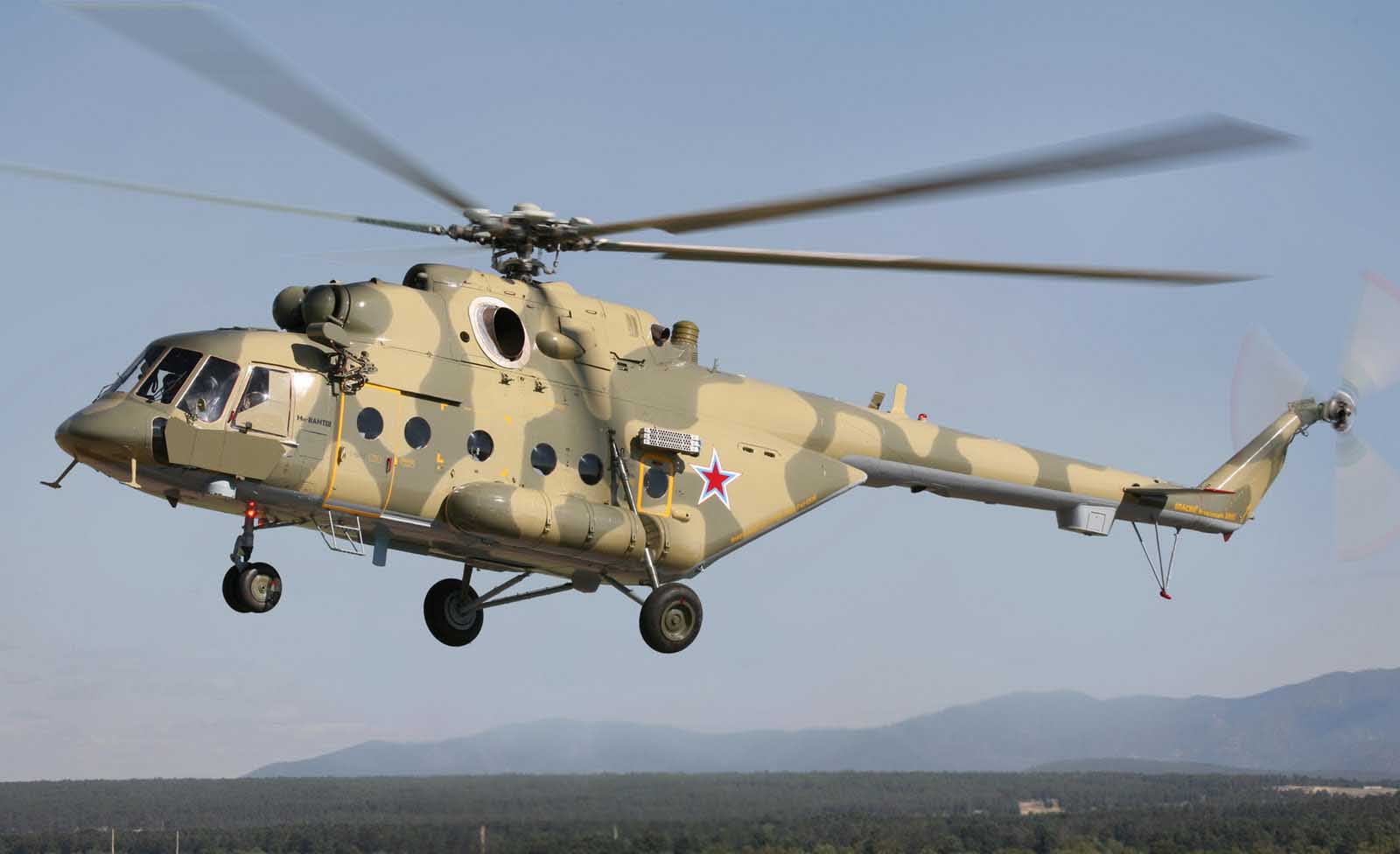
Mi8 helicopter
General staff spokesman, Lt. Gen. Sergei Rudskoi, told that Turkmen rebels in Syria fired on a Russian helicopter that was searching for the two pilots of the SU-24.

The shooting killed one crew member on the Mi-8 helicopter and forced it to land in neutral territory.

The rest of the crew was evacuated. Rudskoi also said that Russian radar data showed that Turkish warplanes had violated Syrian airspace in the course of shooting down the Russian plane.
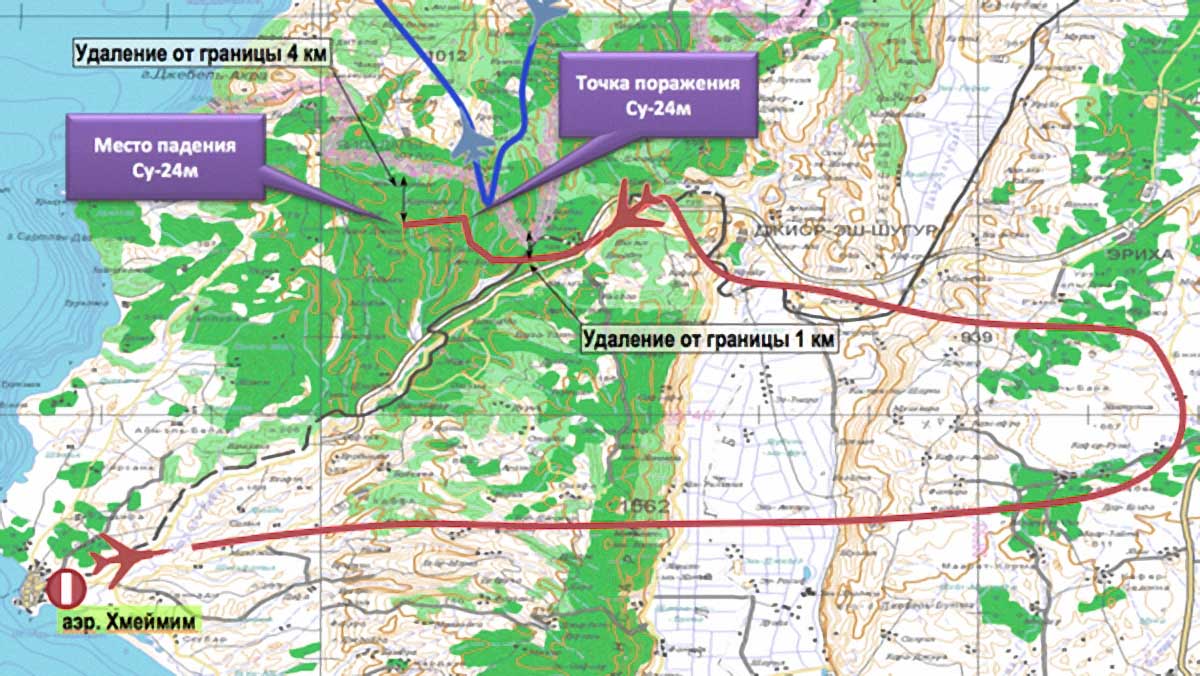
map SU-24 shotdown
In Syria the Turkmen, who are linguistically and ethnically Turkish, live alongside Arabs and Kurds and have mostly stayed neutral. They historically objected to the Arab nationalism of the Syrian Baath party, which stressed assimilation to the Arab language and culture. In turn, the Syrian government has often regarded them as a fifth column working for Ankara.

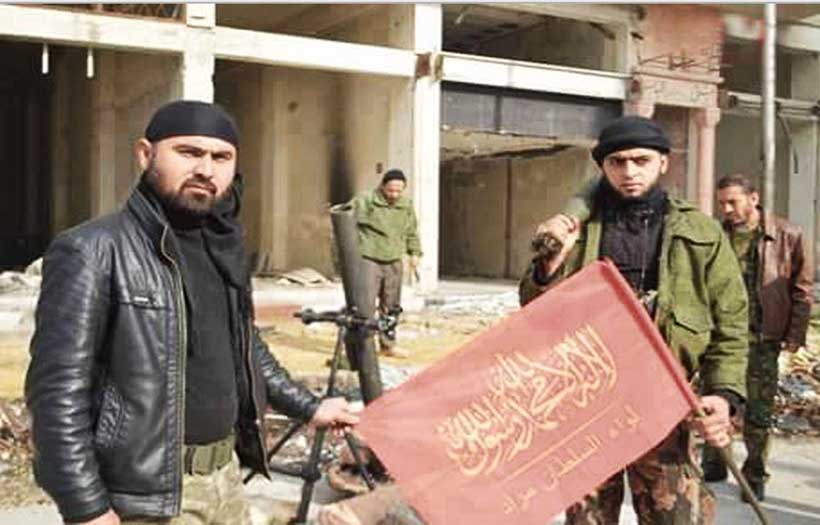
Around a dozen Turkmen militias were created, trained, and equipped by Turkey. It is one of these, Alwiya al-Ashar, who’s members have killed the Russian pilot. They have been fighting alongside other rebel groups, including the al-Qaeda affiliates Jabhat al-Nusra and Ahrar al-Sham, in the north of Latakia province.

Alwiya al-Ashar is linked to a Turkish and CIA-backed logistics supply program that funnels a near-constant stream of small arms, ammunition, and cash for salaries to rebel groups across northern Syria.

Many of the Turkmen brigade fighters are from Central Asia or Uighurs from China and the few real Syrian Turkmen are hardline Islamists, who cooperate with Jabhat al-Nusra, Ansar Al Shams, Jabhat Ansar Ad Din, and Ahrar al-Sham. Turkmen leader and spokesman Alparslan Celik is a Turkish citizen from Elazıg.

In recent days 1,700 civilians have fled over the border, because of an escalation of fighting between rebels and government troops in the area. Another 4,000 arrived at a refugee camp at Arfali, on the Syrian side of the border.
Turkmen Sultan Brigade
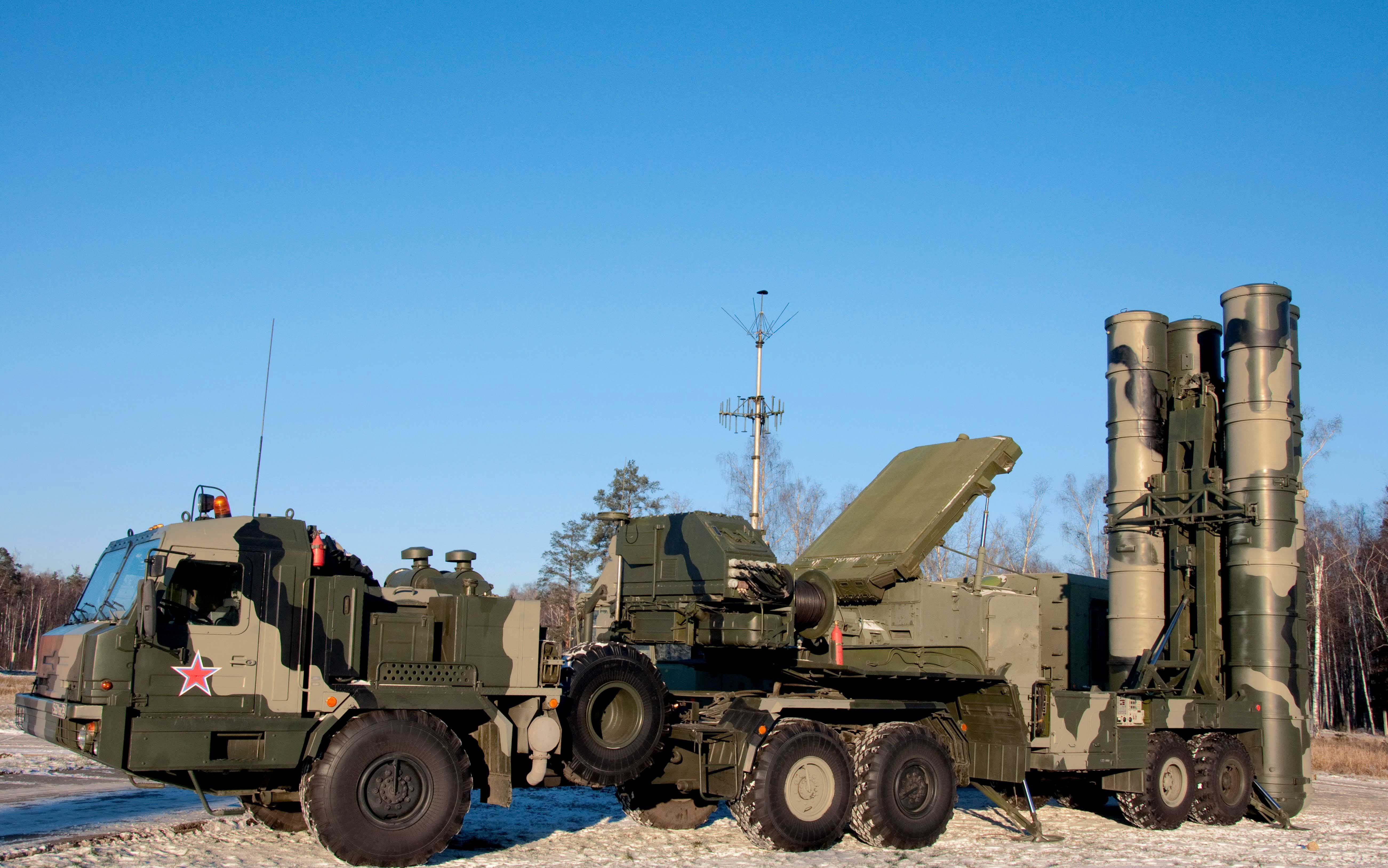
After the downing of its jet, Russia is sending the most hi-tech air defense system to Latakian air base in Syria to help bolster deterrence and protection of the Syrian air space, Defense Minister Sergei Shoigu: “The S-400 anti-aircraft missile system will be deployed to the Hmeimim airbase.”

The S-400 first came into service in 2007. It is the next generation of the S-300, a particularly effective air defense missile system that Russia intends to sell to Iran and India.

With a maximum range of 400 kilometers, the two announced S-400 systems based at Latakias Hmeimim airbase would easily cover the area where Turkish jets shot down the SU-24, and would even threaten Turkish aircraft on the other side of the border.
S-400.Triumf anti-aircraft
NATO held an emergency meeting, but a NATO spokesman stressed that the meeting did not fall under Article 4, in which a member country discusses a threat to territorial integrity, political independence or security, and was purely for information.

NATO support for Turkey is not secured and even staunchly anti Russian members in Eastern Europe like Poland or the Baltic states are not likely to join a war for Turkey. They know that Erdogan caused the refugee crisis and that he supports IS.

There was certainly nothing accidental or unforeseen about the Turkish attack. The Turks fully intended to destroy a Russian aircraft and were waiting for an opportunity. Judging from the remarks of Western leader, it seems that Turkey and the USA want to force Russia to back away from bombing Islamic rebel positions near the Turkish border, acquiescing to a de facto no-fly zone.

It has not worked because Russia increased its air support for Syrian troops in Latakia’s northern countryside and also bombed rebel supply trucks in Azaz, an town north of Aleppo and just 2 kilometers away from the Turkish border. Azaz is on the western edge of Erdogan’s envisioned “safe zone.”

The USA and Turkey have conducted a series of airstrikes along the “Marea line.” Marea is 25 kilometers north from Aleppo, the distance to Azaz is only 20 kilometers. Azaz, Marea, Jarabulus, al-Bab, Manbij are all located inside Erdogan’s “safe zone” and al parties scramble to conquer this area because it is the most important supply corridor for the Islamic rebels.
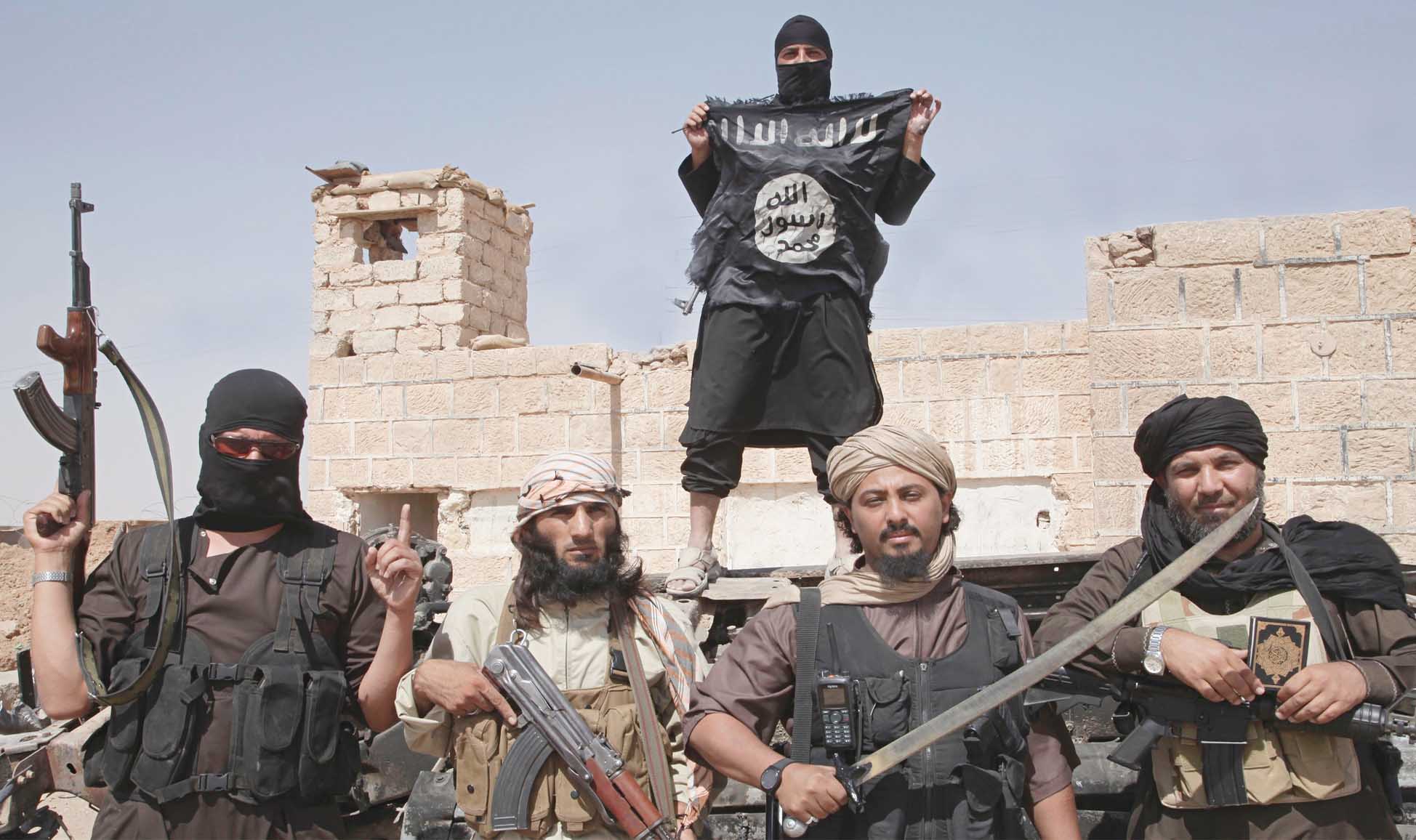
IS flag smoke
The Syrian War is growing past the stage of a proxy war and is now heading towards a conventional confrontation between military powers. Few of the current world leaders have relevant experience during their lifetimes of either waging such wars, or of avoiding them.

There are five nuclear countries flying sorties over Syria; Russia, USA, Israel, France, Britain. World War III has maybe already started, but is not yet officially acknowledged. If the world leaders are not able to imagine the ignition of hydrogen bombs over their heads, the war will inevitably escalate with no one trying to dampen it down.

One possible development is that Russia will in future act much harder and uncompromising in Syria than it would seem “rational.” For Russia the question is whether or not it can sustain an alliance. For Russia the Syrian conflict is not just about Syria, it is about Belarus, Armenia, and other former Soviet republics.

It would be surprising if Putin will back off here and one wonders what the Turks will do when future  air strikes near the Turkish border are done with proper fighter escort? Will the Turks engage in a full-fledged air superiority battle at the Syrian frontier?

Also, will the Russians risk exposing valuable electronic countermeasure assets to enemy observation and assessment in anything less than a major war?

Realistic predictions, educated guesses, wishful thinking

I don’t want to fall into the trap and write: “Russia has to do this or avoid that.” Putin is not dependent on the advise of an unimportant humble blogger and he most likely has more insight and information than even the most enlightened and well connected commentators and analysts. But some possibilities nevertheless can be discussed and suggestions be made without appearing presumptuous and saucy.

This incident will not distract Russia from the prime mission, which is to safe Syria from destruction by Western proxy forces. But, the enablers and supporters of the proxy armies have to be hindered, weakened, neutralized, cordoned off. Erdogan, together with Netanyahu, is the most dangerous enemy of Syria, there has to be done something to stop this hazard.

Which means, that Putin finally needs to put the gloves off, otherwise Erdogan will make a fool out of him. A look into the CIA destabilization and assassination handbook is in order.
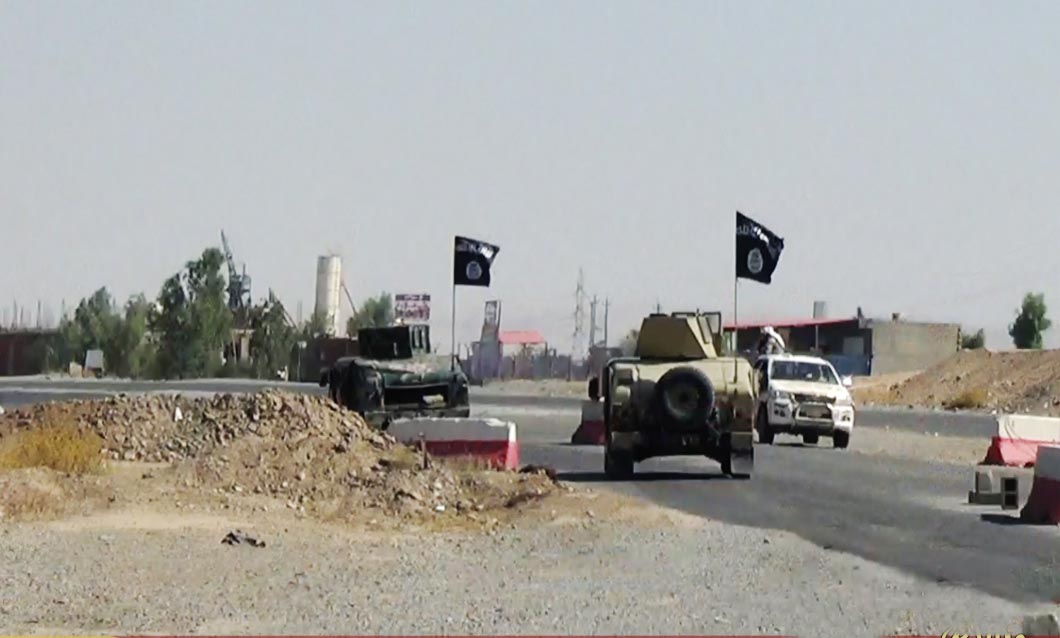
IS 11 2015 z
Russian media will inform the world public about Turkish support for terrorism. There is so much undeniable evidence that it is not difficult to make this case. Russia will publish a detailed documentation (The Terrorism Black Book) about Turkish support for terror organizations and distribute it globally. Russian Prime Minister Dmitry Medvedev has already began to address the issue when he said: “This [the downing of SU-24] is no surprise, considering the information we have about direct financial interest of some Turkish officials relating to the supply of oil products refined by plants controlled by IS.”
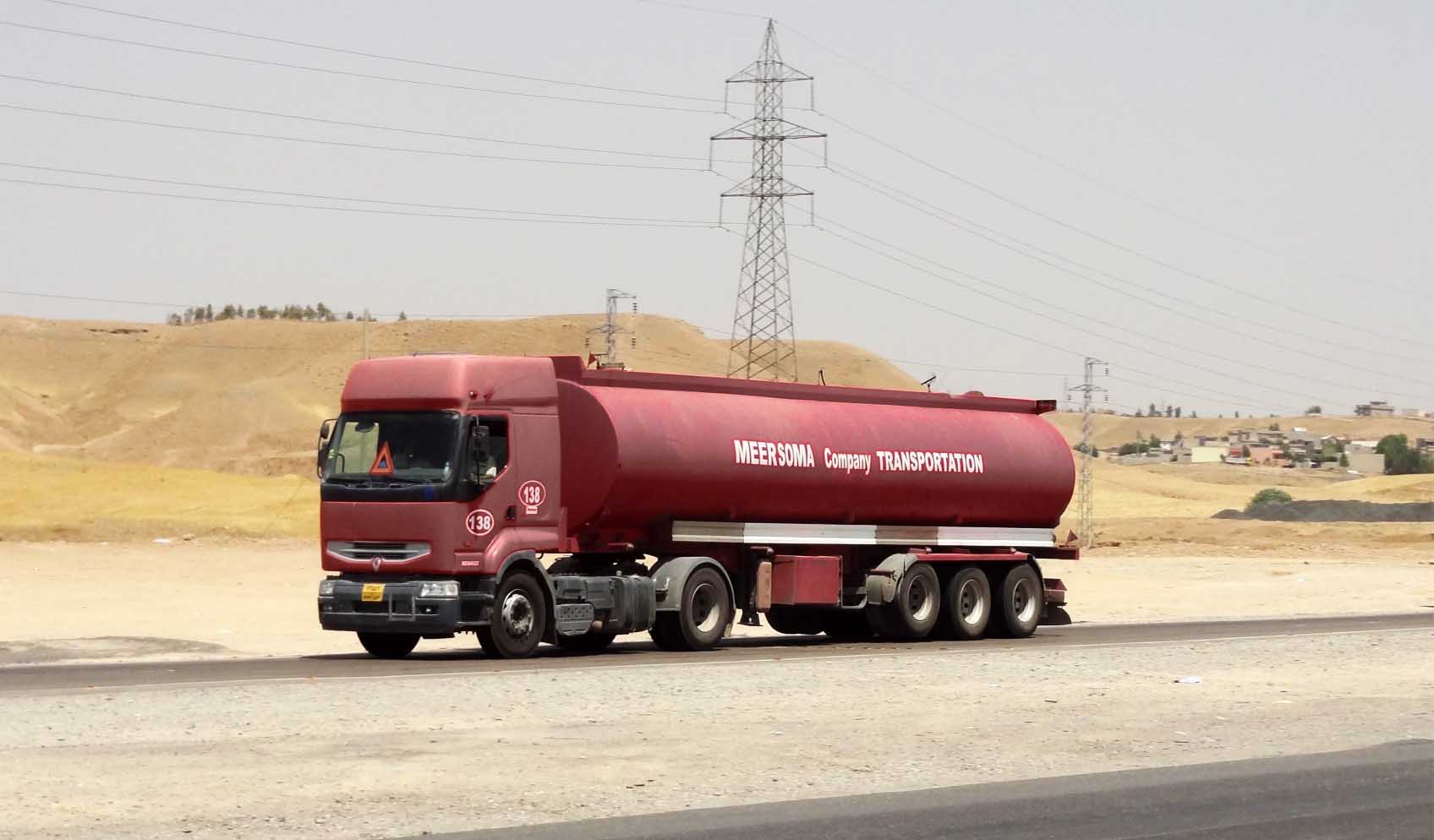
IS Oil tanker
The huge Russian tourist stream to Turkey will disappear, Russian companies will be banned to conduct business in Turkey, Turkish exports to Russia and transfer of goods to Central Asia will stop, gas supplies will be disrupted due to “technical reasons” and “pipeline maintenance,” and various financial and government institutions will find themselves under sustained cyber attacks.

What about Russian NGOs swarming out all over Europe and funding, advising, coordinating anti-imperialist, anti-capitalist, anti-globalist grassroots movements? European resentments against Turkey are high (the siege of Vienna in 1529 and 1683 is still remembered), and Russia can forge an alliance with anti-EU and anti-immigration parties. These parties are constantly gaining popularity and have a rather positive view of Russia. Greek, Spanish, Italian, and Portuguese left wing parties need support too.
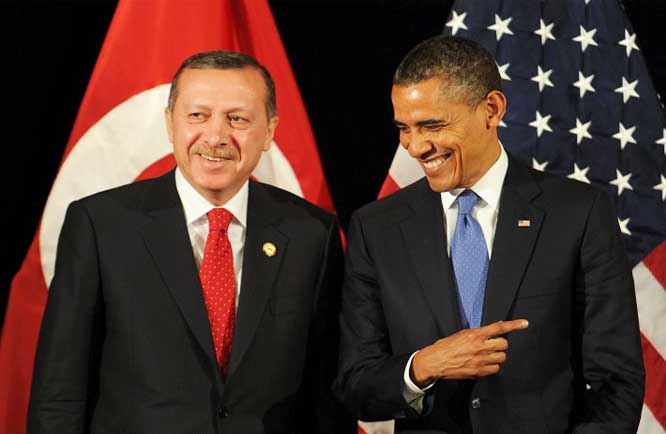
Erdogan Obama
In Turkey maybe the Gulen movement can lend a helping hand. Remnants of secular Kemalism are possibly still in the army, waiting for a resurrection.

Religious bigotry, discrimination of minorities, misogyny, social inequality and injustice cause discontent and disloyalty in Turkish society, which can be exploited by outside players. The CIA has shown how to do it and has accumulated an impressive track record starting from the days of Allan Dulles (1953 Iranian coup, 1954 Guatemalan coup) till now.

Many Kurdish towns in southeastern Turkey have been devastated by fighting between Turkish special forces and the PKK (Silvan, Cizre). The Turkish troops have fired indiscriminately into civilian areas, killing women and children. Curfews and blockades have paralyzed the towns and destroyed the economy.

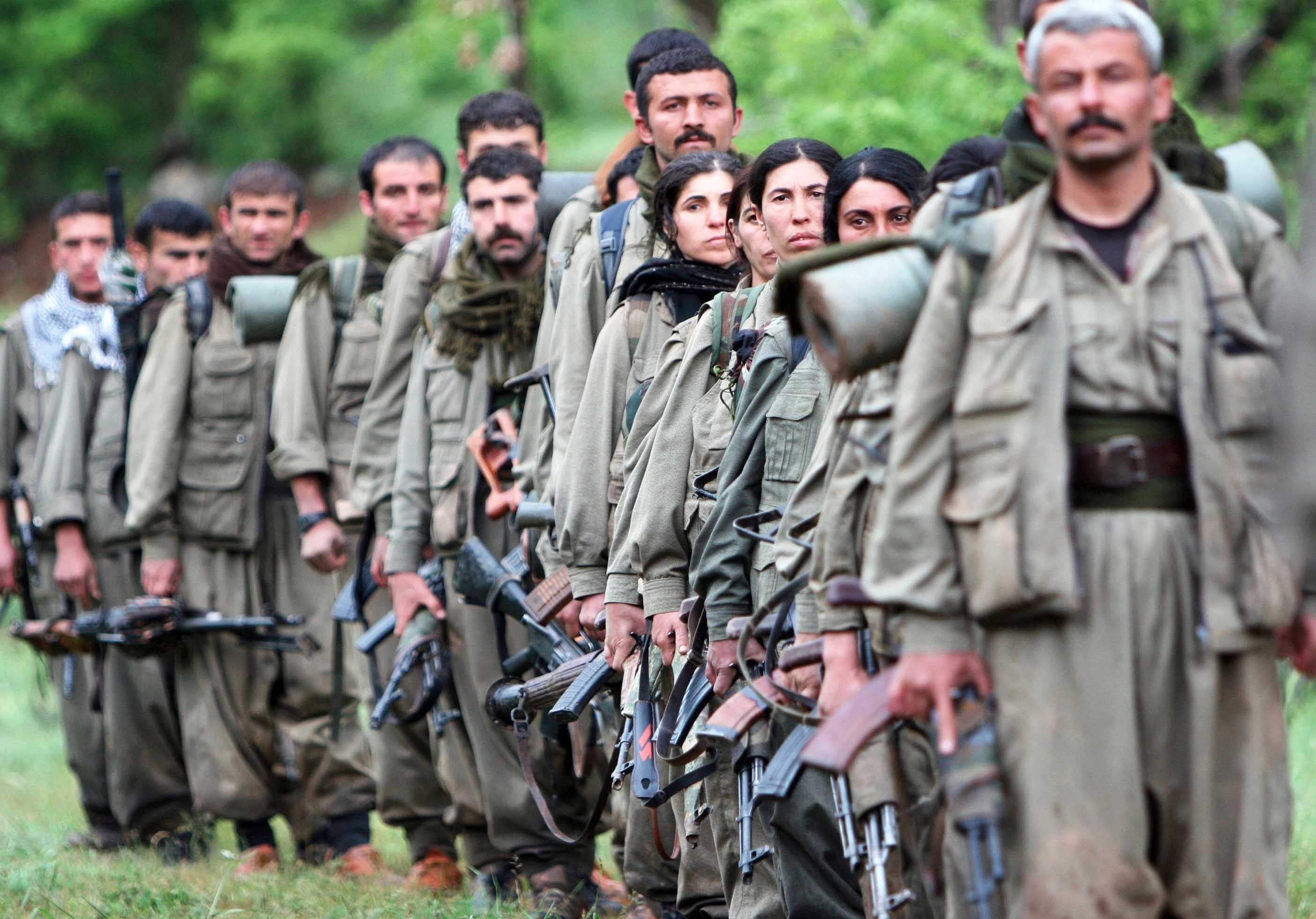
The PKK and their affiliate YPG/YPJ need help. Arms, logistic support, high tech intelligence would be appreciated. Iran could make peace with PJAK and appease the Kurds with increased autonomy, freeing Iranian Kurdish fighters to join the Syrian and Turkish brothers and sisters in their struggle against Erdogan.

It doesn’t seem impossible that the Barzani clan, who rules Iraqi Kurdistan and is friendly to Turkey, can one day be replaced in a popular uprising. Violent protests in Sulaimaniyah and other cities, with at least four killed and dozens of KDP offices torched, open interesting opportunities. Public discontent is high because of endemic corruption, a collapsing economy, and the pitiful display of Masoud Barzani, his near family members, and allied cronies unconstitutionally clinging to power and unashamed further enriching themselves.
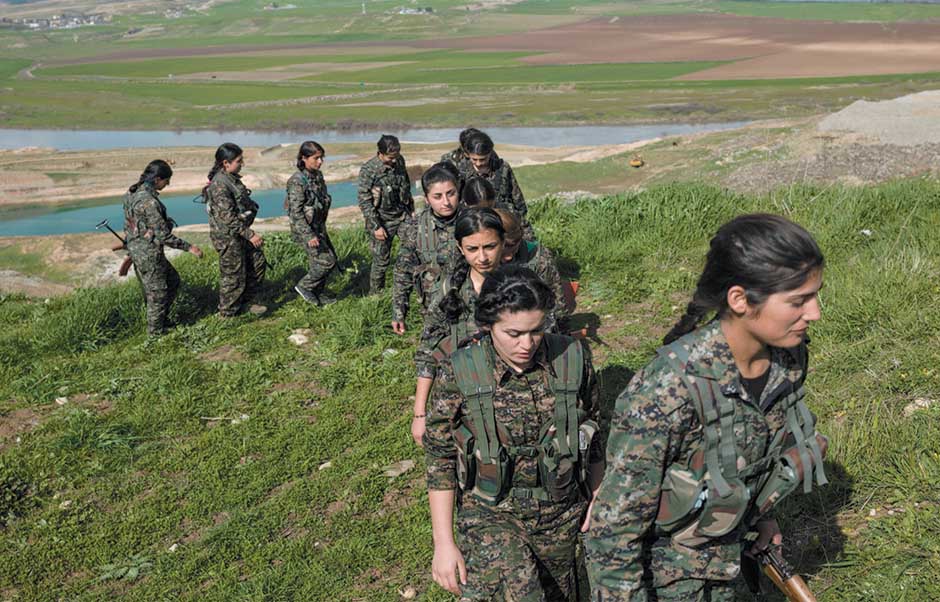
YPJ drills at Shilan Camp
Apart from such quiet operations Russia simply needs to wait till the chickens come home to roost.

The volatility in the worlds financial markets reminds of 2008. The 1.4 quadrillion US$ derivative time bomb is ticking. Sovereign gold reserves in the Manhattan (NY Fed) and London vaults are “over leveraged” (meaning stolen). China stock market turmoil, global bond market insecurity, commodity glut (oil, wheat, metals), everybody is rushing to make a killing before the house of cards finally crushes with nothing left than barter, scavenging, neighbors help, subsistence.

Don’t even talk about US deteriorating infrastructure, growing poverty (food stamps, homelessness, the (un)affordable care act), mind boggling amounts of private and public debt, increasing social tension (black lives (don’t) matter, mass shootings).

Russia’s economy will decline too and Russians will have to scale back and live more modest. But if Putin continues to dismantle the oligarchs fiefdoms and if he can overcome obstruction by the liberal faction under Sberbank CEO German (Herman) Gref, Russia will be stable while the Western consumer economies will descend into chaos.

This is the big game and compared with that the reckless and illegal shooting of the SU-24 is a minor annoyance. It is a tragedy for the killed soldier and a war crime because he was helpless and didn’t pose any threat. He and the killed member of the rescue helicopter crew will be remembered as heroes.

24.11.2015

Who will stop Erdogan?


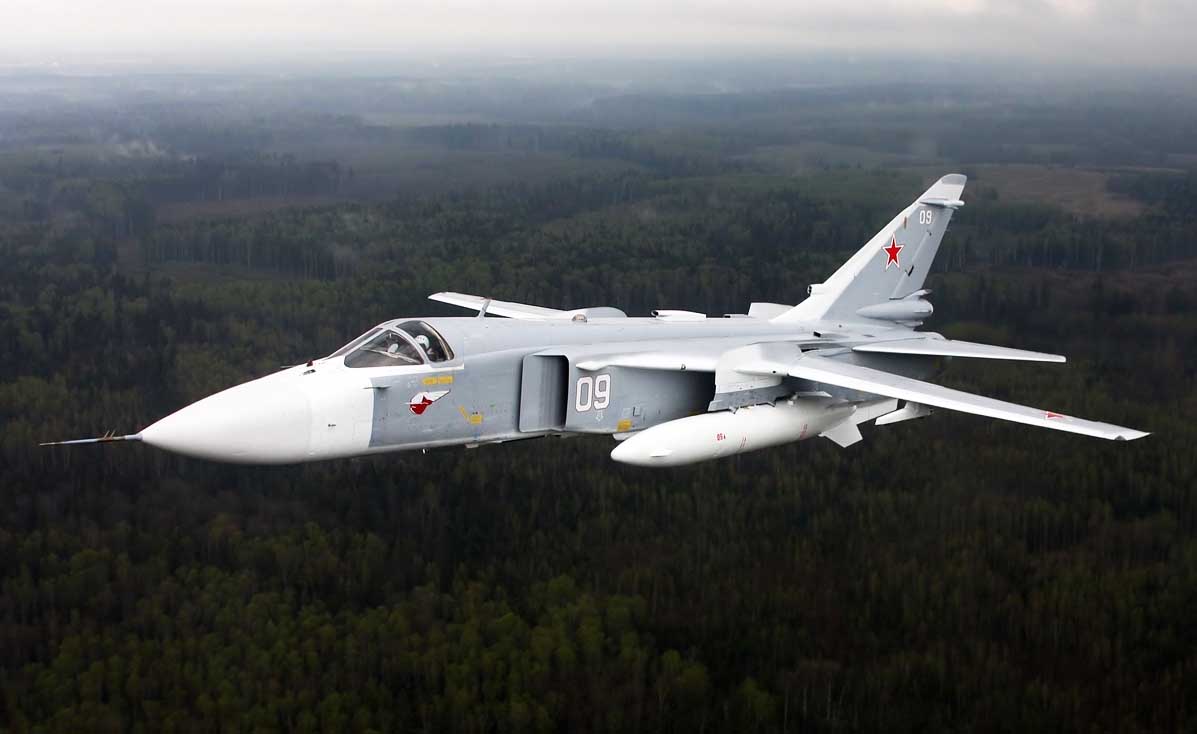
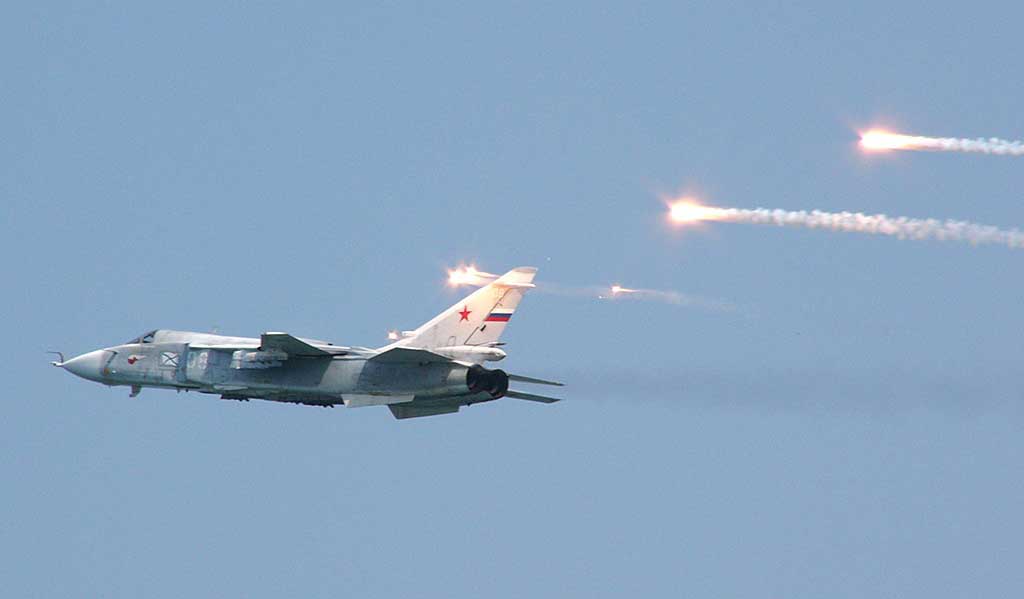
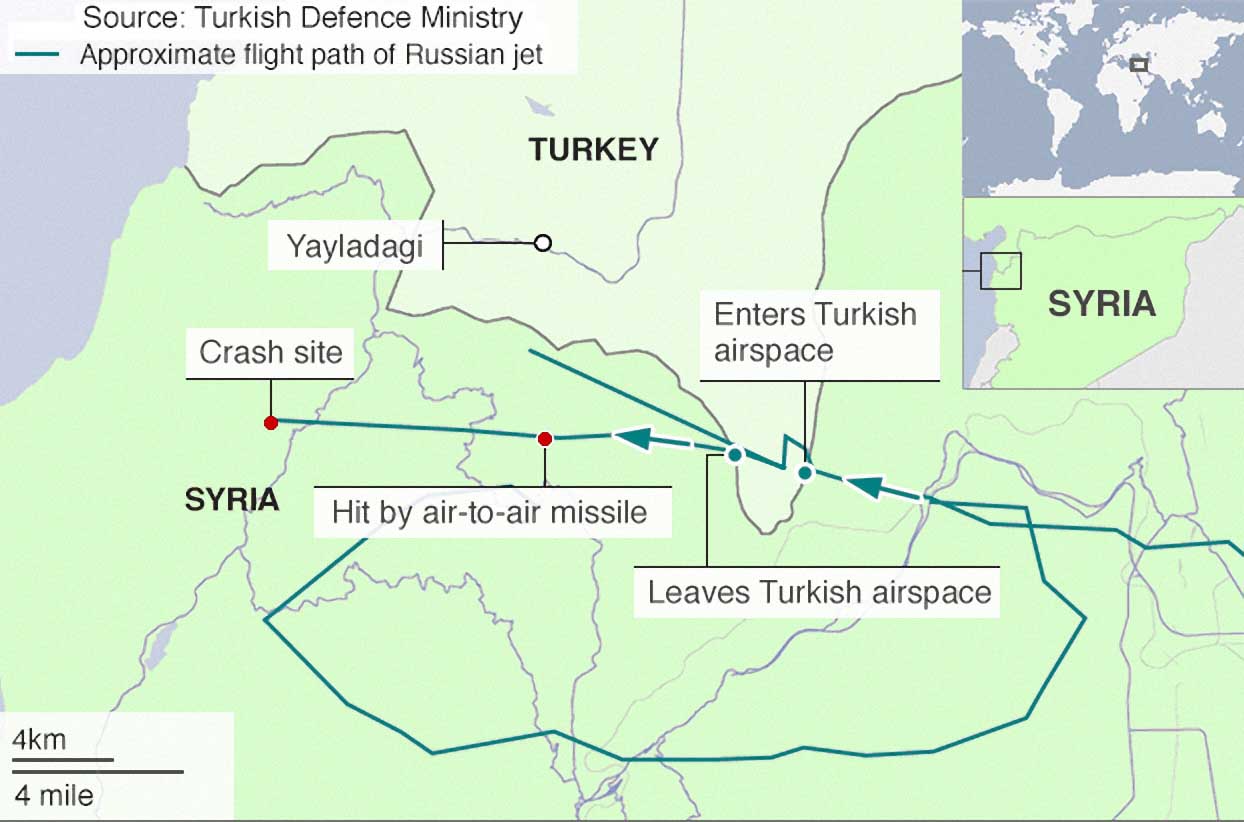
Two Turkish F-16 shot down a Russian SU-24 near the Syrian border inside Syria. The two pilots could parachute out of the jet before it crashed, but Turkmen rebels, trained and funded by Turkey, killed both pilots with machine gun fire as they came down. The plane crashed in a mountainous area in the northern countryside of Latakia province near the Syrian village of Yamadi, 4 kilometer from the border.

Government forces right now are fighting insurgents with aerial support from Russian and Syrian planes, and southern Hatay province Governor Ercan Topaca claims, that about 1,700 people have fled the mountainous area due to fighting in the last days. The fierce clashes over control of the “Burc Kasap” mountain are strategically important, as the side that controls the mountain typically has superiority over the Bayırbucak region. About 35,000 civilians are living in the area, 15,000 of whom are Turkmens.

Turkey has called for a UN Security Council meeting to discuss what it describes as “attacks on Turkmens” and shortly before the downing of the fighter jet summoned the Russian ambassador to warn about grave consequences of the Russian air operation. The ambassador knows now what kind of “grave consequences” were meant.

The Russian defense ministry stated, that ‘for the entire duration of the flight, the aircraft was exclusively over Syrian territory.” Foreign Minister Sergei Lavrov canceled a visit to Turkey. Lavrov advised Russians not to visit Turkey and one of Russia’s largest tour operators said it would suspend sales of trips to Turkey.

Russian President Vladimir Putin insisted, that the aircraft had been attacked while it was one kilometer inside Syria and warned of “serious repercussions” for what he termed a stab in the back administered by “the accomplices of terrorists.” “We will never tolerate such crimes like the one committed today,” Putin said visibly enraged.

Moscow will suspend all military contacts with Ankara and “Further measures to beef up Russian air base security in Syria will be taken.” Russian guided missile cruiser Moskva, equipped with the Fort air defense system, which is similar to the S-300, will be deployed off Latakia province’s coast.

Sergey Rudskoy, a top official with the Russian General Staff, described the Turkish attack as “a severe violation of international law”. Rudskoy said that the Russian jet did not violate Turkish airspace. Additionally, according to the Hmeymim airfield radar, it was the Turkish fighter jet that actually entered Syrian airspace as it attacked the Russian bomber.

“We assume the strike was carried out by a close range missile with an infra-red seeker,” Rudskoy said. “The Turkish jet made no attempts to communicate or establish visual contact with our crew that our equipment would have registered. The Su-24 was hit by a missile over Syria’s territory.”

NATO has called an immediate meeting of its ambassadors, Turkey will undoubtedly invoke Article 5 of the NATO charter if Russia takes any retaliatory actions. US military experts believe that Russia’s incursion into Turkish airspace, if it indeed happened, likely lasted only a matter of seconds. The US military says it cannot offer a precise location where the Russian jet was downed by Turkey and only confirms that it happened “at the border” between Syria and Turkey.
Turkey downs SU-24
Syrian rebel fighters who have received US arms said, they damaged a Russian helicopter, forcing it to land in government territory. There are reports that the helicopter burned out but that all of the crew was saved and is unharmed. This will not be the last downing of Russian or Syrian aircrafts. Qatar is believed to have delivered Chinese FN-6 MANPADS to rebel groups and several of these have since been acquired by the Islamic State.

Documents, which the hacker group Cyber Berkut could unearth, indicate that Qatar is arranging supplies of the Ukrainian air defense systems Pechora 2D, which can strike as high as 21 kilometers, to Islamic insurgents by Ukrainian weapons trader UkrOboronProm via Bulgaria and Turkey. The US officers in Qatar seemingly have approved the deal.
Turkey downs SU-24 b
The Turkish intelligence agency MIT has since two years trained some 5,000 Turkmen, allegedly Syrians of Turkish heritage and speaking the Turkish language, to invade Syria and keep a vital supply corridor for Jabhar al-Nusra, Ahrar al-Sham, and IS (Islamic State) open. Most of the Turkmen entered Syria via the Bab Al-Selame border crossing.

The Turkmen forces had not much success and most of the fighters were absorbed by Jabhat al-Nusra, yet recently the Sultan Murat Brigade and the Damascus Front claimed, that they entered the Turkmen villages of Harcele and Delha in northern Aleppo province near the Turkish border, to retake it from IS with air support by the USA and Turkey. This could have been a testing of the Russian reaction to combined US and Turkish air operations inside Syria.

Turkish officials have said, that a major air operation with the US against IS is planned, with Turkmen forces fighting on the ground. The official aim is to clear jihadists from a 98-kilometer stretch of Syria’s northern border. Turkey has long thought to install a “safe zone” or “no fly zone” to keep this area free from Russian or Syrian air attacks.

The plan is apparently that IS formally retreats to let Turkmen brigades and other Turkish controlled insurgents occupy the area. US and Turkish warplanes would then provide cover and prevent Russian and Syrian attacks against the supply corridor.
sukhoi_su24_fencer_l4
The US policy in Syria is incoherent because the neocon hardliners play their own game, and they play it, if necessary, without President Obamas approval. One sign that Washington doesn’t go along with Erdogan’s plans all the time was the removal of Patriot missiles from the Syrian-Turkish border. Another sign were statements of US President Barack Obama at the G-20 summit in Turkish Antalya.

Erdogan used the conference to again press for a safe zone north of Aleppo. But Obama cut him short and said: “There have been some who are well-meaning, and I don’t doubt their sincerity when it comes to the issue of the dire humanitarian situation in Syria, who, for example, call for a no-fly zone or a safe zone of some sort. … After we’ve gone through a lot of planning and a lot of discussion, and really working it through, it is determined that it would be counterproductive to take those steps — in part because [IS] does not have planes, so the attacks are on the ground.”

“A true safe zone requires us to set up ground operations. And the bulk of the deaths that have occurred in Syria, for example, have come about not because of regime bombing, but because of on-the-ground casualties.”

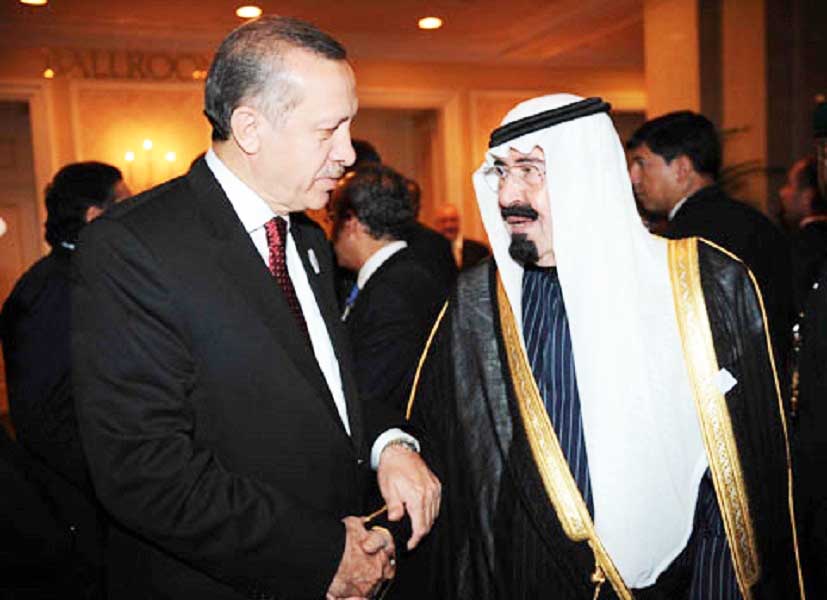
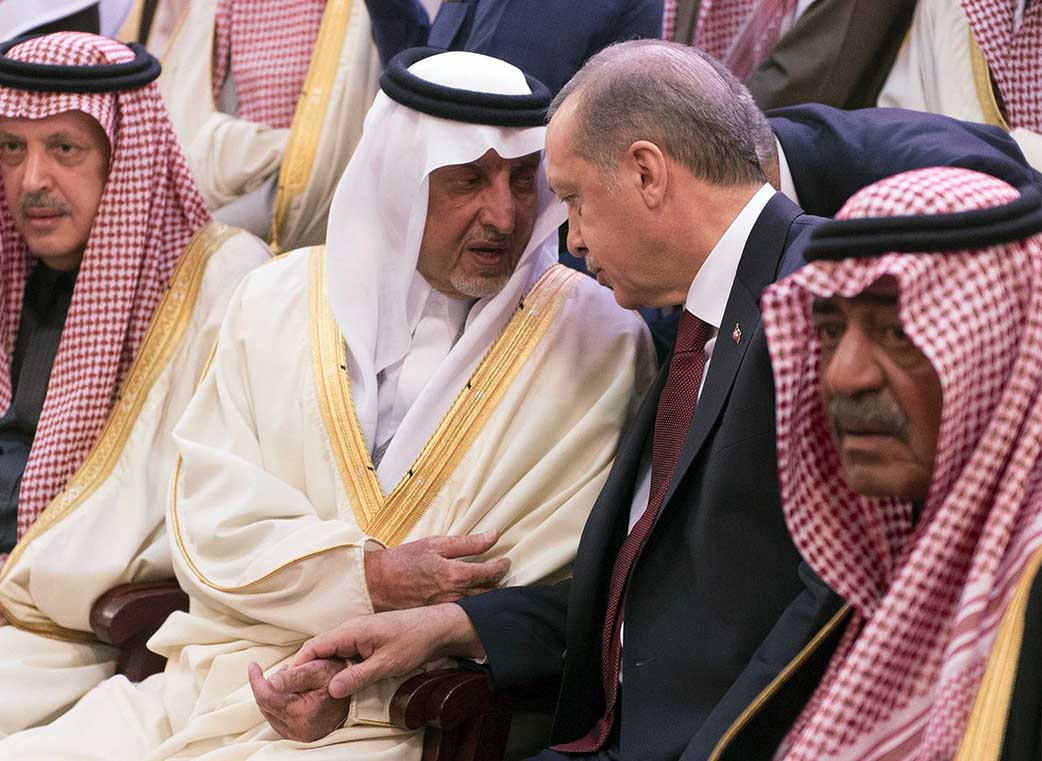
The G20 summit in Antalya was all about reigning in IS, but the hypocritical outpouring of sympathy for the victims of the Paris terror attacks by the participants of the G-20 summit could not hide the fact, that all of the insurgent groups, including IS, are supported by host Turkey and by Saudi Arabia, which sent a huge delegation led by King Salman bin Abdul Aziz Al Saud.
Erdogan Saudi G20
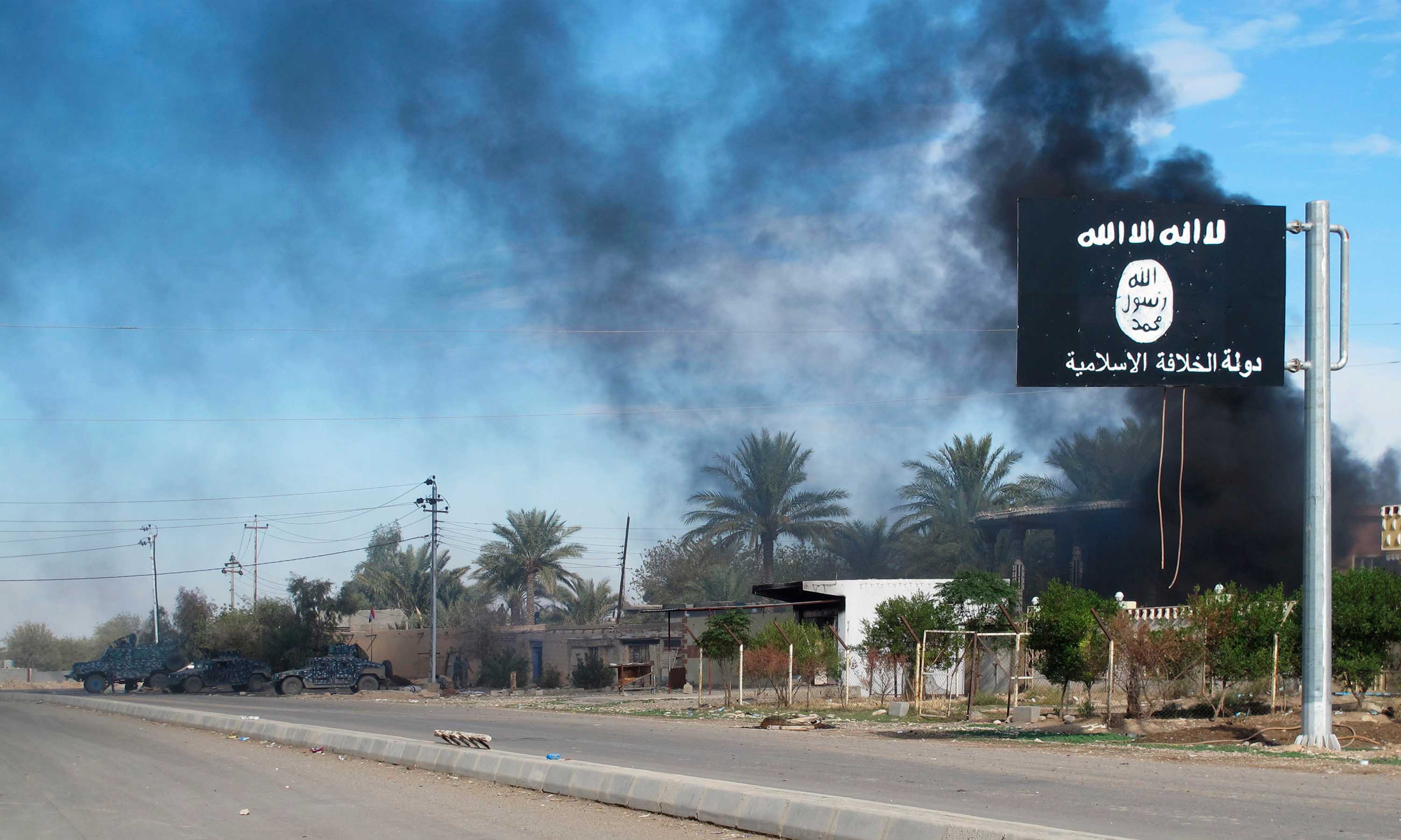
IS, singled out as the most dangerous terrorist organization by the West, had always solid backing by Turkey, Saudi Arabia, and probably most other Western players in the Middle East as well.

Turkish support for terrorist groups

The insurgent groups are relabeled all the time to artificially differentiate between “moderate” rebels and terrorists, but most groups are directed and coordinated from a military operations center in Ankara known as the “MOM,” based on its Turkish initials.

Turkish President Erdogan always had a soft spot for radical Islamists and his AKP party is affiliated with the Muslim Brotherhood. Turkey is home to fugitive leaders of the Egyptian Brotherhood and the Brotherhood’s satellite TV stations broadcast from Turkey. Moreover, the Brotherhood freely holds protests against Egyptian President Abdel Fattah al-Sisi in the Turkish streets. Turkish President Recep Tayyip Erdogan is taking it personally and even has the Rabia symbol on his desk.

Ideologically speaking, there is no difference between Erdogan, IS (Islamic State), Jabhat al-Nusra, Ahrar al-Sham, and other jihadi fighters. They are all driven by the same doctrine, based on a special Quranic interpretation, Islamic supremacy, and misogyny.

For Erdogan, the path to sharia at the moment is through the ballot box. “Democracy” he once said, “is like a streetcar. You ride it until you arrive at your destination and then you step off.”

Defying all surveys and predictions, in national elections on November 1 Erdogan’s AKP party surprisingly won an absolute majority, but there is ample evidence that the predictions were right and the election results were wrong. The speed of the vote count and early victory declarations in the pro-government media alone should raise suspicions.

The nationalist MHP and the Kurdish HDP lost 2 million and 1 million votes, respectively. There were 1.3 million additional votes compared to June. 600 thousands were due to new votes (of which 200 thousands were new registered voters). There were also 700 thousands less invalid votes. More than half of the additional votes came from Istanbul, where the share of invalid votes shrank significantly.

The economist Erik Meyersson analyzed the election and found that the vote counts of AKP, MHP, and HDP show statistical abnormalities (Benford’s Law) which can only be explained by some form of tampering.
http://erikmeyersson.com/2015/11/04/digit-tests-and-the-peculiar-election-dynamics-of-turkeys-november-elections/
Erdogan Saudi 7
Exports from Turkey to the rebel controlled areas of Syria have substantially increased and reached 1.8 billion US$ in 2014. While Turkey’s exports are declining in all other markets, they kept rising to Syrian rebels.

Between January and September this year, foreign investors established 3,736 corporations and limited companies in Turkey; 1,148 of them, some one-third of the total, were set up by Syrians. One in every six companies established in Gaziantep and one of three in Kilis and Sanliurfa belong to Syrians and most of the Syrians are members of Islamic rebel organizations.

A US-led raid against Abu Sayyaf, who was directing IS oil and gas operations, produced evidence that Turkish officials directly dealt with ranking IS members. Documents and flash drives seized during the Sayyaf raid reportedly revealed links between Turkey and IS, “so clear and undeniable, that they could end up having profound policy implications for the relationship between us and Ankara,” a senior Western official familiar with the captured intelligence told journalists.

Conservative estimates are that IS takes in one to two million dollars a day from oil sales; some see the number as high as four million a day. Most of the oil is sold via Turkish and Iraqi Kurdish companies to Israel.

Turkey has supported Islamic terrorists with all needed materials, it has facilitated the selling of looted industrial equipment (mainly from Aleppo), antiquities, and oil by IS and other Islamists. Turkeys spy agency MIT has provided intelligence and logistical support to the terrorist groups.

MIT boss Hakan Fidan, Erdogan’s staunchest ally, in his own words: “IS is a reality and we have to accept that we cannot eradicate a well-organized and popular establishment such as the Islamic State; therefore I urge my Western colleagues to revise their mindset about Islamic political currents, put aside their cynical mentality and thwart Vladimir Putin’s plans to crush Syrian Islamist revolutionaries.”

When MIT truck convoys with weapons for IS were intercepted by regional police, the involved officers, prosecutors, judges were removed from their posts and prosecuted.
IS selfie 2
Wounded Islamic fighters are treated in special wards of military hospitals, IS cells, coordinators, and recruiters are monitored but never hindered in their activities.

IS operatives are allowed to clear out Syrian opponents who have fled to Turkey. The beheaded bodies of Ibrahim Abdul Qader and Fares Hamadi were just found in Sanliurfa, 55 kilometers from the Syrian border. Abu Mohammad was founder of RBSS (Raqqa Is Being Slaughtered Silently), an activist group which regularly publishes information, photos, and videos about IS abuses in Raqqa, from arbitrary detentions and public executions to a ban on private Internet connections and the issuing of costly identity cards.

Syrian army spokesman Brigadier General Ali Mayhub reported: “On October 26, according to reconnaissance data, four planes from Turkey arrived to the airport of the city of Aden (Yemen). Two of them belonged to Turkish Airlines, one to Qatar Airways and one more aircraft owned by an airline of the United Arab Emirates, There were more than 500 militants of the Islamic State terrorist organization on board, they were taken from Syria to save them from Russian airstrikes.”

Cutting off terrorist supplies

IS could be economically isolated by closing the supply routes to Turkey, Israel, Jordan. The terror organization is not able to keep economic networks and state institutions functioning without substantial help from outside. A strict embargo would of course instantly initiate the accusation of starving the population, as it happened in Eastern Gouta and other areas, where Islamic radicals are besieged by the Syrian army.

To some extent Jordan has already scaled down support for the Islamic fighters and impeded traffic, but the lifelines to Turkey and to Israel are intact. The supply line from Turkey is the already mentioned corridor north of Aleppo where Erdogan wants to install a “safe zone.”

The border towns Jarabulus, al-Bab, Manbij are the main supply network nodes and are of immense importance. That stretch of the border is the preferred transfer area for IS apprentices and supplies of all kind, who come from the Turkish cities Gaziantep or Kili and enter the Aleppo countryside to reach the caliphate capital Raqqa.
Kurdish militia 4
The Kurdish YPG/YPJ would like to march into this area to close the gap between the Kurdish Afrin and Kobane cantons, but Turkey has made clear that any move of the Kurds across the Euphrates to the western border region would be a casus belli. Turkey has shelled YPG/YPJ positions various times and concentrated huge forces along the border, ready to invade Syria.

Turkeys economy is vulnerable 

Until now Turkey and Russia have managed to keep their political disputes away from the substantial economic relations. But Erdogan already made references to possible sanctions against Russia. He said, that Turkey could stop its natural gas purchases from Russia, which supplies more than 55 percent of Turkey’s needs, and award the building of the 20 billion US$ Akkuyu nuclear power station to another, non-Russian contractor.

BOTASS, Turkey’s state-owned gas and oil trader, has asked the ICC (International Chamber of Commerce) to arbitrate in an emerging pricing dispute about gas. Turkish Energy Ministry officials told journalists, “We had agreed with Russia on a 10.25 percent discount, and this has not been put in effect due to various excuses. We are confident that we will get this discount through arbitration.”

Surprisingly Russia instantly took preemptive measures and stopped issuing transit passage documents to Turkish trucks carrying Turkey’s exports to Kyrgyzstan, Kazakhstan, Tajikistan, and Mongolia. Gazprom turned down a Turkish request for an additional 3 billion cubic meters of natural gas for 2016 and declared that it will cut by half the capacity of the proposed 16 billion US$ Turkish Stream natural gas pipeline project or even postpone the project.

Russia further exerts pressure by stiffening its inspections of Turkish foodstuffs and making border crossings more tedious. By rejecting tons of Turkish fruits and vegetables, Russia has been warning that it is capable of inflicting severe damage to Turkey’s exports.

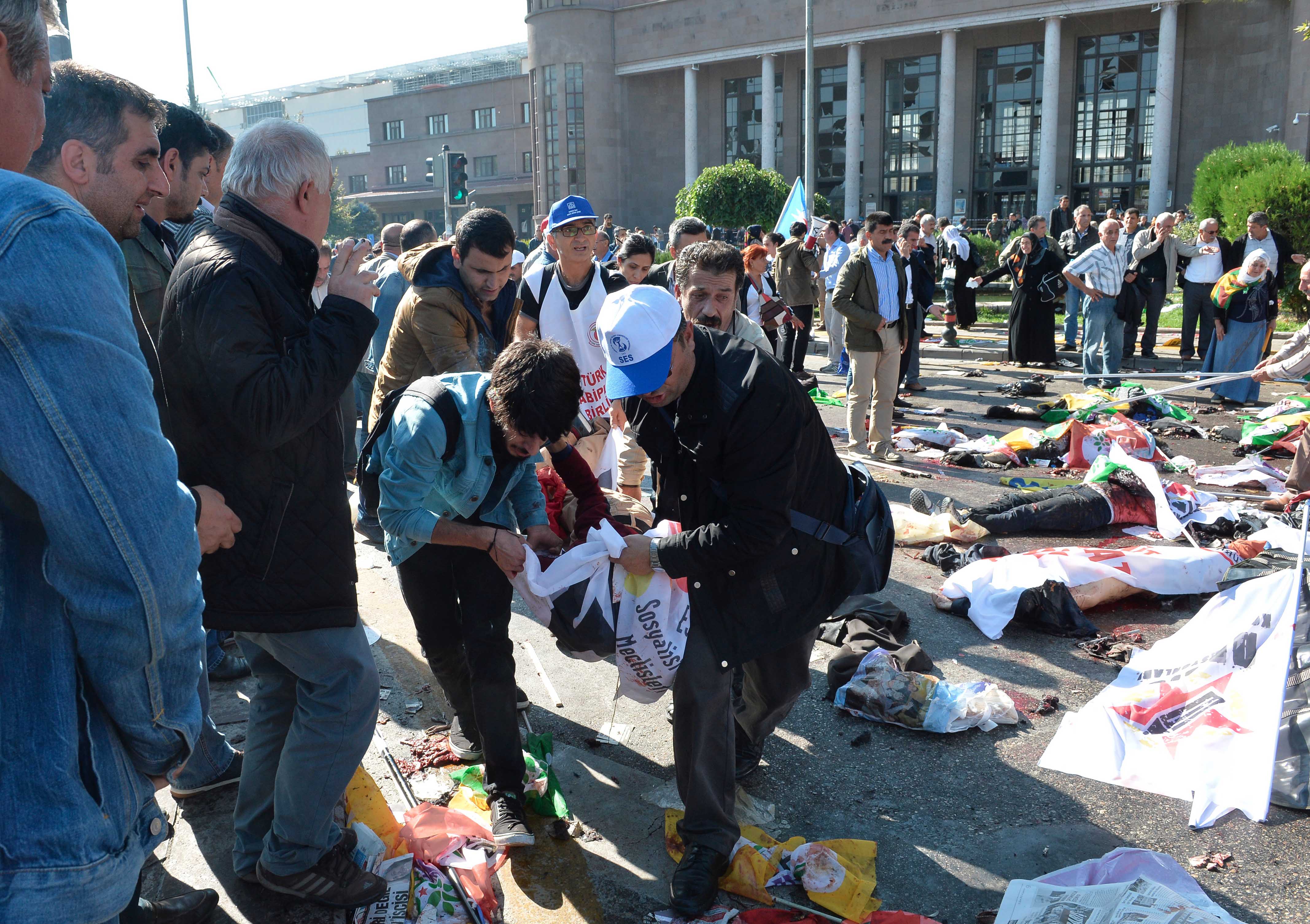
The number of Russian tourists to Turkey has declined even before the downing of the SU-24 because of Western sanctions, and the decline accelerated after the IS bomb attacks in Suruc and Ankara. It is hard to imagine that any Russian citizen will now want to visit Turkey.
Ankara bombing 1
Erdogan’s economic threats as a reaction to Russian operations in Syria will likely become more substantial. But the natural gas agreement between Turkey and Russia is a long-term one that requires Turkey to keep paying for gas even if it stops importing gas.

The bilateral agreement on the Akkuyu nuclear power station was signed and approved by the Turkish parliament. If Turkey decides to halt the project or award the contract to another company, it has to convene the parliament to abrogate the agreement and it will have to pay heavy compensation.

After the SU-24 incident Russia’s main stock index fell more than two percent, while Turkish stocks fell more than four percent. Both the ruble and lira currencies were weaker.

Turkeys economy is vulnerable and the relentless war against the Kurdish PKK has been a disincentive to potential foreign investors. Turkey has reason to fear higher US interest rates because it has borrowed heavily in US$, and it imports much more than it exports.

The lira has already fallen about 17 percent against the dollar this year. A move by the US Fed to raise rates could further boost the dollar, making Turkey’s imports a lot more expensive. The cost of servicing Turkey’s short term foreign debt of nearly 125 billion US$, or roughly 8 percent of GDP, would also rise.

Despite increasing inflation and pressure on the currency, Turkeys central bank has kept interest rates unchanged for most of the year. The government is strongly opposed to higher borrowing costs because it is worried about the impact on consumers.
Erdogan Saudi Salman
Russia cannot retaliate against Turkey militarily because that would mean war with NATO. But it can hurt Turkeys economy and Russian media will have to inform the world public about Turkish support for terrorism. There is so much undeniable evidence that it should not be difficult to make this case.

Putin finally has to put the gloves off, otherwise Erdogan will make a fool out of him.

22.11.2015

Ukraine vies for attention

The Islamic State has stolen away all the headlines from Ukraine, which is a concern for Petro Poroshenko and his crew because finances are worse than bad, in one word: hopeless.

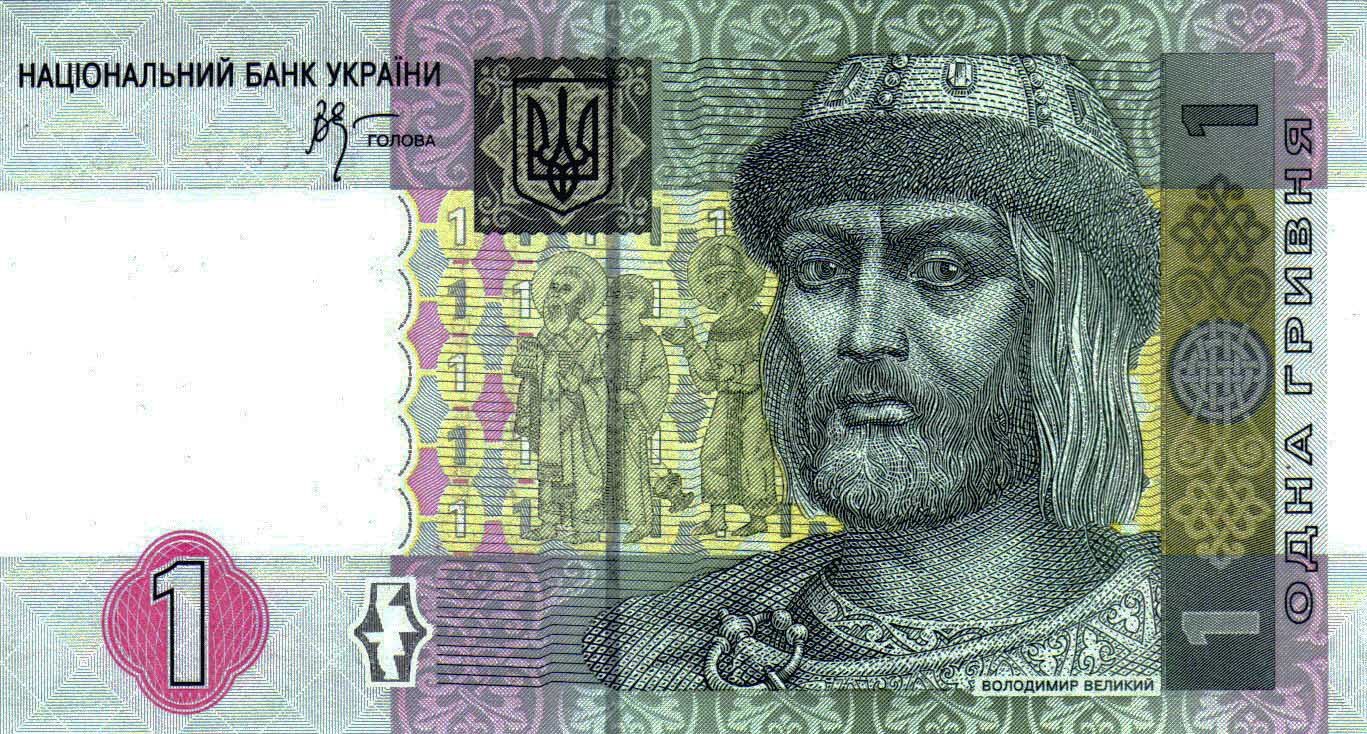
Fitch Ratings lowered Kiev’s credit rating from triple C to D, the default rating. The Ukraine introduced a temporary moratorium on debt on November 6 and failed to pay 250 million US$ in eurobonds. Another payment of 300 million US$ will also be missed. Already on September 23 a 500 million US$ payment was not made. Ukraine’s currency, the hryvnia, is depreciating again and while the official course is 24 hryvnia for one Dollar, no bank will ask less than 26 hryvnia.
1 hryvnia
September was the 21st month of economic decline, as GDP was 5.1 percent down again.

While the Ukrainian population struggles in a collapsing economy with no recovery in sight and has become disobedient and rebellious in addition to being disillusioned since a long time, the EU has gotten annoyed with the constant demand for paying Ukrainian bills with no sign of economic improvement or meaningful moves against endemic corruption.

When Poroshenko’s party PPB lost its majority coalition after key coalition partners, the RP and SHP, defected three months ago, corruption scandals began to engulf Poroshenko’s administration and the PPB party elite. On October 16th a Rada committee agreed to open an investigation into corruption charges, including money laundering, against PPB deputy chairman and Poroshenko business partner Igor Kononenko. Poroshenko’s name appears along with Kononenko’s on at least one of the incriminating documents (www.pravda.com.ua/rus/articles/2015/10/16/7085044/).

Since becoming president, Poroshenko has increased his fortunes considerably and rose in Ukraine’s oligarch ranking from 9th to 6th place. He didn’t fulfill his promise to sell main assets like TV Channel 5 or Roshen, but nobody expected that anyway.
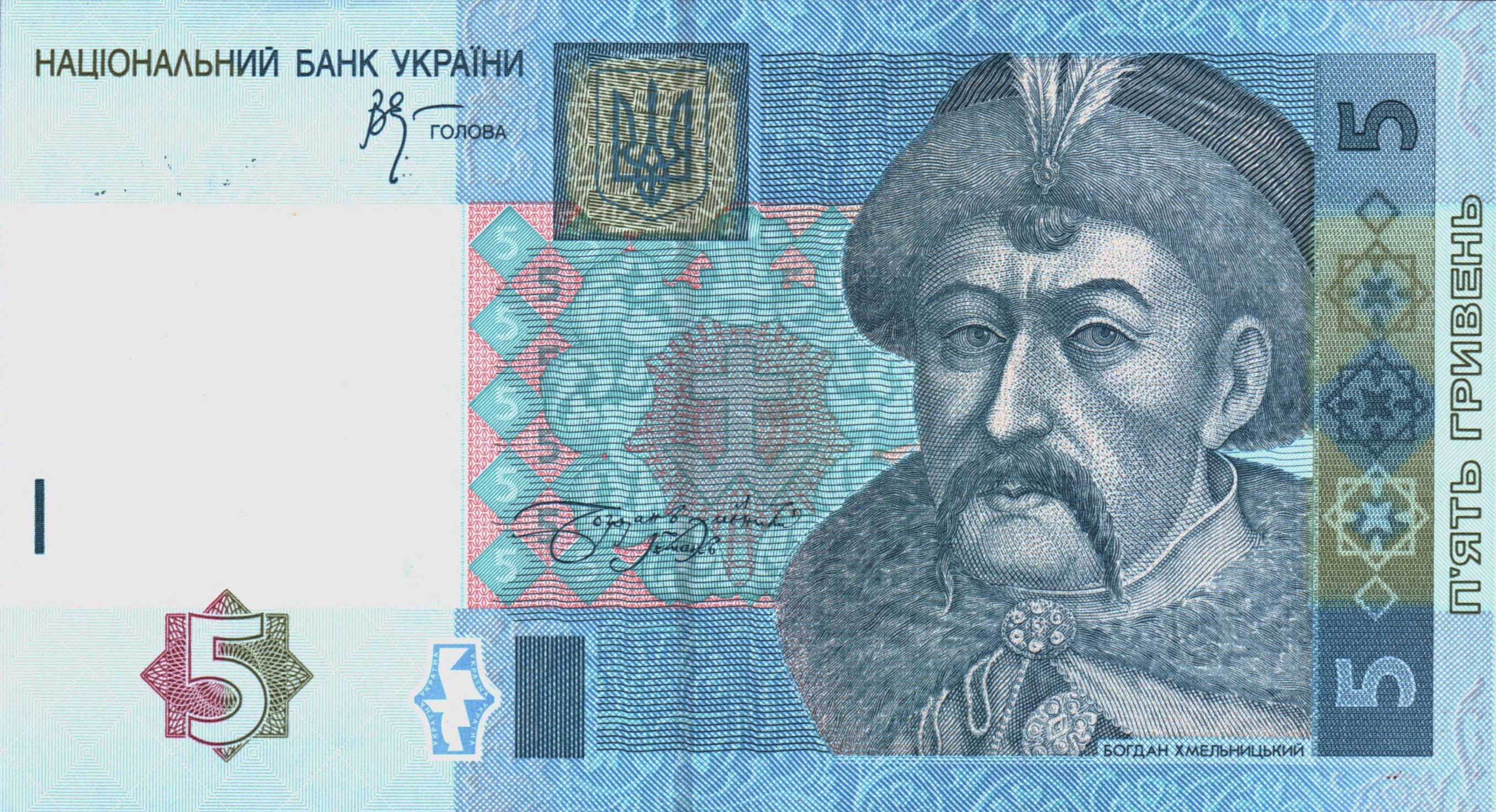
5 hryvnia
Earlier, Austrian authorities initiated an investigation into alleged illegal activity by the head of Poroshenko’s presidential administration Boris Lozhkin.

There is no further information about the transaction of 1.8 billion US$ abroad by Ihor Kolomoysky’s and Victor Pinchuk’s PrivatBank with the help of fake contracts. The money is rumored to be in Cyprus bank accounts controlled by Kolomoysky. This is a horrendous sum but Ukrainian authorities nevertheless have simply swept the issue under the rug.

The EU refused a request for more funding for the anti-corruption prosecutor’s office, because of “concerns raised with regard to some people who participate in the selection” of prosecutors for the office. This is a clear reference to the team of Prosecutor General Viktor Shokin, a Poroshenko appointee and long-time associate, who has been accused of undermining the anti-corruption efforts.

There is an Anti-Corruption Bureau and an Anti-Corruption Agency. These projects were financed by the USA. When the Americans wanted to know how the Bureau is doing, the official response was that the Anti-Corruption Bureau will not begin operations until 2017.
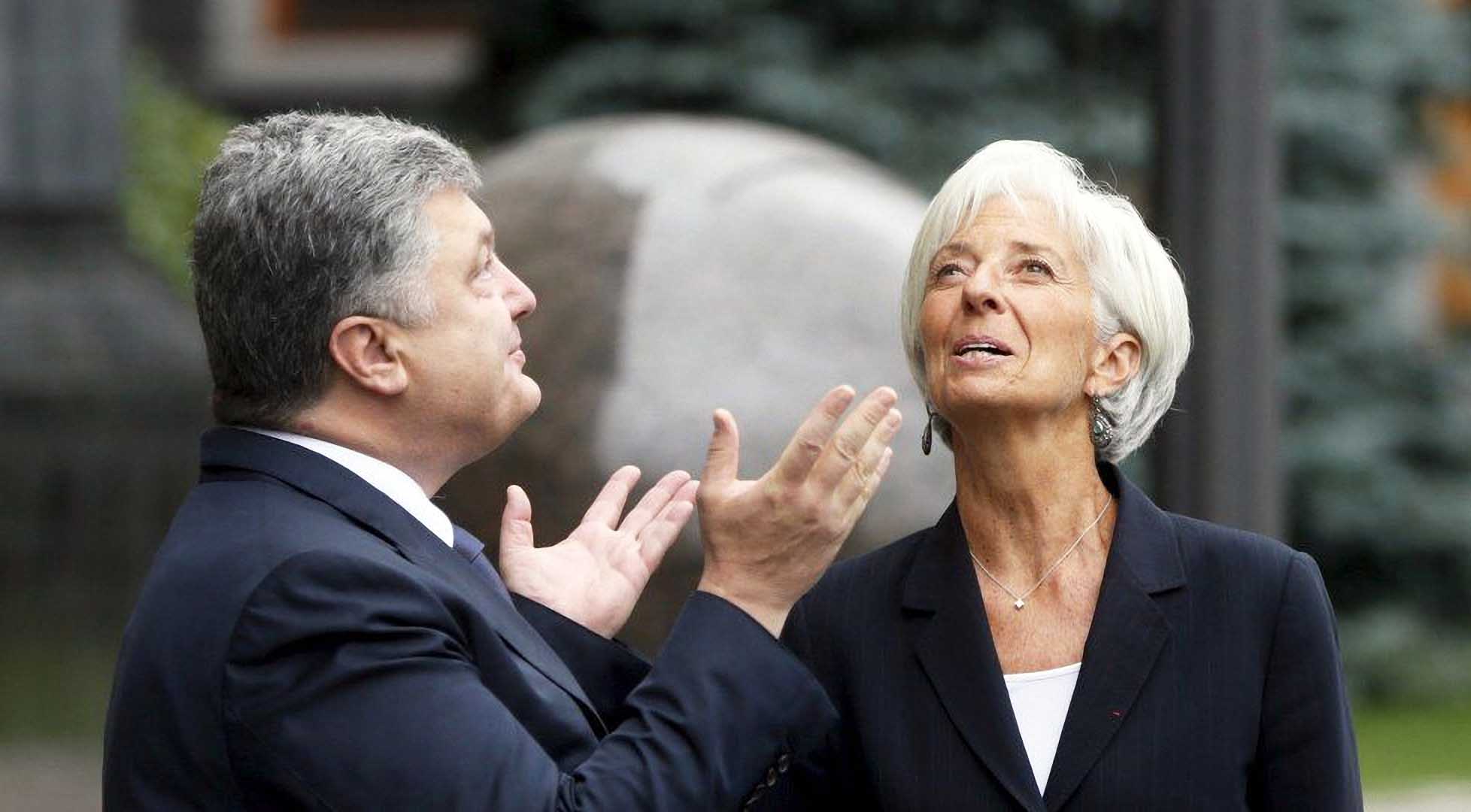
Poroshenko Lagarde
As Ukrainian leaders are desperately looking for ways to keep EU and IMF money flowing, the question arises, what in the world they could do to impress Western donors. Starting the war in Donbass again and declaring it an act of Russian aggression?

The UAF has stepped up demonstrative operations near the border of Crimea to “rehearse defending the border against a Russian invasion.” There are also reports of sizable Ukrainian troop movements near the border with Novorossia, which raises the possibility that earlier troop withdrawals were simply part of a major regrouping of Ukrainian forces, possibly in preparation for a renewed offensive.

DPR (Donetsk People’s Republic) agents have detected redeployment of Ukrainian combat helicopters, artillery, and tanks to the conflict zone near Gorlovka, DPR defense spokesman Eduard Basurin: “Two squadrons of combat helicopters arrived to the Konstantinovka settlement. Presence of battle tanks and artillery were observed in the Zhovanka and Novoselovka settlements.”

There are still 2,000 fighters of the Azov, Dnipro, and Lviv volunteer battalions deployed near the disengagement line.

War hysteria is being kept up by government officials like Oleksandr Turchinov, who announced that Ukraine’s top 2016 priority will be its air defenses, due to the demonstrated Russian air capabilities over Syria. Ukraine has received two US Firefinder counter-battery radars, which were installed in Lviv, and US instructors are training Ukrainian soldiers in their operation.

The USA has also allegedly sent products of US arms manufacturer Barrett Firearms, declared as “auto parts,” via the Bulgarian company Bulcomers KS Ltd.

Another offensive against the pro-Russian rebels in Donbass would for sure garner Western sympathies, yet, starting war again would be risky, because the army’s morale remains at rock bottom, with most of their casualties coming from non-combat incidents which are usually alcohol or drug-related, like the recent deaths of four mechanized brigade soldiers who had just returned from a training exercise and were killed in a drunken shoot-out.

If war is not an option, what else could be done to provoke and hurt Russia, thereby opening Western wallets?

The Ukraine has further cut economic ties with the Russian Federation, which bleeds the Ukraine far more than Russia because it cannot compete in Western markets and has neither money nor expertise to build new or modernize old production lines. The result of this policy is an increasing economic isolation and deindustrialization.
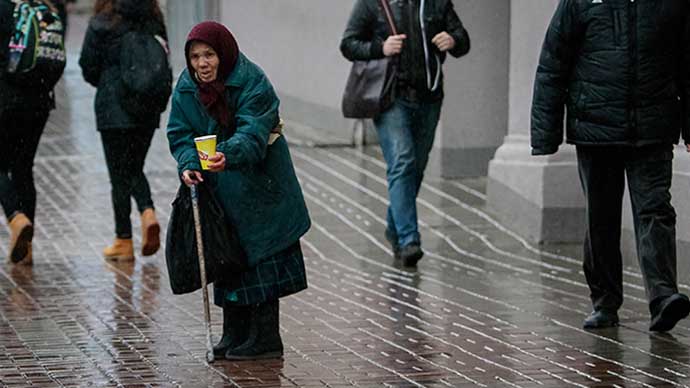
Ukraine poverty
Would additional measures against Crimea be a possibility to annoy Russia and keep Western money flowing?

The USA and EU have put Crimea already under one of the toughest embargoes in the world. Almost all trade, transport links, and banking transactions have been blocked. The sanctions regime is in fact much harsher than the one on Russia and comparable to the embargo imposed on Cuba, Iran, or Sudan.

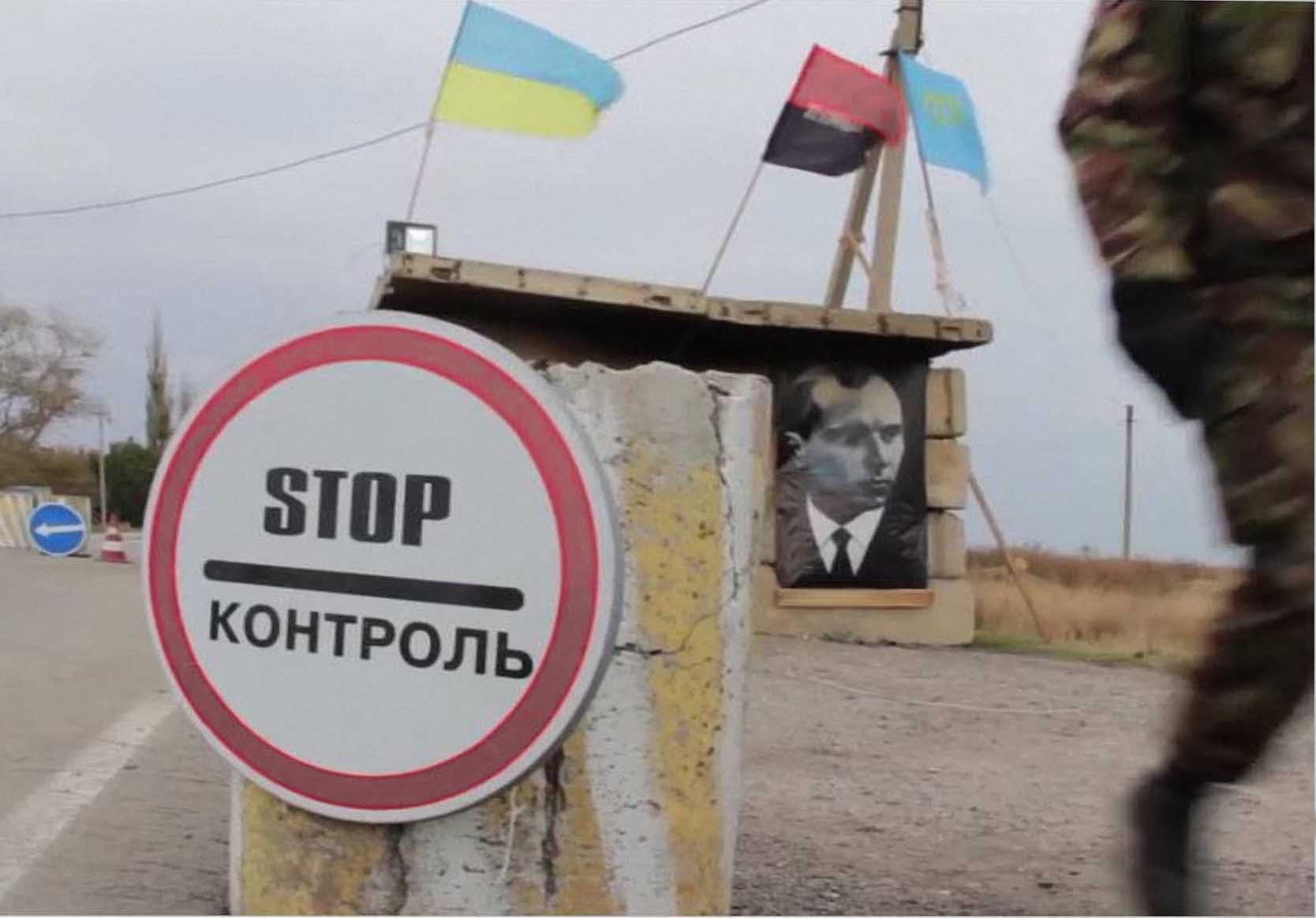
Rail and bus communications with mainland Ukraine have been cut off. The main source of water for the peninsula, the Northern Crimean Canal, is closed, depriving farmers of irrigation for their fields. Since September 21 activists from Pravy Sektor and Crimean Tatars loyal to Kiev are blocking the Ukraine-Crimea road and try to prevent the passing of all cargo transport.
Bandera checkpoint Crimea
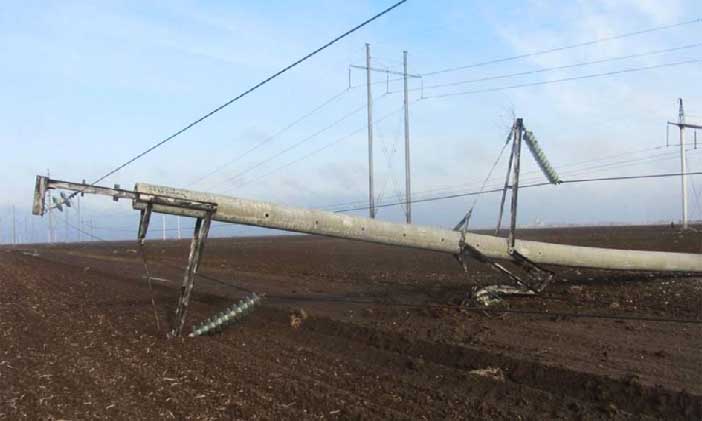
Electricity is transferred to Crimea via four transmission lines in Kherson oblast. Power supplies until now worked, though transmissions from Ukraine were intermittent, with widespread blackouts over the New Year holiday. 

When saboteurs blew up electricity pylons and knocked out two power lines in the night of November 20, Crimean authorities warned of possible shortages, but next day the remaining two lines for Crimea were disconnected. Since November 22 no electricity reaches Crimea and 1.9 million people are left partly or fully without electricity. 

The Crimean authorities have declared an emergency regime on the peninsula and have connected social facilities to backup power generators. Additional generators are sent to every region, but they all together can produce only 350 megawatt, while 800 megawatt would be needed.

Crimea’s First Vice-Premier Mikhail Sheremet about the emergency measures: “We have fuel reserves. No doubt, we understand that we depend on weather and the ferry [across Kerch Strait] to some extent. But nonetheless we can work calmly during 30 days.”
Crimea electricity 2
Russia has offered help to Ukraine for repairing the destroyed electricity pylons, but the offer was turned down. There is no urgency on the Ukrainian side and the repair works were delayed and are hampered by Crimean Tatar and Pravy Sektor militants who proclaim that they are taking the area “under protection.”

The Pravy Sektor and Crimean Tartars have not claimed responsibility, but photos of a destroyed electricity pylon with a Crimean-Tatar flag hanging on it have been posted online.

Russia has ceased coal shipments to Ukraine in response to the breakdown of the electricity supply to Crimea. This was stated by Verkhovna Rada deputy Mustafa Dzemilev after a meeting with President Poroshenko.

“I will tell you honestly — and I spoke about this with the president — that a very difficult situation has developed. In connection with the termination of electricity, now Russia has stopped deliveries of anthracite, which means that seven power stations in Ukraine will cease work.”

It remains to be seen who will suffer most.

Further reading:

16.11.2015

Dropping bombs in self defense


Bombs are weapons of mass destruction, and even the “smartest” bombs will kill indiscriminately, will kill not only the targeted villains, but also all humans and fellow animals mingled with them. For this reason one should be careful in justifying or even praising a bombing campaign and other military actions where living beings are shredded into small pieces of flesh or burned to ash. For the innocent victims it doesn’t matter if the bombs were dropped from an US-American, a French, a Saudi Arabian, or a Russian plane.

The quote “violence only begets more violence” in its many variations is attributed to the Bible and to some famous people, including Matin Luther King. Has it lost its meaning, has it been forgotten, has it been disproved?

Ryan O’Neill  Everything left

How selective solidarity and sympathy aids a jingoistic foreign policy

On Sunday evening, the first news reports started to come through that France had conducted its largest bombing campaign to date against the IS stronghold Raqqa, Syria. The Guardian referred to Raqqa as an “IS bastion,” and according to French foreign minister Laurent Fabius, the decision to launch such “massive, retaliatory airstrikes” was an act of self-defense, The airstrikes followed Friday’s terror attacks in Paris which left 129 people dead.

Speaking on the first day of the G20 summit in Turkey, Laurent Fabius claimed that:

“France has always said that because she has been threatened and attacked by Daesh (IS), it would be normal that she would react in the framework of self-defense. That’s what we did today with the strikes on Raqqa..we can’t let Daesh act without reacting.”

Aside from drawing attention to the carefully selected language of war, deliberately used by elements of the mainstream media in events such as these, it is important to thoroughly consider the public approval to these claims of self defense and the environment that gives the claims such weight.
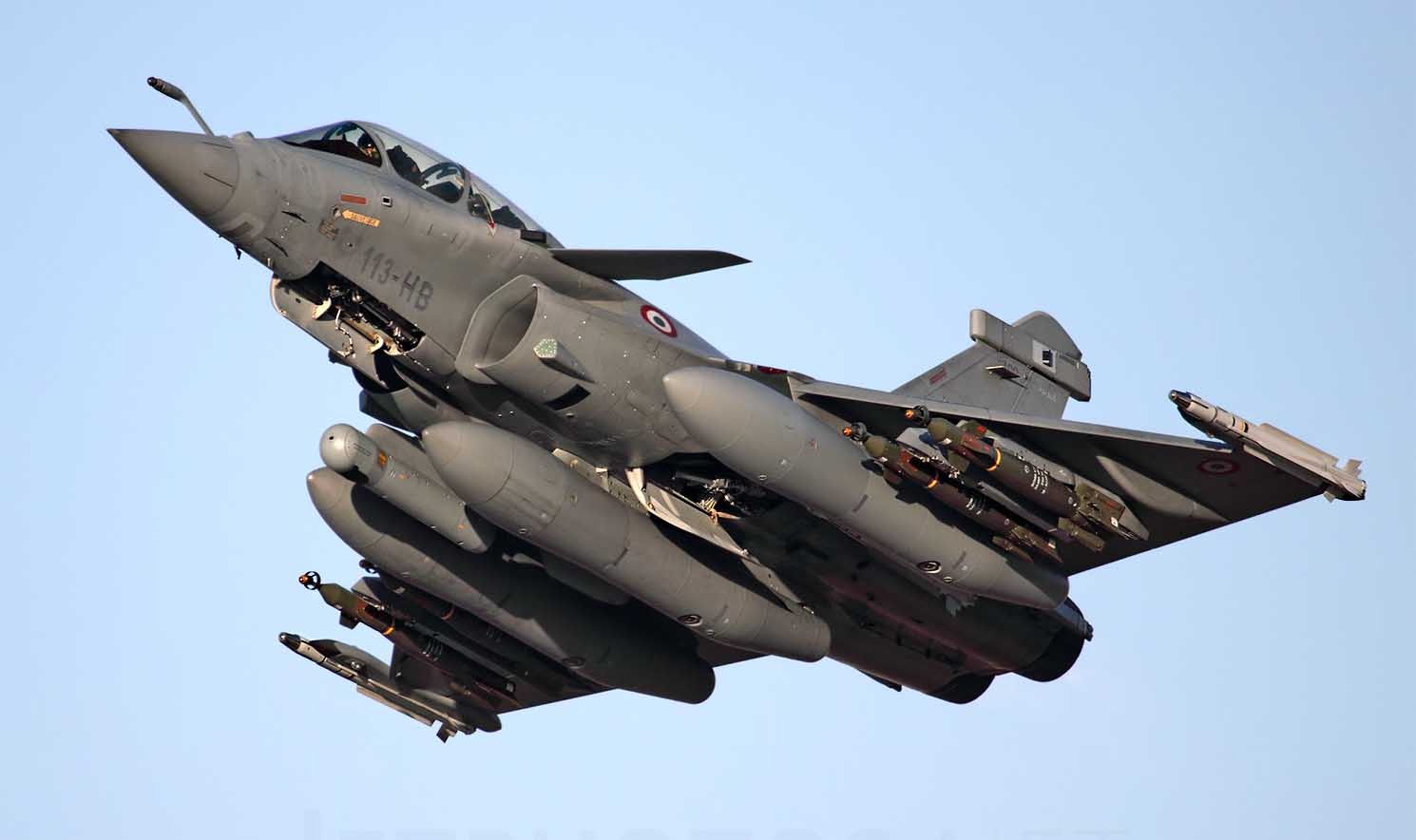
rafale fighter jet 2
Over the weekend following the Paris attacks, hashtags to pray for Paris were everywhere on social media and Facebook gave users the opportunity to cover their profile pictures in the colors of the French flag. Without falling into the sickening diatribe and ideological battles of the nitpicking left, it is important to understand that with France using the narrative of self defense to justify a violent, ongoing bombing campaign, the public has inevitably fallen lockstep in an alliance, that although perceived as defensive or sympathetic by those who make such gestures, can easily appear offensive to others. At the current time of writing, massive portions of social media from Facebook to Twitter are awash with the same flag that don the jets dropping bombs on a city of 200,000 people. A city that was once home to over a million Syrians, most of whom had to flee and whose lives have been destroyed not only by IS but by a war that foreign powers, including France, have been massively instigating.

The day before the events in Paris, 43 people were killed in an IS attack in Beirut and an IS suicide bomber killed 18 people in Baghdad. The reaction to these tragic events however contained very little of the sentiments of solidarity and sympathy to the victims of the attacks in Paris. A predictable response to such selective grief has inevitably taken centre stage however and not only do we have French flags covering social media but a new army of online Europeans taking it upon themselves to decide which victim is more deserving of victimhood and whether someone has the right to grieve depending on their past displays of grief to other tragic events. Various political groups or individuals are engaging in self righteous rhetorical questioning for the purpose of self gratification or even declarations of one being less racist or more internationalist in scope. In the public discourse consequently the tragic death of innocent people, whether in Paris, Beirut, Baghdad or indeed Raqqa, has become less important than the egos of whoever wishes to contribute an opinion. 

We must get past petty and divisive tribal ideological battles if we are to understand why certain parts of the public react to these tragic events in such an unqualified manner. If we seriously wish to create obstacles to the violent results of violent events, whether it is dropping bombs on Syria or setting fire to a refugee camp in Calais, we must understand the environment in which these power relationships take place. The public perception to a specific event is shaped by a public discourse that links language, institutions, and practices. Only by deconstructing this relationship of language, institutions, and practices can we begin to understand the divisive structures that make such selective grief possible and even inevitable. For instance, just as Raqqa is described as an “IS stronghold”, Bourj el-Barajneh, the predominately Shia suburb of Beirut that IS attacked on Thursday was described in the press as a “Hezbollah stronghold.” Such language takes away the humanity of the innocent victims of the IS attack and gives the impression of the event as one which has taken place in an ongoing violent war between Muslim groups, far away in the battlefield of the Arab world. The purpose of this is to sow the idea of difference, the idea of us and them, Western values and Muslim values, here and there, and if such a conflict spills over into our world, it has less to do with the violent foreign policy of our governments and more to do with the Muslims who have come here, bringing “their” violence with them.

As long as this divisive discourse is prevalent in our narrative, increased surveillance and other draconian practices of the security services become a much more pressing issue than the need to question the foreign policy of Western governments that have long been exporting war and conflict and instigating wars throughout the Middle East, Africa, and Asia. Following 9/11, and even much earlier to a lesser degree, Islamism had been “radicalized” through surveillance. Since all racisms are socially and politically constructed rather than resting on the reality of any biological race, cultural markers associated with Islamism (forms of dress, languages, etc.) have become racial markers which indicate people supposedly prone to violence and terrorism, justifying a whole range of surveillance and criminalization, from arbitrary arrests, indefinite detention, deportation, torture, solitary confinement, the use of secret evidence, and convictions for crimes that “we Westeners” would not be jailed for, such as speech, donations to charitable organizations, and other acts considered material support for terrorism. These racial underpinnings also help to sustain the foreign policy objectives of the USA and Europe as the vast death toll in Afghanistan, Iraq, Pakistan, Somalia, Yemen, Libya, Syria, and elsewhere could not be sustained without the dehumanization of its Muslim victims. Racism at home goes hand in hand with colonization abroad.
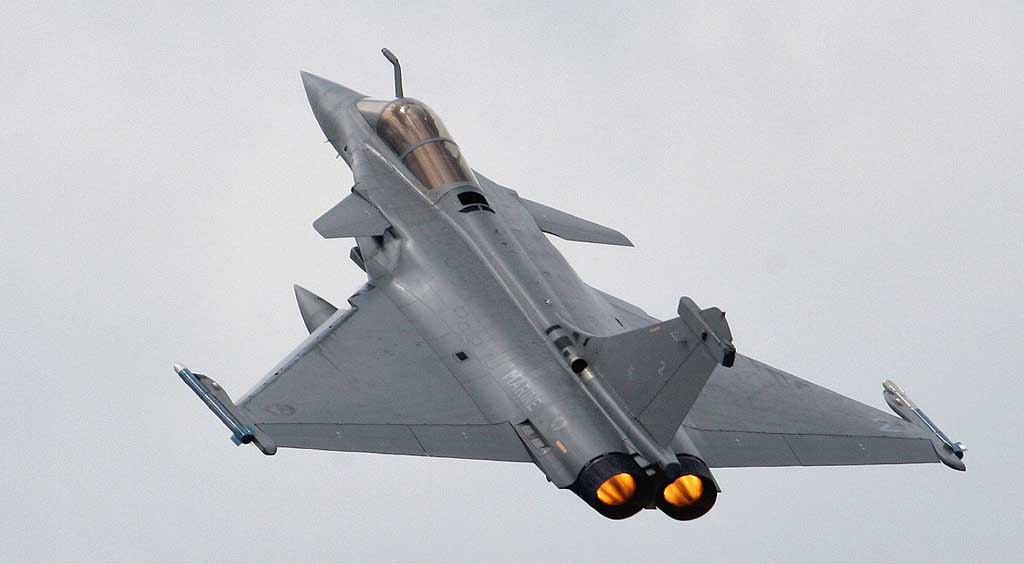
rafale fighter jet 1
Laurent Fabius was right when he said, that France could not let IS act without reacting, as that is an inevitable feature of the divisive discourse we have created and maintained. As long as this divisive discourse keeps us in a constant state of war, a war that now has a tangible enemy, or at least a collective label to associate with terrorism, every action requires a reaction. Repeated standoffs though will not only serve to make decision makers more jittery but will prepare European populations psychologically for more war. However, as we can see throughout history, each crisis leaves behind resentment from those who feel they have been the ones to back down, or those who have been on the receiving end of new security measures in response to such crises. Both of these psychological responses play into the hands of radical elements which will inevitably amplify such resentment and make it more difficult to back down or display caution when the next crisis takes place. In the first quarter of this year following the attacks on Charlie Hebdo, attacks on Muslims in France increased by 500 percent and are now already three times as much than in 2014.

The men, women and children that will be killed in their homes this week from French bombs in Syria are no more willing combatants in a war than those watching a rock concert in Paris were, but as the bombs from French planes rain down on Syrian homes, like they did in Libya or Mali, draping ourselves in the flag of France, no matter if ignorant or well intentioned, will inevitably make the divisions of this war ever deeper. As long as we are unquestioning and complicit in the discursive formations that use racial prerogatives to justify our own violence, we render ourselves to what Jean Paul Sartre describes as “half victim, half accomplice,” when our violence inevitably returns.