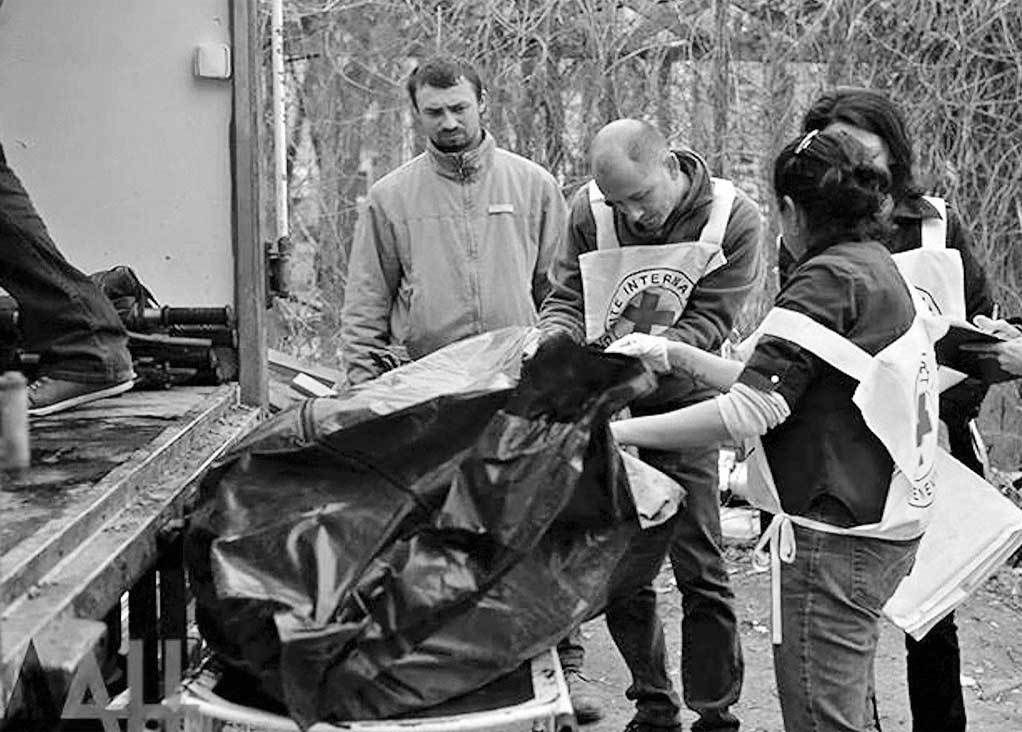
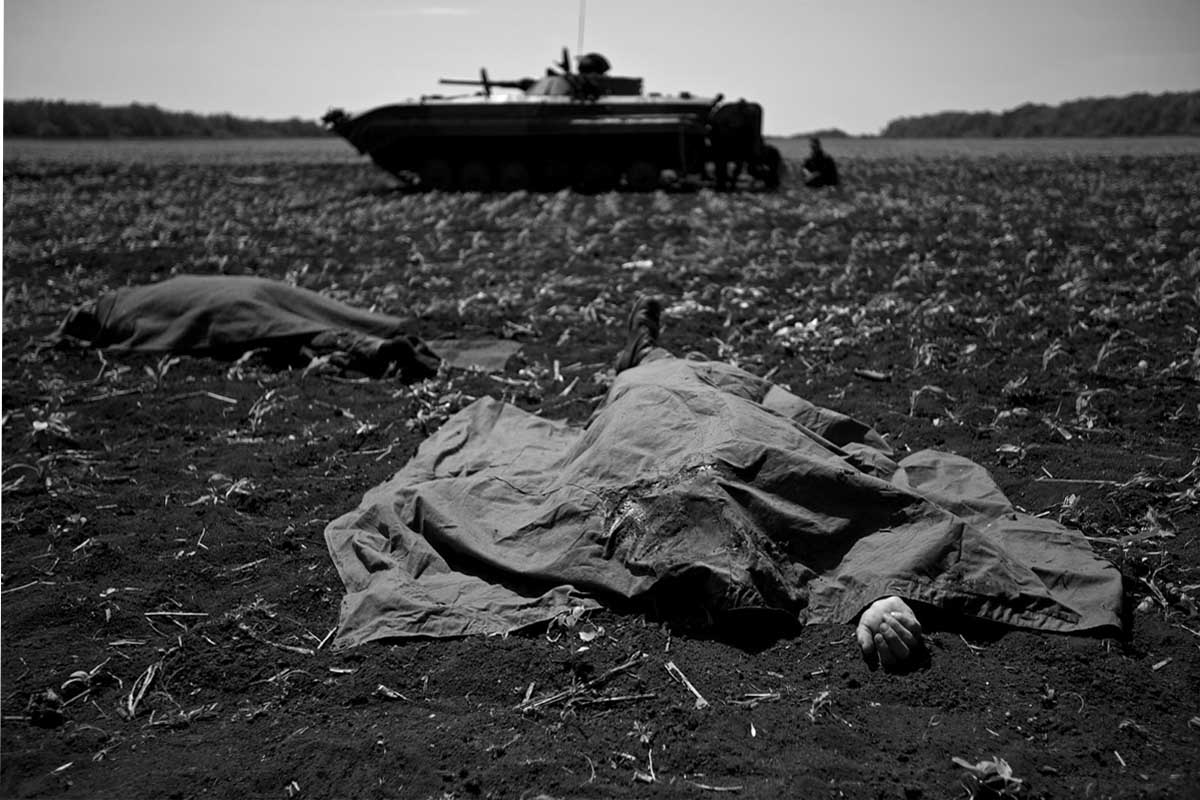
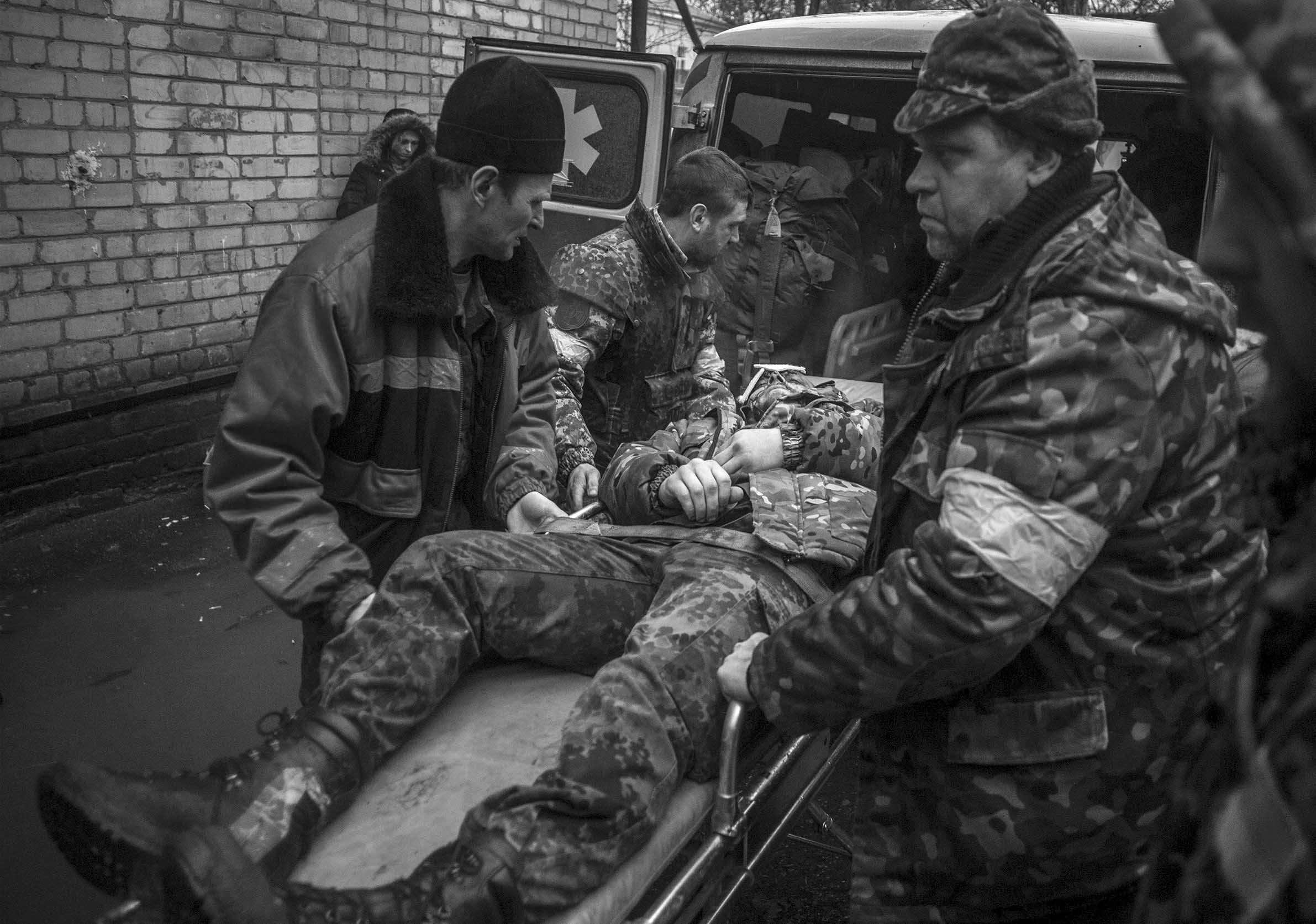
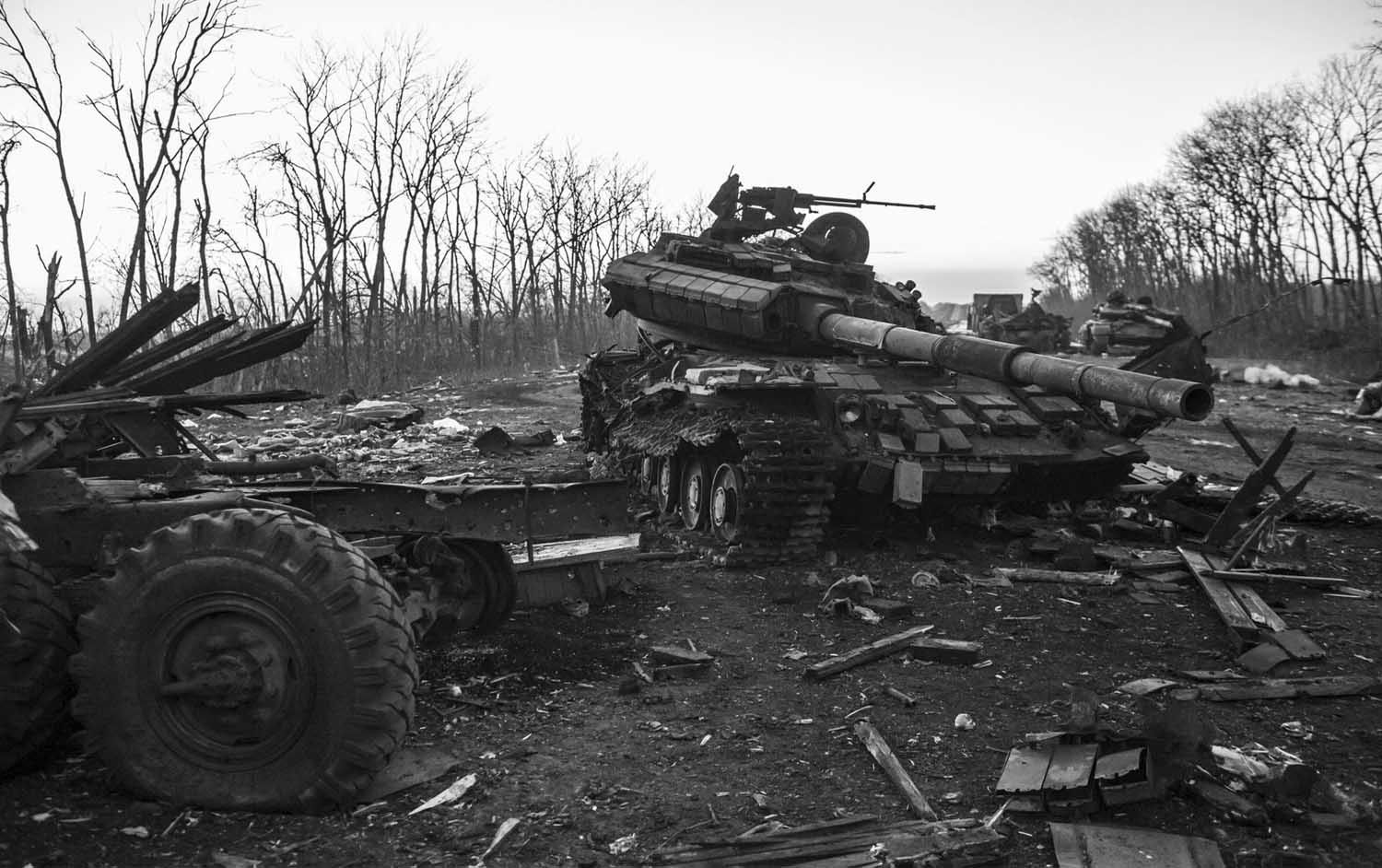
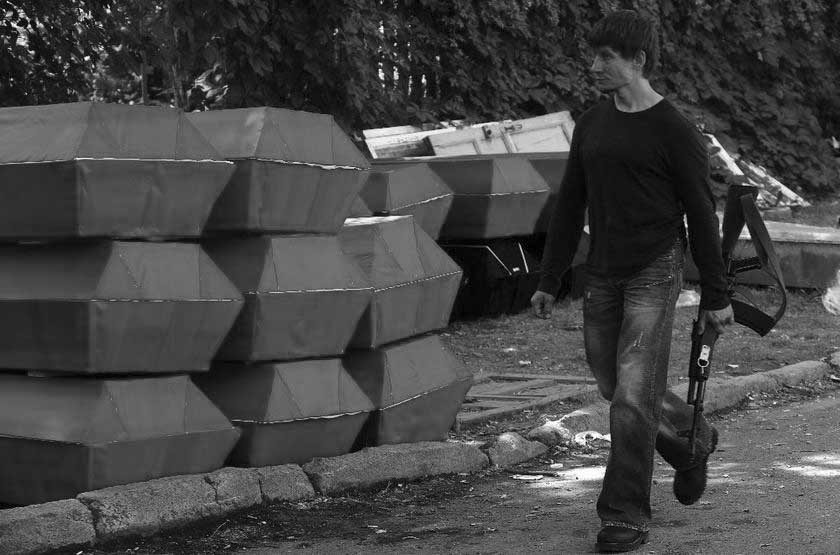
Greek has dominated the news while the slaughter in Syria, Iraq, and Yemen went on unabated and yet ignored by mass media.
Reports signal that the Jordanian government is eyeing a security zone in southern Syria to give safe haven to refugees and rebel groups that are seeking to overthrow Syrian President Bashar al-Assad. Turkey, too, wants to create a buffer zone on its border and is considering sending thousands of troops into Syria to prevent the Kurdish PYD/YPG, which Ankara considers a national threat, from seizing more territory. Until now the Turkish military has not been supportive and it is not clear if Turkish President Erdogan can proceed with this plan.
The USA and Turkey have agreed to create a de facto ‘safe zone’ in northwest Syria. Planned operations in the targeted area would stop short of meeting long-standing Turkish demands for a full-scale no-fly zone, but the area could eventually become a protected haven for Islamic rebels.
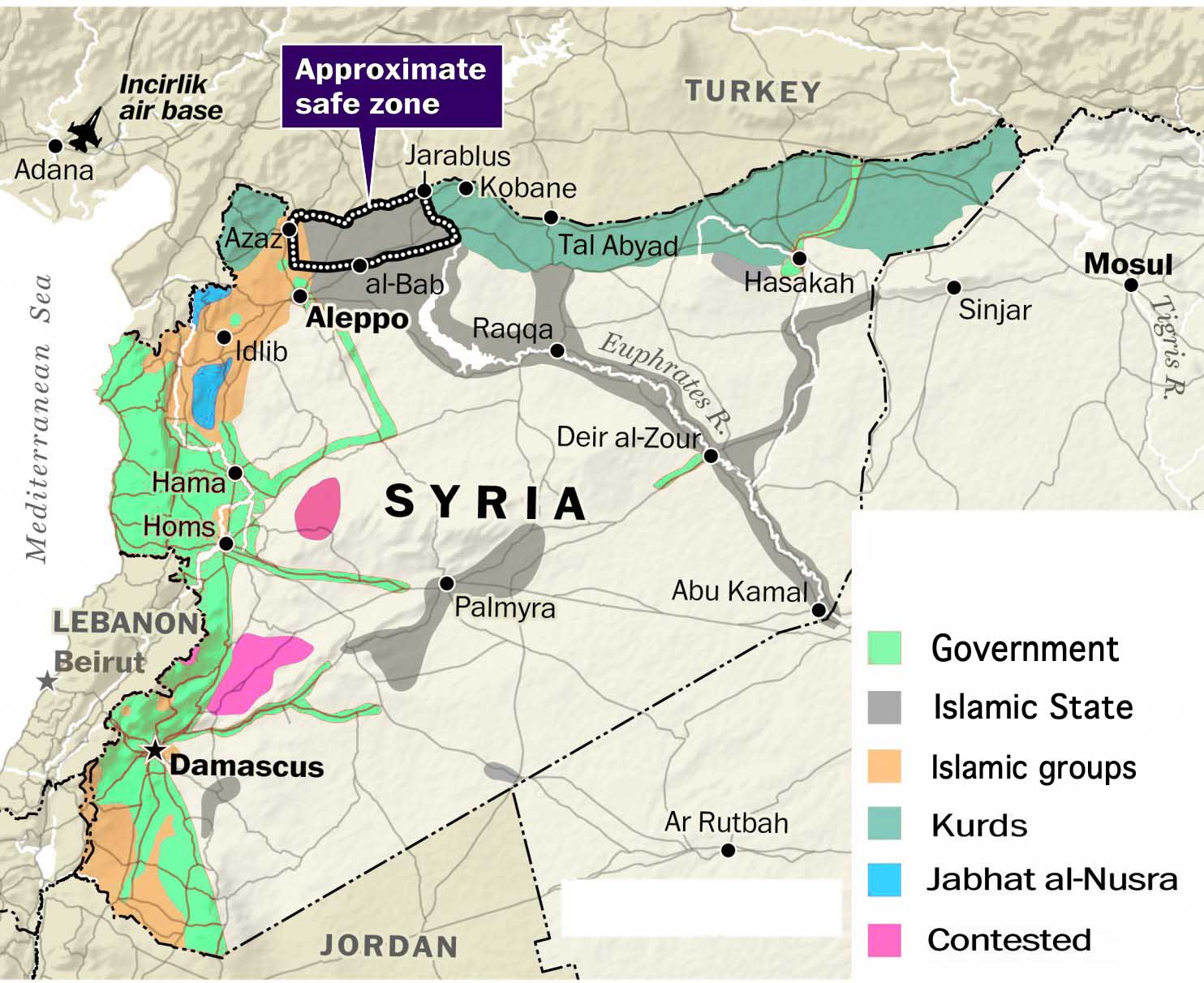
At least three Turkish F-16 fighters from the Diyarbakir air base bombed targets inside Syria, ostensibly targeting IS (Islamic State) fighters but more likely targeting Kurds. In Iraq, Turkey bombed PKK facilities. Turkey’s military has also shelled Kurdish positions from across the border. The YPG reported that Turkish tanks hit its positions in Zur Maghar in Syria’s Aleppo province, wounding four fighters and several villagers. Zur Maghar lies on the border with Turkey, east of the town of Jarabulus, which is held by IS.
Turkish police in Ankara dispersed hundreds of Kurdish activists who gathered to protest the bombardments, and arrested 33. More than thousand persons have been detained by Turkish police for alleged ties to IS. Kurdish activists maintain that most of the arrestees are not IS sympathizers at all but Kurdish Turks. In other words, the AKP government is using a feigned move against IS to actually crack down on the Kurds instead.
Seized USB drives from the compound of Abu Sayyaf, who was killed in a commando operation a few months ago, reveal high-level contacts between Turkish officials and lS leaders. A senior Western official said that “direct dealings between Turkish officials and ranking IS members were now undeniable.“
Iran, despite concerns about its own sometimes restive Kurdish minority, has been strongly backing Iraqi and Syrian Kurds against IS, which regards Shiites and most Kurds as mortal enemies. Iranian military and intelligence advisers have been active in Kurdish areas in both Iraq and Syria.
The USA until now has managed to train not more than 60 individuals to fight IS in Syria and the bombing campaign is ineffective and rather a show for Western media to make it easier of further obscuring the machinations of Western agencies and the true origins of Islamic terrorism.
Syrian President Bashar al-Assad admitted in an interview that the Syrian Arab Army lacks manpower and had to cede some areas to Islamic insurgents in order to hold onto other regions deemed more important.
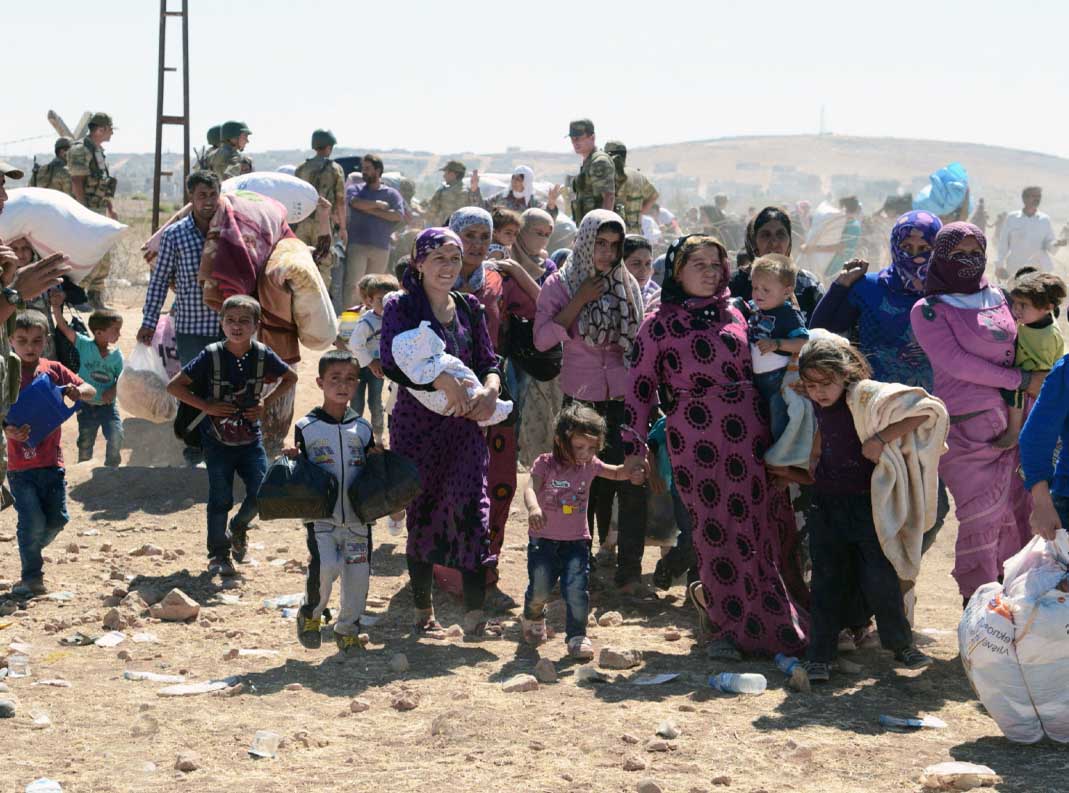
The cold war slogan “better dead than red” has become reality for 220,000 Syrians, another four million Syrians are refugees in neighboring countries. They are for sure glad to have escaped the clutches of the secular and socialist BA’ATH regime in Damascus. 7.6 million Syrians are internally displaced, mostly crammed into government controlled areas.
US democratization efforts are not always going along smoothly.
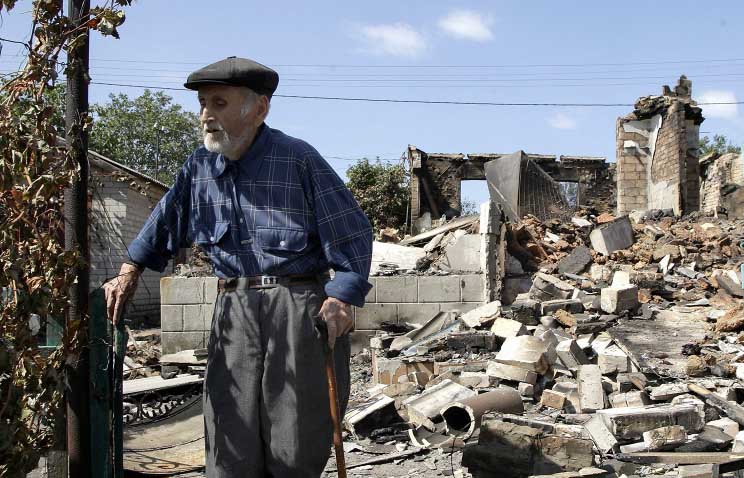
The Ukraine is stumbling on, and despite running out of cash, the economy has not collapsed. This can only be explained by the fact, that nearly 70 percent of Ukraine’s economy is informal and based on barter, neighborhood help, and subsistence. The national Hryvnia is replaced by Euros, Dollars, and all kind of counter currencies.
A third of Ukrainians want to leave the country (similar to Latvia, another neo-liberal success story, where a tenth of the population already have left their homeland). But Ukrainians are not welcomed in Western Europe and the EU has created a “cordon sanitaire,” summarily rejecting visa applications and asylum requests. To prevent Ukrainians from “voting with their feet” is in the interest of both the EU and the Poroshenko regime, because 1) a Ukrainian nation without people would be not a good role model for further regime change projects, 2) a Ukrainian regime, even a strongly pro-Western one, bereaved of its subjects would be useless, 3) the EU has an unemployment problem which could lead to social unrest and political volatility. Moldova, Romania, and Latvia already provide more than enough cheap laborers to keep the EU labor unions quiet and enough sex workers to keep EU natives motivated.
A UN report estimates that a third of the Ukrainian population will be in poverty by the end of the year. Even the World Bank, optimistic as it tries to be, states that the economy is disappearing. Odessa’s new governor Mikhail Saakashvili (Georgia’s ex-president, sought for corruption charges in his native country) says that it will be 20 years before the economy returns to the pre-Maidan state.
Another UN report says Russia leads the world in asylum requests, the vast majority of which are from Ukraine. 172,000 Ukrainians have applied for asylum in neighboring countries, including more than 168,000 people in Russia. A further 149,000 applied for other forms of legal stay in Russia.”
Cyberberkut hackers turned up a document from the Ukrainian Procuracy saying the so-called “volunteer battalions” are out of control and little more than criminal organizations. OSCE observers were told by the Pravy Sektor that the battalion had its own orders and did not fall under the command of the Ukrainian Armed Forces. A recent shootout in Mukachevo between a Pravy Sektor gang and local police, which left 3 people dead and 13 injured, resulted in the suspension of Mukachevo’s police chief by Interior Minister Arsen Avakov.
6,000 supporters of the Pravy Sektor were gathering on Maidan a few days later and leader Dmitry Yarosh announced plans to initiate a referendum on a vote of no-confidence in the Ukrainian authorities. Field offices will be organized in all regions of Ukraine to work on the referendum. Yarosh also announced at the rally that those Pravy Sektor centers will act as “revolutionary committees.”
The Pravy Sektor demands a return to war, but this is not happening because corruption and inefficiency in Ukraine remain, even in the war effort: Generals are accused of writing off equipment so they can sell it, Weapon repair facilities are turning out nonfunctioning pieces. Desertions and defections are increasing — more than one million men of military age are said to be hiding in Russia alone.
And yet, there are persistent news about a new wave of mobilization for the ATO and the latest expansion in forced recruitment all the way up to age 60 suggests one of two things:
1. The Ukraine is planning another offensive
2. The Ukraine believes that pro-Russian separatists are planning another offensive
OSCE observers finally confirm that Ukrainian forces are shelling civilian areas in Donetsk: “In both cases, the SMM was able to conclude the direction of fire to have been from the area of government-controlled Pisky (11km north-west of Donetsk) and Pervomaiske (17km north-west of Donetsk).”
Grexit and other venues of the ongoing global financial crisis have made clear an uncomfortable truth that the banking establishment has tried to obscure for generations: Bank deposits are not piles of money sitting in bank vaults to be drawn upon as needed, but unsecured loans being made to bankers who use that money to gamble on exotic financial instruments (CDSs, BDSs) that only further destabilize the financial system.
Urgent advice: Take the deposed money out of the bank as soon as you are able, as long as you are able. Can one really believe after what happened in Cyprus and Greece that the money is insured and safe from being snatched in the case of a “bail-in?”
Sadly, Greece has unconditionally surrendered and has seized to exist as an independent country. The conclusion of “negotiations” with the “Troika” (EU/ECB/IMF) was reminiscent of the Munich Dictate in 1938.
Greece’s top spokesman Lefteris Kretsos said on CBC: “Austerity is bad but bankruptcy is much worse,” and named five reasons why the deal went down the way it did:
“First, we don’t have an efficient and effective public administration to deal with emergencies. Secondly, the Greek people were not informed about what a transition to a new currency means. Thirdly, we did not have enough reserves in our banks to sustain them. And finally, we did not have support from other economic blocs or countries that could sustain Greece in the midterm or in the case of going back to the country’s previous currency, the drachma.”
It has to be seen if the Left Block in Portugal and Podemos in Spain will follow Syrizas example or will finally stand up to the EU-masters. Italian comedian-turned-political activist Beppe Grillo calls for a nationalization of Italian banks and an exit from the Eurozone. His “Five Star Movement” has been rising steadily in the polls and currently enjoys the support of 26 percent of voters. Right wing anti-euro parties will also surely see increased popularity.
http://www.telegraph.co.uk/finance/economics/11758853/Why-Greeces-ritual-humiliation-wont-kill-off-Europes-revolutionary-Left.html
http://www.telegraph.co.uk/finance/economics/11758853/Why-Greeces-ritual-humiliation-wont-kill-off-Europes-revolutionary-Left.html
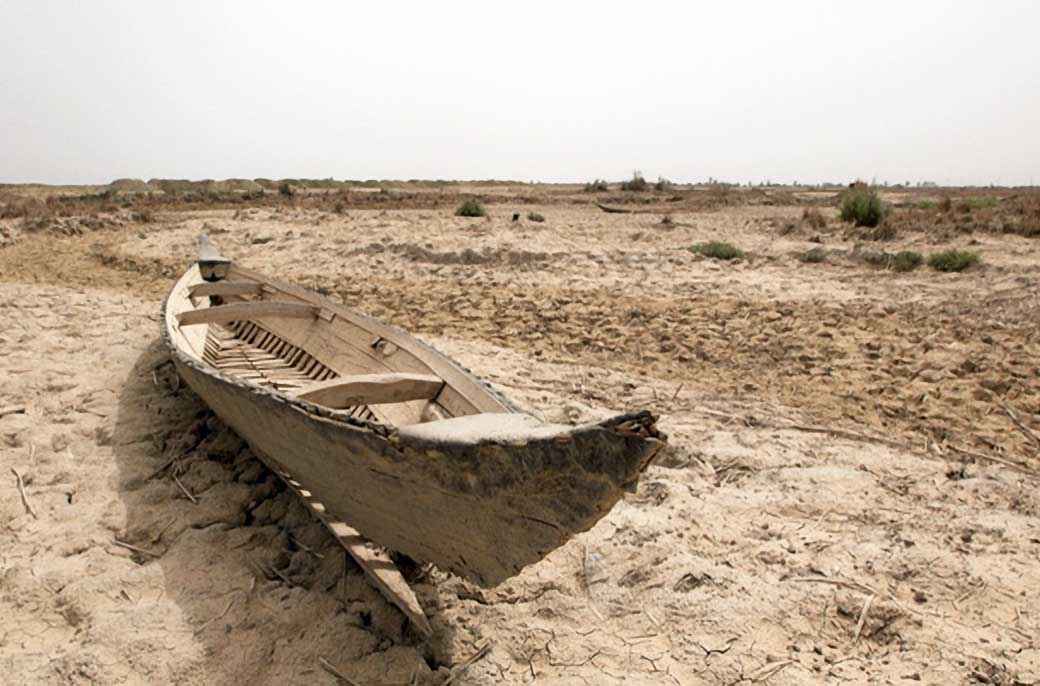
Blistering heat and the statical data which tells that five month of this year were the hottest ever recorded have climate change deniers make disappear. They will come out from their caves in late fall at the earliest.
The heat wave has kept me busy, because I had to water the plants in the garden all day to keep them from drying and dying. Irrigation was time consuming and costly, because the rain barrels (containing 2,400 liter all together) were soon empty and I had to use municipal water. 9 of my (approximately) 160 blueberry bushes died because of the heat but I have already replaced them. I planted the new bushes only in shadowy areas.
I was busy for up to six hours only with irrigation. This is the explanation for the longest silence this blog has ever seen. I intend to keep posting but the garden has preference.
Climate change is real but until now nature can adapt. The vegetation gradually becomes more mediterranean. The forest is very dry and wildfires will become a danger in the coming years. At the moment forest fires are raging in not too far away Croatia and Bosnia, illustrating the frightening prospect that one day my subsistence gardening project could go up in flames.
There are a few upsides of the warming world:
Grapevines love the increased sunshine and temperatures. There are 11 plants who all carry substantial amounts of grapes and in fall I will have a whole freezer filled up alone with grapes. The biggest plant and three younger plants share a huge pergola and I’m constantly constructing new trellis out of aluminum pipes and profile bars to accommodate the fast growing branches of the grapevine plants.
Strawberry yield was extraordinary and blueberries will be the same despite the heat related losses. Tomatoes are doing very well and many pumpkin fruits the size of (European) footballs are ready to harvest. There will be about 100 pumpkins but I will have to give away most of them to friends because they rot fast and until now I have not found a method to preserve them longer than till January.
I will not deepfreeze pumpkins because all freezers will be full with berries. I bought a fourth freezer which is now completely full with strawberries and blueberries. Another freezer is slowly filing up with the remaining blueberries, gooseberries, and jostaberries. I got a load of organic apricots from a friend and have to deepfreeze most of them too. My own apricot trees were only planted last year and they have no fruits yet. The fruit trees in general are not doing well this year, but I have modest amounts of apples and plums. Even the peach trees, suffering from peach leaf curl, contribute a handful of fruits.
At the moment my diet is rich of raspberries and blackberries because freezing, canning, or making jam is not viable in their case.
Lemon balm and mint have reached the status of weeds and most plants have to be just cut and composted. Nothing to worry about, the cut herbs are valuable organic material and a good part of the herbs is spared and used to make tee with fresh green leaves plucked right from the garden.
Growing, harvesting, composting, this is the real renewable energy, using photo synthesis — the most efficient and environmental friendly variety of solar power. I’m not advocating industrial bio fuels, which are a scam, but locally and independently growing food and firewood is good.
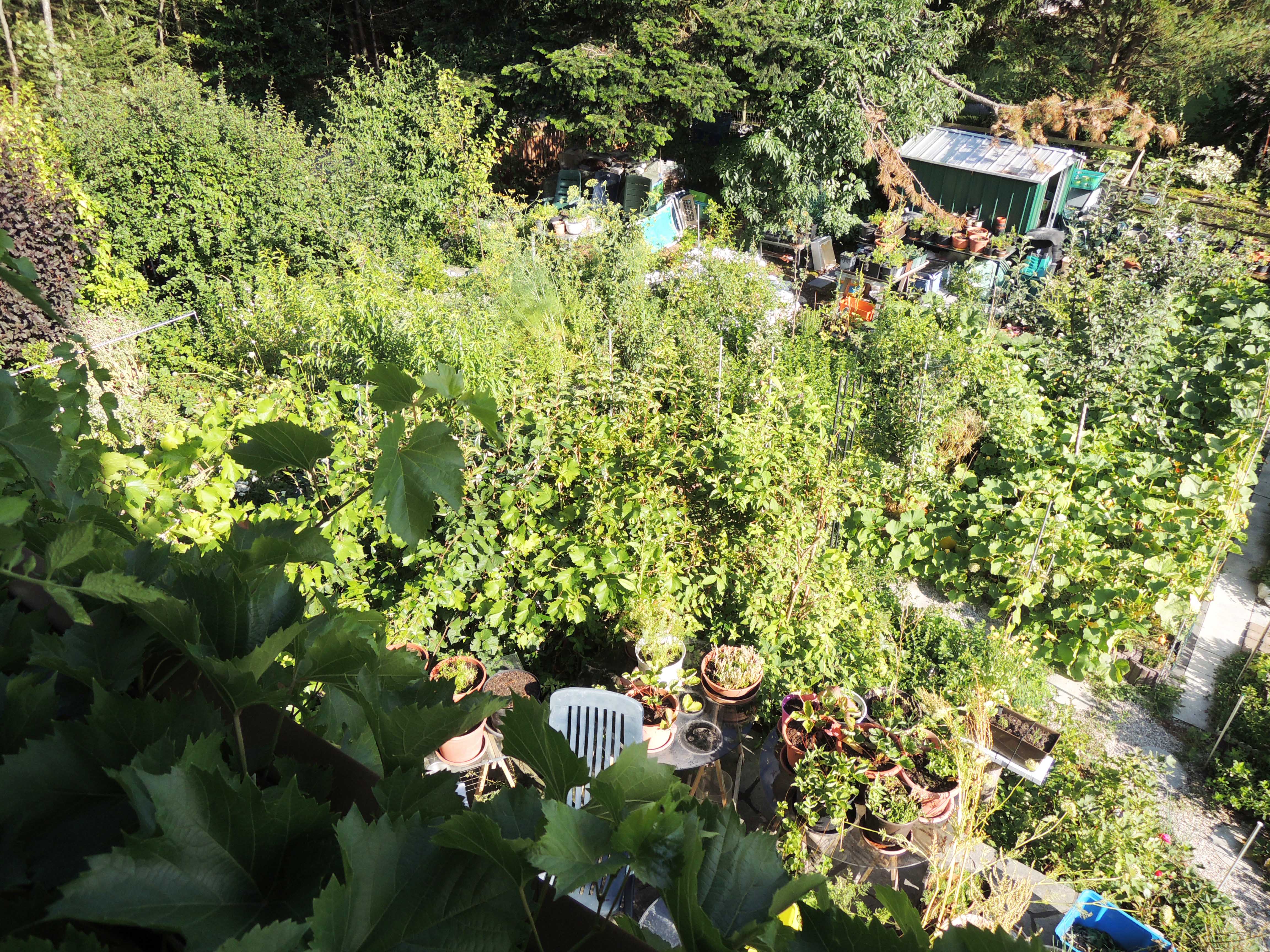
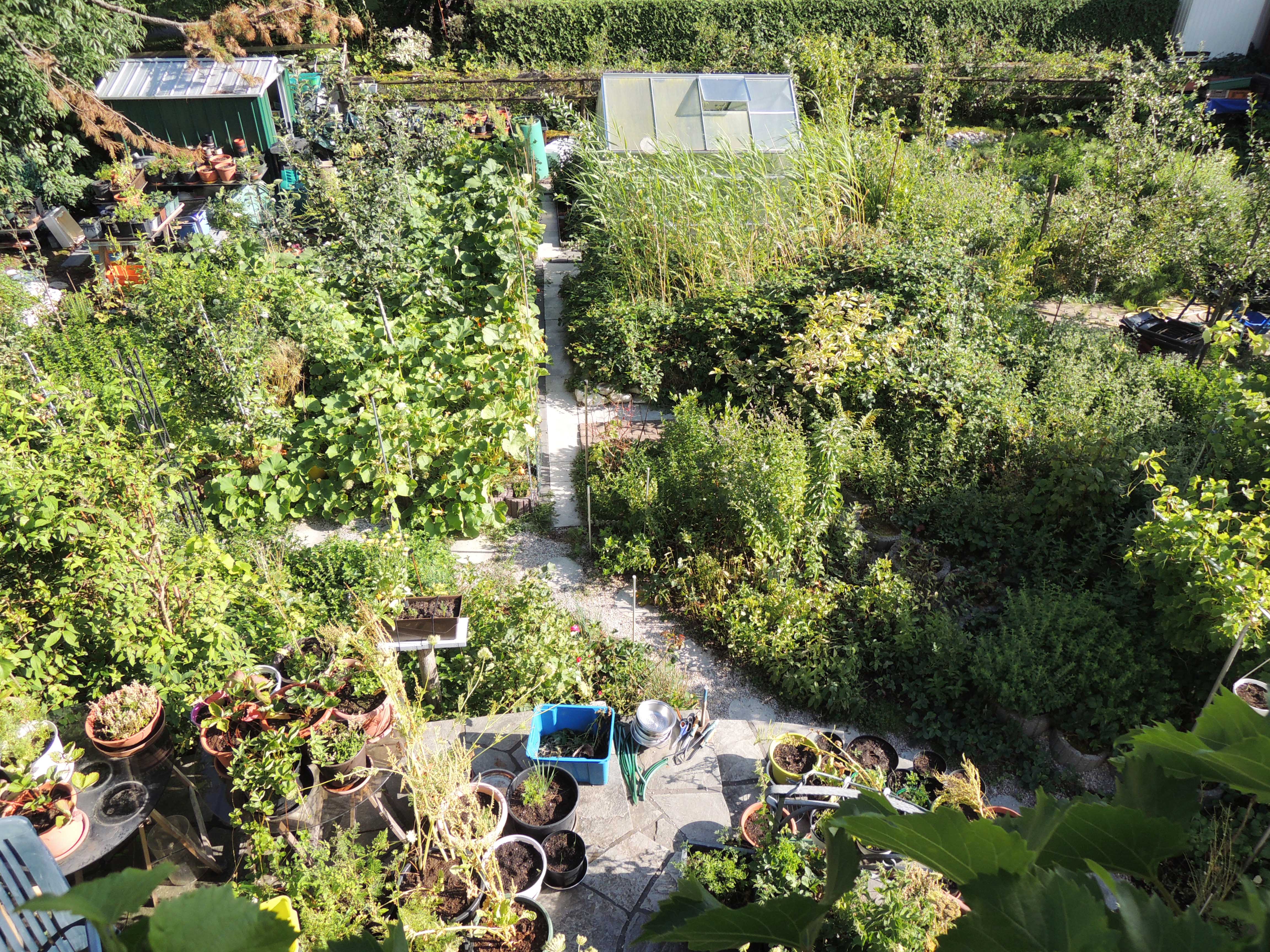
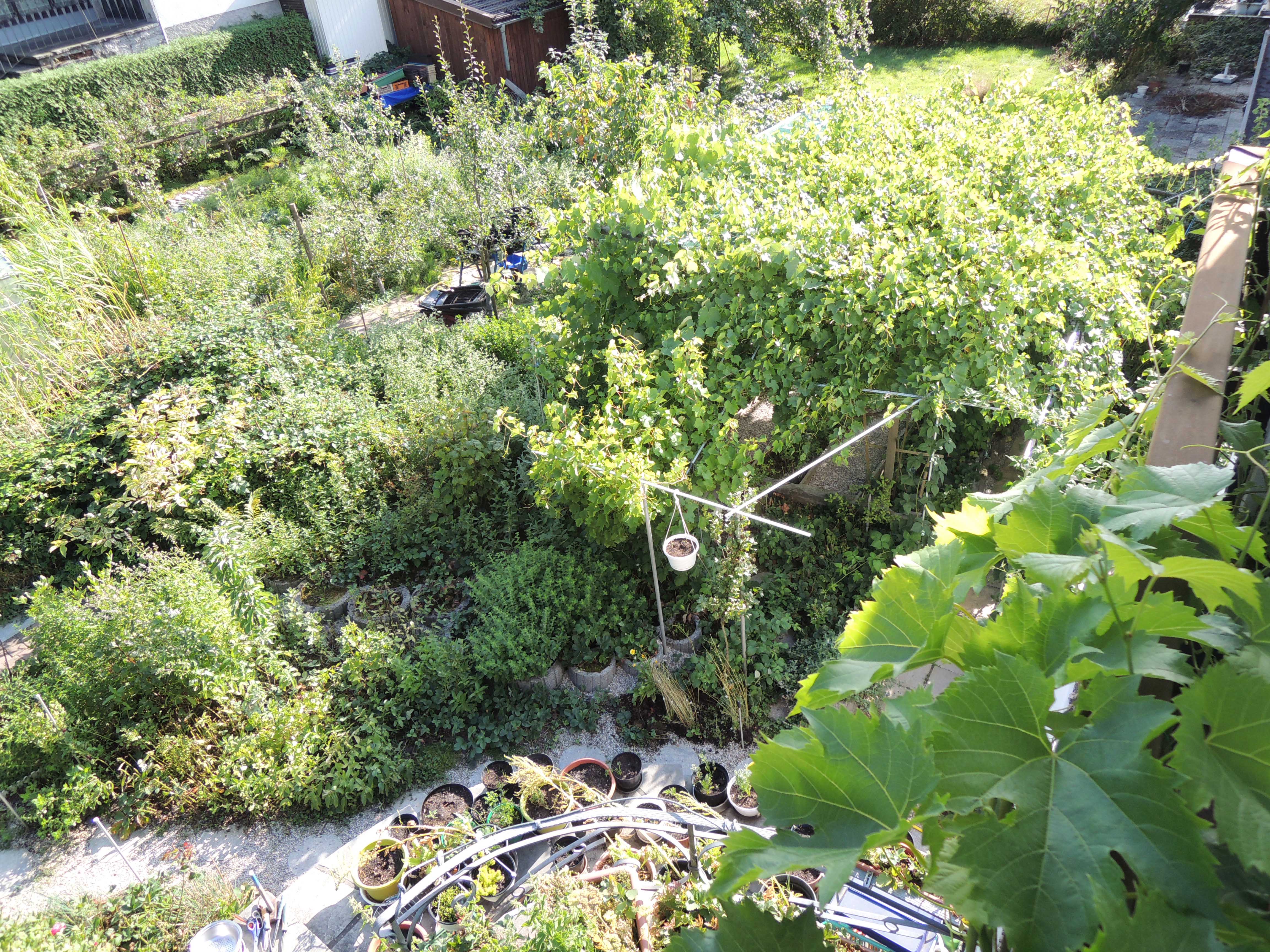
This is not even half of the garden, I juetst went up to the balcony to make a few pictures of the garden from there.
Amazon.com (which I profoundly dislike) reported revenues of 23 billion US$ for the last quarter, up 20 percent. Its stock market value is now higher than Wal-Mart’s. Ordering goods online and let it be delivered by post is not a bad idea, it saves time and energy. Decent co-op or community owned online-retailers should be supported.
https://www.coopathome.ch/
http://www.co-operative.coop/
https://www.coopathome.ch/
http://www.co-operative.coop/
Would be glad about further suggestions of co-op online retailers.
Ecological news:
http://www.theguardian.com/world/2015/jul/03/runit-dome-pacific-radioactive-waste
http://www.reuters.com/article/2015/07/01/us-france-nuclear-waste-idUSKCN0PB4TM20150701
https://agenda.weforum.org/2015/04/why-ukraine-should-move-away-from-nuclear-power/
http://www.motherjones.com/tom-philpott/2015/06/africa-indigenous-vegetables-superfood
http://www.motherjones.com/environment/2015/06/climate-change-medical-emergency
http://www.environmentalhealthnews.org/ehs/news/2015/jul/chemicals-obesity-oil-deepwater-horizon-soda-obesogen-fda
http://ehp.niehs.nih.gov/123-A174/
http://www.dw.com/en/global-ideas-infrastructure-africa-development-environmental-protection-poverty/a-18566109
http://www.bostonherald.com/news_opinion/local_coverage/2015/07/docs_wireless_devices_can_harm_pregnancies
http://touch.latimes.com/#section/-1/article/p2p-83876686/
http://www.independent.co.uk/environment/climate-change/society-will-collapse-by-2040-due-to-catastrophic-food-shortages-says-study-10336406.html
http://www.naturalnews.com/050411_Russia_GMOs_agriculture.html
http://www.washingtonpost.com/news/to-your-health/wp/2015/06/24/researchers-latest-obsession-the-stress-of-urban-noise-on-your-body/
http://www.livescience.com/51494-safer-plastics-phthalates-health-problems.html
http://www.vancouversun.com/technology/Seabird+population+down+cent+around+world+researchers/11200446/story.htmlWho needs birds when the mass production of cheap drones has already started? The sky will not be empty even without birds.
http://www.theguardian.com/sustainable-business/2015/jul/09/bottled-water-shipped-halfway-round–world-madness
http://neweconomicperspectives.org/2015/07/climate-defeatism-is-as-much-a-threat-to-human-survival-as-climate-denial.html
http://www.noaanews.noaa.gov/stories2015/071615-international-report-confirms-2014-was-earths-warmest-year-on-record.html
http://www.theguardian.com/world/2015/jul/03/runit-dome-pacific-radioactive-waste
http://www.reuters.com/article/2015/07/01/us-france-nuclear-waste-idUSKCN0PB4TM20150701
https://agenda.weforum.org/2015/04/why-ukraine-should-move-away-from-nuclear-power/
http://www.motherjones.com/tom-philpott/2015/06/africa-indigenous-vegetables-superfood
http://www.motherjones.com/environment/2015/06/climate-change-medical-emergency
http://www.environmentalhealthnews.org/ehs/news/2015/jul/chemicals-obesity-oil-deepwater-horizon-soda-obesogen-fda
http://ehp.niehs.nih.gov/123-A174/
http://www.dw.com/en/global-ideas-infrastructure-africa-development-environmental-protection-poverty/a-18566109
http://www.bostonherald.com/news_opinion/local_coverage/2015/07/docs_wireless_devices_can_harm_pregnancies
http://touch.latimes.com/#section/-1/article/p2p-83876686/
http://www.independent.co.uk/environment/climate-change/society-will-collapse-by-2040-due-to-catastrophic-food-shortages-says-study-10336406.html
http://www.naturalnews.com/050411_Russia_GMOs_agriculture.html
http://www.washingtonpost.com/news/to-your-health/wp/2015/06/24/researchers-latest-obsession-the-stress-of-urban-noise-on-your-body/
http://www.livescience.com/51494-safer-plastics-phthalates-health-problems.html
http://www.vancouversun.com/technology/Seabird+population+down+cent+around+world+researchers/11200446/story.htmlWho needs birds when the mass production of cheap drones has already started? The sky will not be empty even without birds.
http://www.theguardian.com/sustainable-business/2015/jul/09/bottled-water-shipped-halfway-round–world-madness
http://neweconomicperspectives.org/2015/07/climate-defeatism-is-as-much-a-threat-to-human-survival-as-climate-denial.html
http://www.noaanews.noaa.gov/stories2015/071615-international-report-confirms-2014-was-earths-warmest-year-on-record.html
Economic news:
http://www.prospectmagazine.co.uk/blogs/jonathan-derbyshire/interview-paul-masons-guide-to-a-post-capitalist-future One must not share Mason’s analytic conclusions and predictions, some of which are implausible, unconvincing, or wishful thinking. But a few gems here and there make this interview worth reading. Like for instance: “positive externality for Google is that it can see what we are searching for but we can’t see what each other are searching for. So it can now construct a monopolized business model on the basis of the secrets revealed by its data-mining.”
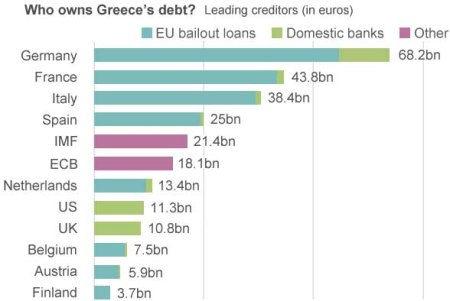 In Greece the banking closure alone was massively destructive and brought the Syriza government to its knees.
http://www.globalresearch.ca/greece-the-delphi-declaration/5458742
https://www.jacobinmag.com/2015/07/tsipras-varoufakis-kouvelakis-syriza-euro-debt/
Debt servitude is the basis of rentier capitalism. An empathetic society would help those who are in need, unconditionally providing all necessary means to overcome an emergency. If the received funds would be wasted, misappropriated, or stolen, the help would stop.
http://www.prospectmagazine.co.uk/blogs/jonathan-derbyshire/interview-paul-masons-guide-to-a-post-capitalist-future One must not share Mason’s analytic conclusions and predictions, some of which are implausible, unconvincing, or wishful thinking. But a few gems here and there make this interview worth reading. Like for instance: “positive externality for Google is that it can see what we are searching for but we can’t see what each other are searching for. So it can now construct a monopolized business model on the basis of the secrets revealed by its data-mining.”
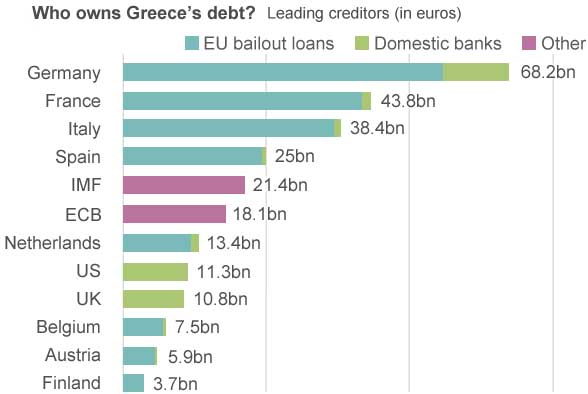 In Greece the banking closure alone was massively destructive and brought the Syriza government to its knees.
http://www.globalresearch.ca/greece-the-delphi-declaration/5458742
https://www.jacobinmag.com/2015/07/tsipras-varoufakis-kouvelakis-syriza-euro-debt/
Debt servitude is the basis of rentier capitalism. An empathetic society would help those who are in need, unconditionally providing all necessary means to overcome an emergency. If the received funds would be wasted, misappropriated, or stolen, the help would stop.
Greece was offered cheap loans by French and German banks for projects it didn’t need and was offered more money than it ever could pay back. This was similar to the sub-prime mortgage crisis in the USA which in 2008 nearly brought down the international finance system. When Greece got in trouble the concerns of the international money-masters were not about saving the Greek economy but about saving the banks and consequently 77 percent of the 207 billion Euros in the so-called “Greek bail-out” went to banks.
Greece should attempt to become more self-sufficient. This is difficult in a country which has been ecologically devastated since ancient times and cannot feed the people with the remaining agricultural land. Only a quarter of the land is cultivated because of poor soil, low precipitation, and the emigration of the rural community into urban areas or abroad. The agricultural labor force decreased from 1.4 million in 2000 to 1.2 million in 2010.
Greece is still a major EU producer of olives, cotton, tobacco, all crops which have a negative ecological impact. In 2010 38 percent of farms were specialized on olives. 37 percent of the cultivated land has to be irrigated.
Greece is demographically challenged, a fifth of Greeks are above 65. Lavish military spending is a big cause of Greece’s 360 billion Euros debt problem.
http://www.project-syndicate.org/commentary/greece-referendum-troika-eurozone-by-joseph-e–stiglitz-2015-06
Despite the “OXI” (No) vote of 61 percent Greece’s Parliament passed stringent austerity measures needed to secure a fresh bailout. The measures, which include spending cuts and tax increases, were approved by 229 MPs. Among a total of 149 MPs in Mr. Tsipras’s left-wing Syriza party, only 32 voted against the deal.
http://www.project-syndicate.org/commentary/greece-referendum-troika-eurozone-by-joseph-e–stiglitz-2015-06
Despite the “OXI” (No) vote of 61 percent Greece’s Parliament passed stringent austerity measures needed to secure a fresh bailout. The measures, which include spending cuts and tax increases, were approved by 229 MPs. Among a total of 149 MPs in Mr. Tsipras’s left-wing Syriza party, only 32 voted against the deal.

Imagine that members of Syriza, whose name translates as “Radical Left Coalition,” vote for hardcore neoliberal memes. This is a reflection of the success in organizing the economic and political order along neoliberal lines over the past 35 years. This deal is a total capitulation to the EU bureaucrats and a sellout of Greece’s remaining public assets to foreign corporations and equity firms.
Syriza didn’t make preparations for a return to the Drachma (which would have been a challenge, but not unachievable in a timeframe of a few month) and they didn’t stockpile essential goods (food, medicine). Syriza had no plan B and when the ECB shot down Greek banks the guys around Tsipras were helpless. The story is a bit more complicated of course and cannot be described in a few sentences, if one likes to get confused by details:
http://www.nakedcapitalism.com/2015/07/greeces-drachma-drama-why-planning-is-too-important-to-be-left-to-economists.html
To make things even more convoluted, despite a general agreement the bailout deal is not definitely done yet and there are many uncertainties:
http://www.nakedcapitalism.com/2015/07/greece-negotiations-already-starting-to-look-wobbly.html
http://www.nakedcapitalism.com/2015/07/greeces-drachma-drama-why-planning-is-too-important-to-be-left-to-economists.html
To make things even more convoluted, despite a general agreement the bailout deal is not definitely done yet and there are many uncertainties:
http://www.nakedcapitalism.com/2015/07/greece-negotiations-already-starting-to-look-wobbly.html
According to recent polls only 19 percent of the Greek population favor a return to the drachma. Thats it — let democracy take its course no matter what.
Greek’s are now described as lazy and unproductive by media pundits and notorious commentators, a necessary move to prevent their hard pressed and stressed out fellow EU workers of developing any sympathy for their plight.
“The time for singing and dancing is over!”
The proverbial easygoing Greek lifestyle, once cherished by tourists from around the globe, is now declared to be a hinderance, not compatible with diligence and industriousness. Why should Greeks be spared, if Latvians, Irish, Portuguese, Spaniards, Italians, and Romanians have to endure hard times?
But: if Greeks lived beyond their means, they didn’t it to a higher extend than the populations of other Western countries. Greece’s per-capita consumption of energy and vital resources is still a fraction of what the USA consumes.
One has to admit that accordingly US citizens face the probably toughest austerity measures of all Western consumer societies. Real earnings for the US middle class has fallen for decades and both husband and wife have to work hard to continue their accustomed middle-class lifestyle. Those with prestigious jobs (analysts, managers, specialists of every kind) often put in 12-hour days while millions of their less fortunate compatriots work 2 or 3 part-time jobs to make a living. Everybody has to be reachable every moment via smartphone by her/his employer or by important customers.
Why wages stall, US public services and social spending are cut in favor of military expenditures and tax favors for big corporations.
http://www.theguardian.com/business/2015/jul/24/greek-debt-crisis-great-greece-fire-sale
Calling the privatization of public property an austerity measure is misleading and a prime example how the use of euphemisms and the constant repetition of profoundly false assumptions is able to dumb down the artless population and make them accept even the most obvious deceptions and lies.
Calling the privatization of public property an austerity measure is misleading and a prime example how the use of euphemisms and the constant repetition of profoundly false assumptions is able to dumb down the artless population and make them accept even the most obvious deceptions and lies.
There are no examples that privatization increases the efficiency of public services or results in longtime benefits for society as a whole. Privatization means a loss of state revenue, means tariff increases, a decrease in quality of services and produced goods, lower salaries and worsening working conditions for the employees, and a deteriorating infrastructure because of cost saving measures (“cost saving measures” is the new euphemistic term for neglect and carelessness).
The Greek assets will be payed partly with the Dollars which the US-FED is creating and which are inserted into the financial system via big US banks. 1.37 trillion US$ in coins and banknotes are in circulation, but including money held in money market funds, savings accounts and CDs (certified bank deposits) there are about 11 to 12 trillion US$ in existence. This is fiat money, not backed by gold reserves or other assets, and yet, the Dollar is strong still because it is the worlds reserve currency (petrodollar) and is used for most trade exchanges.
A strong Dollar means that the USA can buy commodities cheap and sell high tech gadgets, IT services, and weapons for good value.
If the amount of 11 trillion US$ is nearly unimaginable, the US government debt of 18 trillion US$ is even more so. This mountain of debt is getting bigger and the increase is accelerating. This debt can never be repaid but no creditor will dare to challenge the USA thanks to US military might.
Some nations try to replace the US$ in bilateral trade (Brazil – Uruguay, China – Russia) or create Dollar free trade zones (BRICS, SCO, EEU). Some nations repatriate their gold reserves, suspecting financial shenanigans or preparing for turmoil in the global financial system (Germany, Austria, Netherlands, Belgium).
http://www.huffingtonpost.com/joseph-e-stiglitz/argentina-greece-default_b_7697838.html
http://sputniknews.com/columnists/20150629/1023985661.html
http://triplecrisis.com/the-slow-burn/ About the neoliberal experiment in Latin America.
http://journal-neo.org/2015/07/02/the-us-russia-economic-war-heats-up/
http://www.counterpunch.org/2015/06/29/putin-gobsmacks-uncle-sam-again/
http://www.huffingtonpost.com/joseph-e-stiglitz/argentina-greece-default_b_7697838.html
http://sputniknews.com/columnists/20150629/1023985661.html
http://triplecrisis.com/the-slow-burn/ About the neoliberal experiment in Latin America.
http://journal-neo.org/2015/07/02/the-us-russia-economic-war-heats-up/
http://www.counterpunch.org/2015/06/29/putin-gobsmacks-uncle-sam-again/
Imperial news
http://www.reuters.com/article/2015/07/23/us-usa-gmo-labeling-idUSKCN0PX17920150723
http://www.washingtonpost.com/blogs/wonkblog/wp/2015/07/24/there-have-been-204-mass-shootings-and-204-days-in-2015-so-far Gun deaths are expected to surpass automobile deaths in the USA this year.
http://www.workers.org/articles/2015/07/23/justice-for-sandra-bland/
http://www.reuters.com/article/2015/07/23/us-usa-gmo-labeling-idUSKCN0PX17920150723
http://www.washingtonpost.com/blogs/wonkblog/wp/2015/07/24/there-have-been-204-mass-shootings-and-204-days-in-2015-so-far Gun deaths are expected to surpass automobile deaths in the USA this year.
http://www.workers.org/articles/2015/07/23/justice-for-sandra-bland/
Imperial conquest news:
http://www.middleeasteye.net/columns/anglo-american-empire-preparing-resource-war-1170119289 Important.
https://electronicintifada.net/blogs/ali-abunimah/israel-seizes-gaza-bound-boat-act-piracy
http://www.middleeasteye.net/news/report-leaked-documents-show-israel-tried-sell-weapons-syria-oppositon-1500586222 Israel and Jabhat Al-Nusra – a perfect match (or: birds of a feather…)
http://www.telegraph.co.uk/news/worldnews/islamic-state/11716111/Inside-Kobane-How-Islamic-State-conducted-its-terrifying-killing-rampage.html Don’t let them fool you and don’t forget: IS = US.
http://awdnews.com/top-news/turkish-president’s-daughter-heads-a-covert-medical-corps-to-help-isis-injured-members,-reveals-a-disgruntled-nurse
http://news.yahoo.com/video-shows-mass-execution-ruins-syrias-palmyra-163424222.html
http://www.strategic-culture.org/news/2015/07/02/greek-crisis-awaits-other-nato-partners.html
http://www.unz.com/ishamir/russia-tit-for-tat/ This article contains many contentious and debatable statements (especially calling “everything is better than war” a soul numbing mantra) but it is nevertheless refreshingly different from Western junk journalism.
https://consortiumnews.com/2015/07/07/ukraine-merges-nazis-and-islamists/ The most logical step.
http://gordonhahn.com/2015/07/14/ukraines-neo-fascist-right-sector-preparing-a-revolt/
http://www.counterpunch.org/2015/06/19/in-the-usa-i-cannot-write/ A powerful text about the imperial mindset.
http://www.workers.org/articles/2015/07/18/iran-nuclear-free-but-u-s-sends-a-bombs-to-italy/
http://www.counterpunch.org/2015/07/23/72279/
http://www.middleeasteye.net/columns/anglo-american-empire-preparing-resource-war-1170119289 Important.
https://electronicintifada.net/blogs/ali-abunimah/israel-seizes-gaza-bound-boat-act-piracy
http://www.middleeasteye.net/news/report-leaked-documents-show-israel-tried-sell-weapons-syria-oppositon-1500586222 Israel and Jabhat Al-Nusra – a perfect match (or: birds of a feather…)
http://www.telegraph.co.uk/news/worldnews/islamic-state/11716111/Inside-Kobane-How-Islamic-State-conducted-its-terrifying-killing-rampage.html Don’t let them fool you and don’t forget: IS = US.
http://awdnews.com/top-news/turkish-president’s-daughter-heads-a-covert-medical-corps-to-help-isis-injured-members,-reveals-a-disgruntled-nurse
http://news.yahoo.com/video-shows-mass-execution-ruins-syrias-palmyra-163424222.html
http://www.strategic-culture.org/news/2015/07/02/greek-crisis-awaits-other-nato-partners.html
http://www.unz.com/ishamir/russia-tit-for-tat/ This article contains many contentious and debatable statements (especially calling “everything is better than war” a soul numbing mantra) but it is nevertheless refreshingly different from Western junk journalism.
https://consortiumnews.com/2015/07/07/ukraine-merges-nazis-and-islamists/ The most logical step.
http://gordonhahn.com/2015/07/14/ukraines-neo-fascist-right-sector-preparing-a-revolt/
http://www.counterpunch.org/2015/06/19/in-the-usa-i-cannot-write/ A powerful text about the imperial mindset.
http://www.workers.org/articles/2015/07/18/iran-nuclear-free-but-u-s-sends-a-bombs-to-italy/
http://www.counterpunch.org/2015/07/23/72279/
News from cat land
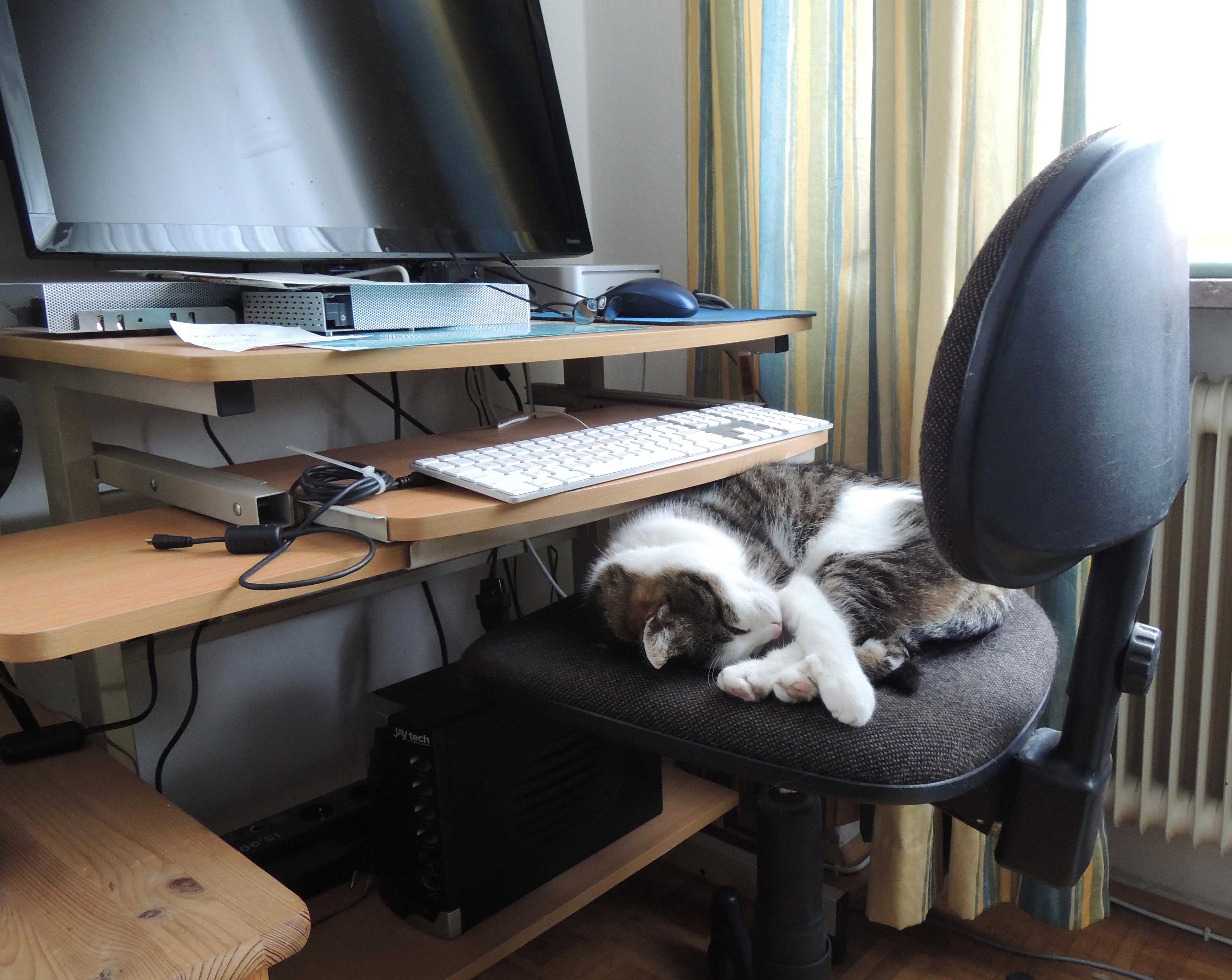
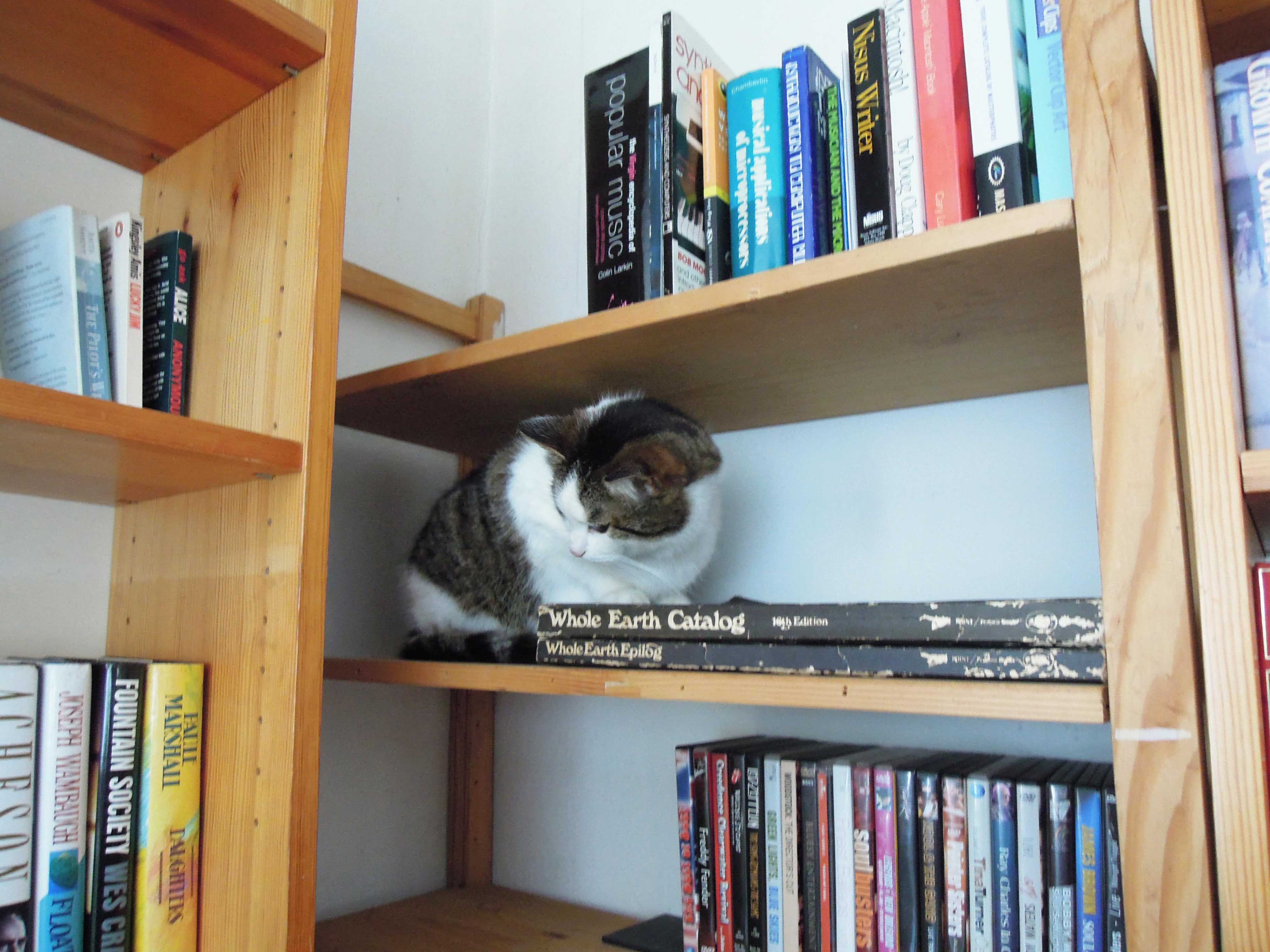
Mia has died, she had cancer. Here are a few pictures made in the last two days of her life.
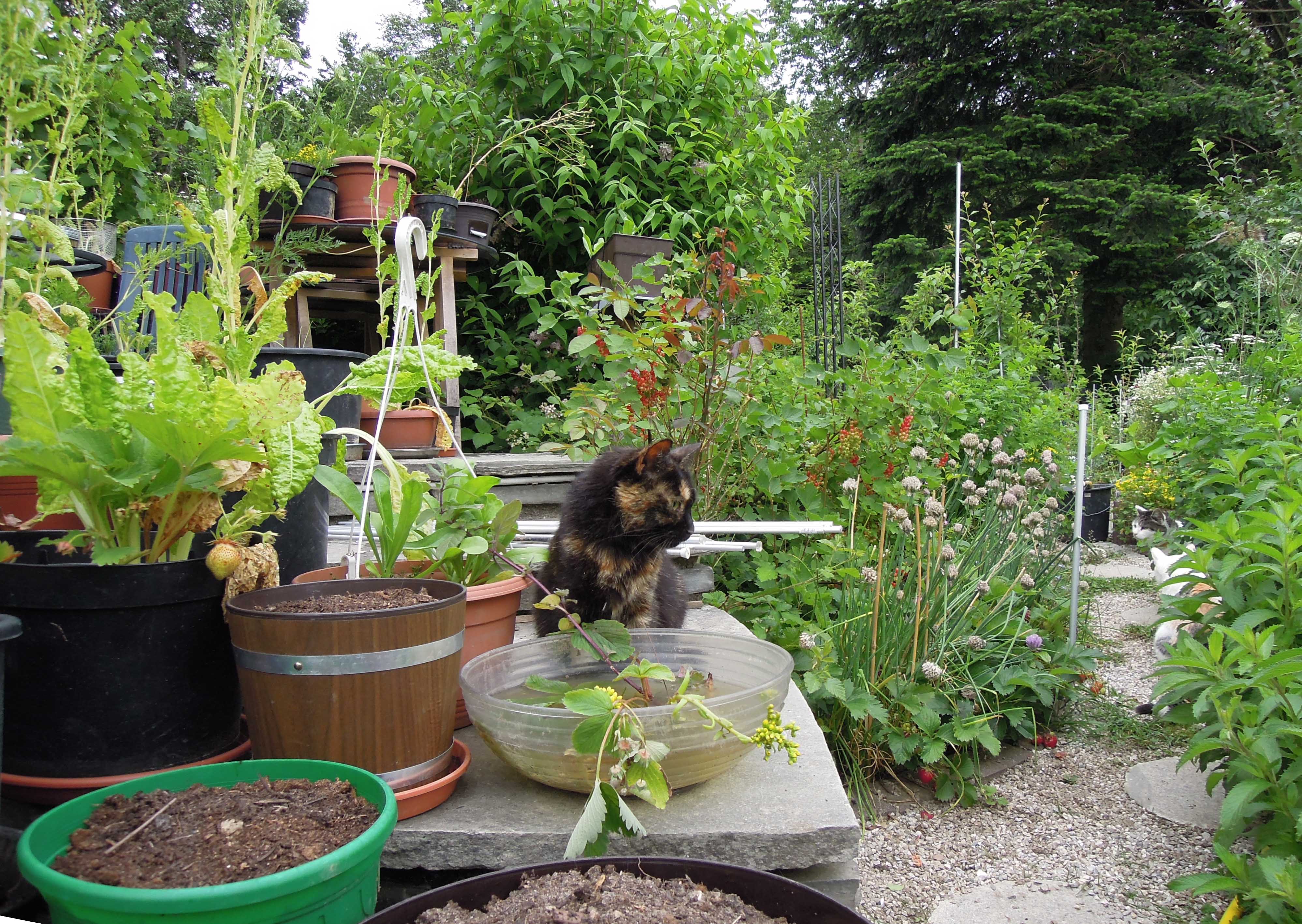

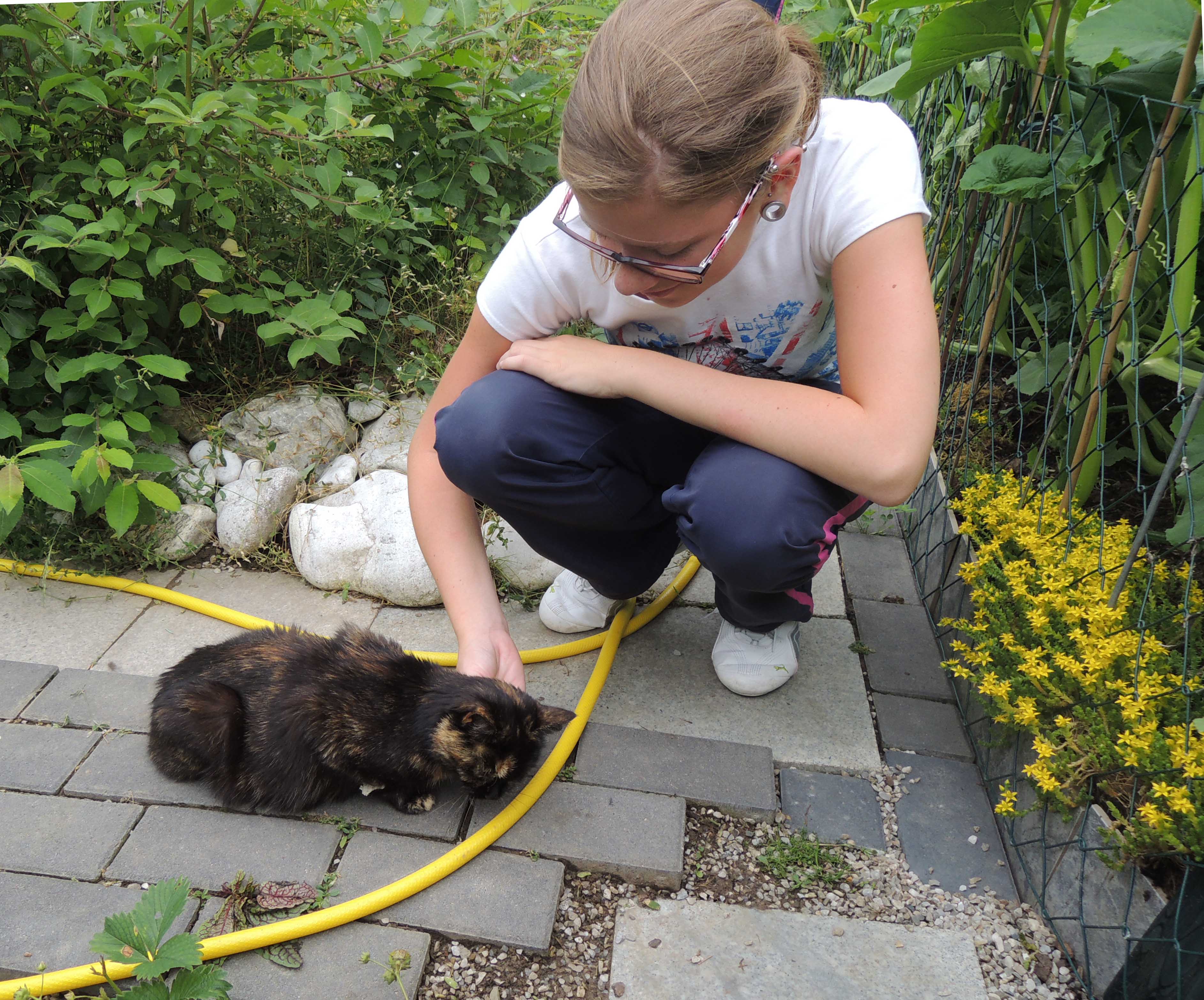
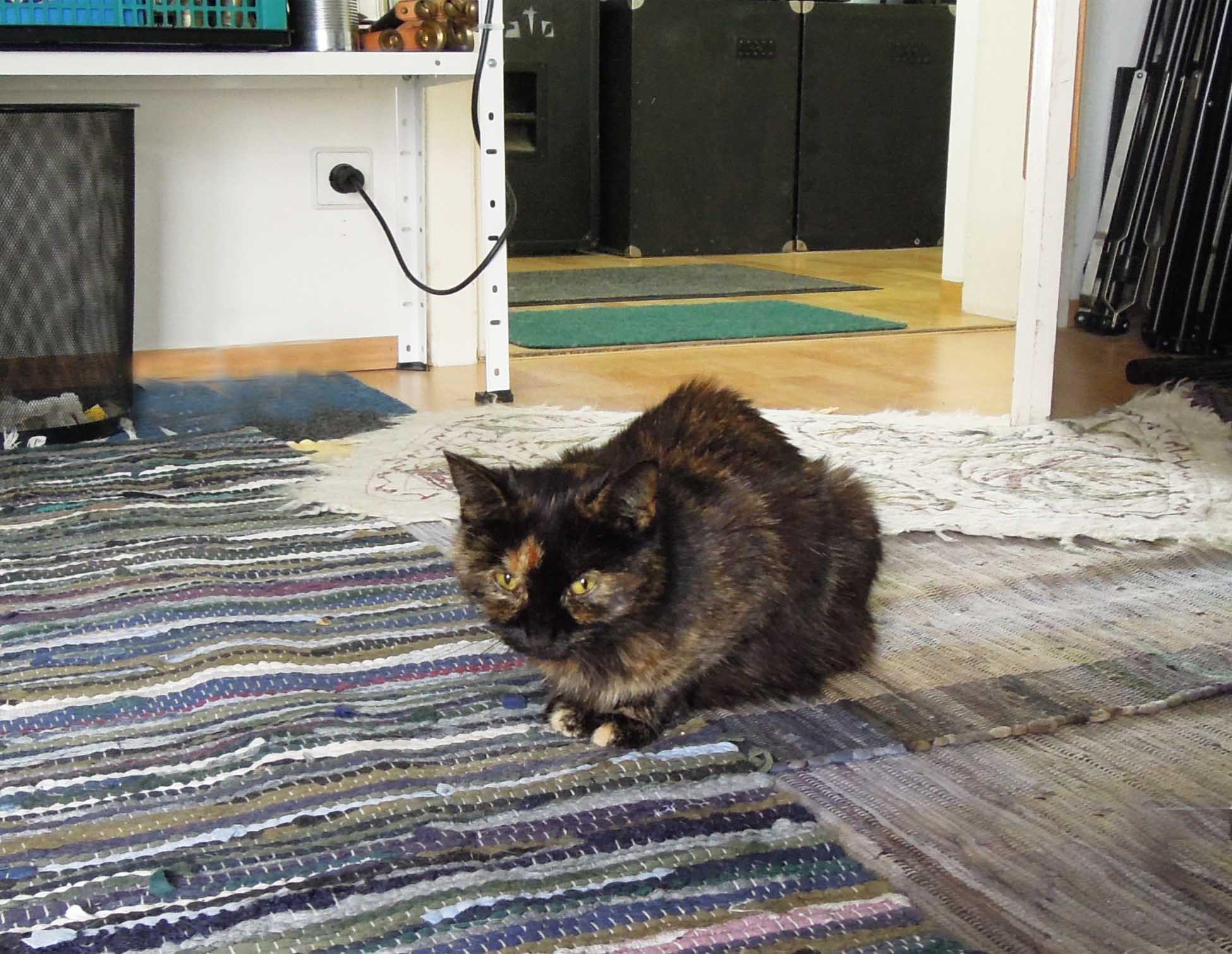

I will write more about her in a separate post.