https://chicago.craigslist.org/chc/tlg/5188443833.html Circus animals seldom have a happy life. The Moscow Cat Theater of Kuklachev is accused of torturing cats and animal rights activists call for a boycott.
http://www.huffingtonpost.com/2015/04/10/amazing-acrocats-cat-circus_n_7040256.html
http://www.telegraph.co.uk/news/science/science-news/11841884/Cats-do-not-need-their-owners-scientists-conclude.html Cats are not owned by anybody, to begin with.
http://abc7news.com/pets/firefighters-rescue-burned-black-cat-from-valley-fire/985671/ Terrible burns. I would take him instantly if he wouldn’t be far away in America.
http://www.huffingtonpost.com/2015/04/10/amazing-acrocats-cat-circus_n_7040256.html
http://www.telegraph.co.uk/news/science/science-news/11841884/Cats-do-not-need-their-owners-scientists-conclude.html Cats are not owned by anybody, to begin with.
http://abc7news.com/pets/firefighters-rescue-burned-black-cat-from-valley-fire/985671/ Terrible burns. I would take him instantly if he wouldn’t be far away in America.
Environmental news
http://news.nationalgeographic.com/2015/09/150908-sperm-whale-culture-vocalizations-animals-oceans-galapagos-science/
http://www.rollingstone.com/politics/news/what-is-killing-americas-bees-and-what-does-it-mean-for-us-20150818
http://english.pravda.ru/opinion/columnists/26-08-2015/131731-toxic_pesticides_bees-0/
https://www.opendemocracy.net/transformation/javan-briggs/we-have-right-to-have-that-basic-thing—it’s-water
http://www.globalresearch.ca/monsantos-sealed-documents-reveal-the-truth-behind-roundups-toxicological-dangers/
http://oilprice.com/Energy/Energy-General/Conflict-Over-Water-In-Central-Asia.html
http://www.wri.org/blog/2015/08/ranking-world’s-most-water-stressed-countries-2040
http://news.yahoo.com/number-ethiopians-needing-food-aid-surges-4-5-125134071.html
http://www.reuters.com/article/2015/08/31/us-somalia-hunger-idUSKCN0R01T420150831
http://www.environmentalhealthnews.org/ehs/news/2015/aug/monsanto-roundup-glyphosate-pesticide-kidney-liver-toxic-gmo
http://www.theguardian.com/us-news/2015/aug/23/hawaii-birth-defects-pesticides-gmo?CMP=twt_a-environment_b-gdneco
http://www.foodandwaterwatch.org/blogs/monsanto-turns-its-attention-to-the-produce-aisle/ I usually let the flower heads of broccoli plants bloom, when they are too small to be harvested, and I am proud, when new broccoli plants emerge where I never have planted seeds. Broccoli is vulnerable to insect infestation and my broccoli performs poorly, battered by aphids, caterpillars, and other herbivorous insects. This is not a viable business, for sure not a cash crop, but every now and then there is organic broccoli on the menu.
http://www.publicintegrity.org/2015/09/01/17922/nuclear-cleanup-project-haunted-legacy-design-failures-and-whistleblower
http://www.pnas.org/content/early/2015/08/27/1504710112 Who would have thought that birds hate traffic noise?
http://blogs.worldwatch.org/5-eye-opening-global-trends-you-should-know-about/
http://news.nationalgeographic.com/2015/09/150908-sperm-whale-culture-vocalizations-animals-oceans-galapagos-science/
http://www.rollingstone.com/politics/news/what-is-killing-americas-bees-and-what-does-it-mean-for-us-20150818
http://english.pravda.ru/opinion/columnists/26-08-2015/131731-toxic_pesticides_bees-0/
https://www.opendemocracy.net/transformation/javan-briggs/we-have-right-to-have-that-basic-thing—it’s-water
http://www.globalresearch.ca/monsantos-sealed-documents-reveal-the-truth-behind-roundups-toxicological-dangers/
http://oilprice.com/Energy/Energy-General/Conflict-Over-Water-In-Central-Asia.html
http://www.wri.org/blog/2015/08/ranking-world’s-most-water-stressed-countries-2040
http://news.yahoo.com/number-ethiopians-needing-food-aid-surges-4-5-125134071.html
http://www.reuters.com/article/2015/08/31/us-somalia-hunger-idUSKCN0R01T420150831
http://www.environmentalhealthnews.org/ehs/news/2015/aug/monsanto-roundup-glyphosate-pesticide-kidney-liver-toxic-gmo
http://www.theguardian.com/us-news/2015/aug/23/hawaii-birth-defects-pesticides-gmo?CMP=twt_a-environment_b-gdneco
http://www.foodandwaterwatch.org/blogs/monsanto-turns-its-attention-to-the-produce-aisle/ I usually let the flower heads of broccoli plants bloom, when they are too small to be harvested, and I am proud, when new broccoli plants emerge where I never have planted seeds. Broccoli is vulnerable to insect infestation and my broccoli performs poorly, battered by aphids, caterpillars, and other herbivorous insects. This is not a viable business, for sure not a cash crop, but every now and then there is organic broccoli on the menu.
http://www.publicintegrity.org/2015/09/01/17922/nuclear-cleanup-project-haunted-legacy-design-failures-and-whistleblower
http://www.pnas.org/content/early/2015/08/27/1504710112 Who would have thought that birds hate traffic noise?
http://blogs.worldwatch.org/5-eye-opening-global-trends-you-should-know-about/
Economic news
http://www.nakedcapitalism.com/2015/09/labor-day-lets-tell-the-truth-and-call-it-assets-day.html This is spot on. Must read!
http://petras.lahaine.org/?p=204 James Petras’ outrage about the betrayal of the Greek population is justified but he should nevertheless mention the organizational and technical difficulties of a Grexit and a return to the Drachma. The financial systems of Western nations are tightly interwoven and controlled by big financial institutions (banks, hedge funds) which hold national politicians to ransom.
http://www.nakedcapitalism.com/2015/09/labor-day-lets-tell-the-truth-and-call-it-assets-day.html This is spot on. Must read!
http://petras.lahaine.org/?p=204 James Petras’ outrage about the betrayal of the Greek population is justified but he should nevertheless mention the organizational and technical difficulties of a Grexit and a return to the Drachma. The financial systems of Western nations are tightly interwoven and controlled by big financial institutions (banks, hedge funds) which hold national politicians to ransom.
The times of self sufficiency are long gone and we are small wheels in a big machine, unable to turn at our own pace. While todays specialization and reliance on big support systems (national or even global) have made life comfortable in many respects (at least for citizens in the most affluent countries) it has made us vulnerable to extortion and exploitation.
The prime example is the financial sector, where banks, initially entrusted with the organization of cash transfers, the matching of borrowers and lenders, and the secure holding of savings, have hijacked the system and extract sums that are a multitude of their operational costs. Banks don’t fail because fees and interest rates are too low but because they gamble away the entrusted money with risky investments.
http://www.globaljustice.org.uk/blog/2015/aug/19/greece-sale-–-and-everything-must-go
http://www.globalresearch.ca/economic-destabilization-financial-meltdown-and-the-rigging-of-the-shanghai-stock-market/5471533
https://www.project-syndicate.org/commentary/demographic-challenge-poor-countries-by-adair-turner-2015-08
http://www.alternet.org/economy/why-bezos-denials-about-exploitation-amazon-pure-sociopathic-ceo-speak If you ever should contemplate to use Amazon, read this first.
http://www.thenation.com/article/ukraine-has-reached-a-debt-deal-now-what/
http://www.thenation.com/article/the-tpp-will-finish-what-chiles-dictatorship-started/
http://www.globaljustice.org.uk/blog/2015/aug/19/greece-sale-–-and-everything-must-go
http://www.globalresearch.ca/economic-destabilization-financial-meltdown-and-the-rigging-of-the-shanghai-stock-market/5471533
https://www.project-syndicate.org/commentary/demographic-challenge-poor-countries-by-adair-turner-2015-08
http://www.alternet.org/economy/why-bezos-denials-about-exploitation-amazon-pure-sociopathic-ceo-speak If you ever should contemplate to use Amazon, read this first.
http://www.thenation.com/article/ukraine-has-reached-a-debt-deal-now-what/
http://www.thenation.com/article/the-tpp-will-finish-what-chiles-dictatorship-started/
Technology news
http://mathbabe.org/2015/08/26/links-about-big-bad-data/
http://mathbabe.org/2015/08/26/links-about-big-bad-data/
Imperial news
http://www.workers.org/articles/2015/09/07/behind-the-govts-rosy-jobs-report/
http://www.workers.org/articles/2015/08/19/former-black-panther-killed-in-calif-prison/
http://www.washingtonsblog.com/2015/08/first-state-approves-drones-with-rubber-bullets-tasers-pepper-spray-tear-gas-sound-cannons-for-domestic-use.html
http://civileats.com/2015/09/09/former-black-panther-launches-oakland-urban-farm-to-give-ex-prisoners-a-fresh-start/ Never give up, never lose hope!
http://www.workers.org/articles/2015/09/07/behind-the-govts-rosy-jobs-report/
http://www.workers.org/articles/2015/08/19/former-black-panther-killed-in-calif-prison/
http://www.washingtonsblog.com/2015/08/first-state-approves-drones-with-rubber-bullets-tasers-pepper-spray-tear-gas-sound-cannons-for-domestic-use.html
http://civileats.com/2015/09/09/former-black-panther-launches-oakland-urban-farm-to-give-ex-prisoners-a-fresh-start/ Never give up, never lose hope!
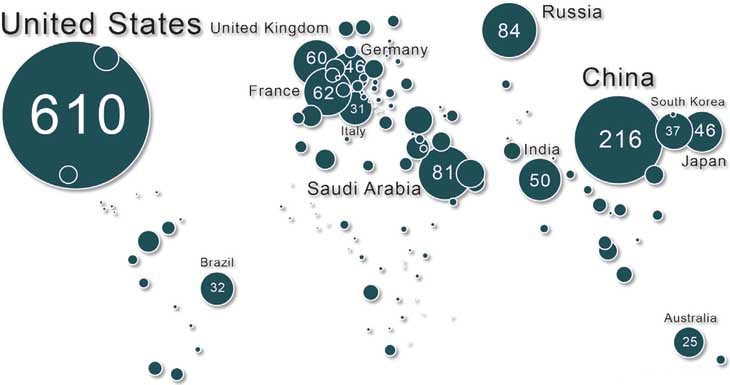
Global military expenses:
Imperial conquest news
http://www.globalresearch.ca/washington-wants-regime-change-in-ecuador-what-is-the-cia-planning-before-ecuadors-2017-elections/
http://www.workers.org/articles/2015/09/04/a-letter-on-the-colombia-venezuela-border-conflict/
https://consortiumnews.com/2015/09/02/usnato-embrace-psy-ops-and-info-war/
http://www.unicef.org/emergencies/syria/
http://www.unicef.org.uk/Documents/Media/Education%20Under%20Fire.pdf
http://www.al-monitor.com/pulse/originals/2015/08/turkey-syria-palestinia-fight-for-syrian-army.html Al-Monitor is a Western propaganda instrument, but nevertheless it has now published several articles by author Fehim Tastekin, which diverge from the usual storyline and show the Islamic rebels in an unfavorable light. What is behind this change of direction?
http://www.al-monitor.com/pulse/originals/2015/08/turkey-syria-sued-for-looting-aleppo-industry.html
http://www.ronpaulinstitute.org/archives/peace-and-prosperity/2015/september/04/white-house-russian-military-action-against-isis-in-syria-would-be-destabilizing/
http://www.telegraph.co.uk/news/worldnews/middleeast/syria/11846382/Russia-is-building-military-base-in-Syria.html The article doesn’t fail to include one of the obligate phrases that are used to vilify a person which is on the US-hitlist. “Syria and its brutal ruler” was chosen this time, “butcher Assad” is maybe after intensive use regarded as trite and hackneyed or is spared for the really important psy-ops. The only thing what one can do against this constant mudslinging is to constantly call out the lies and unmask the propagandists.
https://consortiumnews.com/2015/08/04/how-us-allies-aid-al-qaeda-in-syria/
http://www.theguardian.com/commentisfree/2015/sep/02/david-petraeus-bright-idea-give-terrorists-weapons-to-beat-isis The Daily Beast’s article, “Petraeus: Use Al Qaeda Fighters to Beat ISIS,” has caused some consternation, but his suggestions are nothing new. Petraeus, the former commander of US forces in Iraq and Afghanistan, has been since some time quietly urging the administration in Washington to consider using so-called moderate members of al Qaeda’s Jabhat al-Nusra to fight IS in Syria. Petraeus is also in accord with the Brookings institute, which stated in an article: “Ultimately, negotiation and amnesty programs with extremist groups must enter the US counterterrorism repertoire if reluctance to military deployment continues.”
http://www.globalresearch.ca/british-sas-special-forces-dressed-up-as-isis-rebels-fighting-assad-in-syria/5466944
http://www.globalresearch.ca/polls-show-syrians-overwhelmingly-blame-u-s-for-isis/ A remarkable text not only because it shows that the majority of Syrians still support Assad but also demonstrates how poll results can be turned on their head in the establishment press by careful wording. Beside that, Syrians know that IS = US.
http://www.huffingtonpost.com/jackie-abramian/rania-kinges-social-enterprise-i-love-syria-transcends-nationalism_b_7994862.html
http://newcoldwar.org/grim-toll-of-rising-ukrainian-shelling-in-donbas-eastern-ukraine/
http://russia-insider.com/en/ukraine-shelling-keeping-osce-out-suffering-east-ukraine-town/ri9327
http://www.globalresearch.ca/the-mh17-pilots-corpse-more-on-the-cover-up/5467351
http://www.independent.co.uk/news/world/europe/ukraine-crisis-soldiers-accuse-commanders-of-lying-as-both-warring-sides-make-repeated-claims-of-victories-and-broken-ceasefires-10462754.html
http://www.workers.org/articles/2015/08/20/ukraine-silences-igor-guzhva-editor-of-largest-daily-newspaper/
http://harpers.org/blog/2015/08/undelivered-goods/
http://newcoldwar.org/ukraine-agribusiness-firms-in-quiet-land-grab-with-development-finance/
https://consortiumnews.com/2015/08/24/the-case-for-pragmatism/ Well written and a useful compilation of facts, but the plea for “geopolitical pragmatism” will be unheeded. Criminals (bankers, politicians) thrive in chaos and instability, taking advantage of lawlessness and fast changing situations. The “disaster capitalists” are not restrained by feelings of responsibility, compassion, or guilt, their ethical guide is profit optimization.
http://www.globalresearch.ca/washington-wants-regime-change-in-ecuador-what-is-the-cia-planning-before-ecuadors-2017-elections/
http://www.workers.org/articles/2015/09/04/a-letter-on-the-colombia-venezuela-border-conflict/
https://consortiumnews.com/2015/09/02/usnato-embrace-psy-ops-and-info-war/
http://www.unicef.org/emergencies/syria/
http://www.unicef.org.uk/Documents/Media/Education%20Under%20Fire.pdf
http://www.al-monitor.com/pulse/originals/2015/08/turkey-syria-palestinia-fight-for-syrian-army.html Al-Monitor is a Western propaganda instrument, but nevertheless it has now published several articles by author Fehim Tastekin, which diverge from the usual storyline and show the Islamic rebels in an unfavorable light. What is behind this change of direction?
http://www.al-monitor.com/pulse/originals/2015/08/turkey-syria-sued-for-looting-aleppo-industry.html
http://www.ronpaulinstitute.org/archives/peace-and-prosperity/2015/september/04/white-house-russian-military-action-against-isis-in-syria-would-be-destabilizing/
http://www.telegraph.co.uk/news/worldnews/middleeast/syria/11846382/Russia-is-building-military-base-in-Syria.html The article doesn’t fail to include one of the obligate phrases that are used to vilify a person which is on the US-hitlist. “Syria and its brutal ruler” was chosen this time, “butcher Assad” is maybe after intensive use regarded as trite and hackneyed or is spared for the really important psy-ops. The only thing what one can do against this constant mudslinging is to constantly call out the lies and unmask the propagandists.
https://consortiumnews.com/2015/08/04/how-us-allies-aid-al-qaeda-in-syria/
http://www.theguardian.com/commentisfree/2015/sep/02/david-petraeus-bright-idea-give-terrorists-weapons-to-beat-isis The Daily Beast’s article, “Petraeus: Use Al Qaeda Fighters to Beat ISIS,” has caused some consternation, but his suggestions are nothing new. Petraeus, the former commander of US forces in Iraq and Afghanistan, has been since some time quietly urging the administration in Washington to consider using so-called moderate members of al Qaeda’s Jabhat al-Nusra to fight IS in Syria. Petraeus is also in accord with the Brookings institute, which stated in an article: “Ultimately, negotiation and amnesty programs with extremist groups must enter the US counterterrorism repertoire if reluctance to military deployment continues.”
http://www.globalresearch.ca/british-sas-special-forces-dressed-up-as-isis-rebels-fighting-assad-in-syria/5466944
http://www.globalresearch.ca/polls-show-syrians-overwhelmingly-blame-u-s-for-isis/ A remarkable text not only because it shows that the majority of Syrians still support Assad but also demonstrates how poll results can be turned on their head in the establishment press by careful wording. Beside that, Syrians know that IS = US.
http://www.huffingtonpost.com/jackie-abramian/rania-kinges-social-enterprise-i-love-syria-transcends-nationalism_b_7994862.html
http://newcoldwar.org/grim-toll-of-rising-ukrainian-shelling-in-donbas-eastern-ukraine/
http://russia-insider.com/en/ukraine-shelling-keeping-osce-out-suffering-east-ukraine-town/ri9327
http://www.globalresearch.ca/the-mh17-pilots-corpse-more-on-the-cover-up/5467351
http://www.independent.co.uk/news/world/europe/ukraine-crisis-soldiers-accuse-commanders-of-lying-as-both-warring-sides-make-repeated-claims-of-victories-and-broken-ceasefires-10462754.html
http://www.workers.org/articles/2015/08/20/ukraine-silences-igor-guzhva-editor-of-largest-daily-newspaper/
http://harpers.org/blog/2015/08/undelivered-goods/
http://newcoldwar.org/ukraine-agribusiness-firms-in-quiet-land-grab-with-development-finance/
https://consortiumnews.com/2015/08/24/the-case-for-pragmatism/ Well written and a useful compilation of facts, but the plea for “geopolitical pragmatism” will be unheeded. Criminals (bankers, politicians) thrive in chaos and instability, taking advantage of lawlessness and fast changing situations. The “disaster capitalists” are not restrained by feelings of responsibility, compassion, or guilt, their ethical guide is profit optimization.
About the consequences? Devil may care, or après moi, le déluge (after me, the flood), as King of France Louis XV said.
http://sputniknews.com/us/20150912/1026926635/foreign-meddling-and-a-fight-for-oil-fueling-syrian-civil-war.html A useful compilation about Syria.
http://medialens.org/index.php/alerts/alert-archive/2015/801-invisible-war-crimes-the-corporate-media-on-yemen.html Exposing the lies.
http://sputniknews.com/us/20150912/1026926635/foreign-meddling-and-a-fight-for-oil-fueling-syrian-civil-war.html A useful compilation about Syria.
http://medialens.org/index.php/alerts/alert-archive/2015/801-invisible-war-crimes-the-corporate-media-on-yemen.html Exposing the lies.
News roundup
I’m busy in the garden but I’m also spending more time on the computer than I would prefer. There is so much going on in the world and I’m researching, collecting information from the few trustworthy sources, sifting through piles of often inconsistent and contradictory informations, making conclusions, formulating ideas in my head and writing them down.
Economy
The Federal Reserve Bank of New York has stopped shipping gold back to Germany, which wants to repatriate the national gold reserves. Is there no gold left in the vaults in Manhattan?
Deutsche Bank, which runs Europe’s biggest investment bank, may let go 23,000 employees and Italy’s UniCredit may fire 10,000, leading a bloodletting across Europe’s financial organizations which could cost tens of thousands their jobs.
Oil prices go up and down without apparent reason, keeping analysts guessing. High frequency trading is at any moment good for crashing the stock markets.
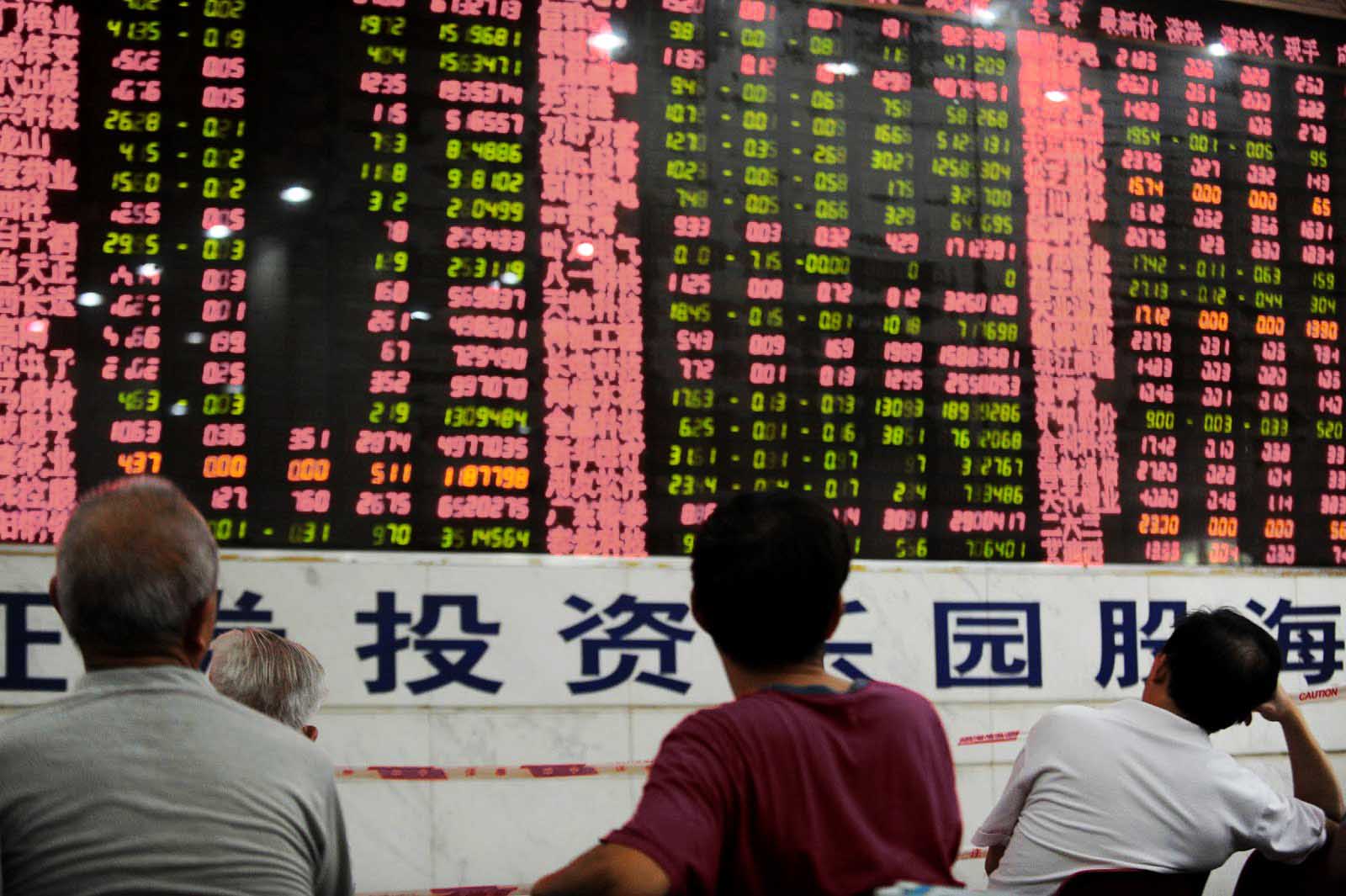
The Chinese stock market is in turmoil and the government has spent 246 billion US$ purchasing equities since the 5 trillion US$ selloff began three months ago. The Shanghai Composite has tumbled 40 percent from its June high. Is this economic warfare? Are the big banks in New York and London able to orchestrate this?
Or is this just an inevitable result of the Ponzi schemes and other financial shenanigans going on all the time?
According to the Bank for International Settlements (BIS), since 2010 the amount of US$-denominated debt issued by foreign companies has grown by 50 percent from 6 trillion US$ to 9 trillion US$.
Some of the credit extended to companies operating in emerging-markets (China, India, Brasil, Turkey, South Africa) was used for real economic projects, but a BIS report released in late August concludes that most of the money was simply invested in higher yielding shadow-banking instruments. This is the so-called global carry trade.
The credit/money growth was seemingly fueling economic growth while in reality production and productivity didn’t increase. Wealth was only created in form of profits for the financial companies.
Ukraine
Ihor Humeniuk, a a member of the Sich volunteer battalion, which is part of the Interior Ministry forces, killed three policemen with a hand grenade during a violent protest in front of the Verkhona Rada. 140 people were injured. There were allegedly also shots fired.
Leaflets bearing Poroshenko’s portrait and the words “Kill the fag,” were handed out in Kiev.
IMF and World Bank officials say, that the Ukrainian economy is stabilizing. It has to be seen how the population in the long run responds to the all-out privatization and the systematic destruction of the remnants of a welfare state.
The new ceasefire from the start of September is holding and it is unusual quiet in Donbass. According to Igor Strelkov the Ukraine has amassed forces south of Donetsk city ready for an offensive but it doesn’t look like they are able to start war again.
President Petro Poroshenko disclosed in an interview why EU and USA have refused to provide more weapons, saying: “I was given two reasons. First, you don’t have an army. What you do have is infiltrated by Russian agents, and everything we give you will end up in Russia. And second, the army is corrupt.”
The Trans-Dniester card also doesn’t work at the moment to pressure Russia because the EU-leaning government in Moldova is in deep trouble and may soon lose power. Protesters have set up a tent city with at least 150 tents in Chisinau’s main square outside the government’s building. The population is infuriated by a bank fraud where not less than one billion US$ were stolen by oligarch Ilan Shor.
28-year-old Ilan Shor owns a football club, TV stations, the country’s main international airport, Chisinau International Airport, and has a Russian pop-star wife called Jasmine. He made his fortune selling duty-free goods at the airport.
The fraud has caused a rapid depreciation in the national currency, the Leu, stoking inflation and hurting living standards. The EU has frozen funding for Moldova.
Mikheil Saakashvili, the former Prime Minister of Georgia who was made the governor of Odessa, has brought in a series of tough anti-graft measures. He is mired in a dispute with Prime Minister Arseniy Yatsenyuk after accusing officials in Kiev to sabotage his reform efforts. Rumors say that Yatsenyuk will leave the governing coalition in preparation for elections which may come earlier than expected.
Ihor Mosiychuk, a member of the Verkhovna Rada from Lyashko’s Radical Party was stripped of his immunity and instantly detained by SBU officers inside the parliament on September 17 for demanding a bribe (4,600 US$).
The head of the central office of the State Employment Service Yaroslav Kashuba has been arrested and charged with bribery (28,000 US$).
The head of the public organization “Center of counteraction of corruption” Vitaliy Shabunin accused the Minister of internal Affairs Arsen Avakov of stupidity after Avakov posted on his Facebook page information about money of oligarch Serhiy Kurchenko in the accounts of Latvian banks, revealing that 80 million US$, 177 thousand Euros, and 1 million Czech Korunas were found in Kurchenko’s accounts. According to Avakov, the money was discovered during an investigation of the laundering of criminal funds, taken by offshore companies from Real Bank and Brokbiznesbank.
The money has not been recovered yet and as Kurchenko is warned now it may disappear before any action is taken.
When Avakov created the “Office for the return of assets obtained through criminal activity.” he appointed Elena Tishchenko as head, which in 2013 was detained in Russia on suspicion of fraud and money laundering, but was released under an amnesty. The first task of the new body was to scrutinize the financial dealings of the former ecology Minister Mykola Zlochevsky, of Serhiy Kurchenko, and of Dmytro Firtash.
After Maidan Kurchenko moved to Russia while Firtash lives in Austria.
Ihor Kolomoisky has left Ukraine for good. 1.8 billion US$ of IMF money disappeared in dubious dealings of Private Bank with 54 offshore companies based in the Caribbean, USA, and Cyprus. The money is said to be in Cyprus bank accounts controlled by Kolomoisky. No charges have been filed until now.
Podcaster Anatoly Sharii fights his own campaign via a YouTube channel against Anton Gerashenko and other corrupt Ukrainian officials. He lives in Latvia and since 2012 Ukrainian authorities both pre- and post-Maidan try to get him extradited but as they are not able to present convincing evidence of criminal activities until now they failed.

President Petro Poroshenko by decree banned 400 foreigners, mainly journalists, from entering the country, including BBC’s well known Steve Rosenberg, Emma Wells, and Anton Chicherov. The Spanish journalists Antonio Pampliega and Angel Sastre, who are missing and presumably dead in Syria, are also included. This is incredibly insensitive — what was Poroshenko thinking?
Banned are further 105 Russian corporations, including a number of Russian airlines like Aeroflot and Transaero, and major banking institutions like Gazprombank and Rosselkhozbank. Russia’s largest producers of Internet security software, Kaspersky Lab and Doctor Web, are also on the list. Ukraine is the country with the most malware infected computers, so this ban comes handy for cyber criminals. The major Russian state news channels Rossiya-24, Channel One, and NTV are all banned.
Not that this move matters, after four Russian journalists (Andrey Stenin, Igor Kornelyuk, Anton Voloshin, Anatoly Klyan) were killed in Ukraine, there are understandably no more official visits of Russian reporters.
This is not the first list of banned foreigners and foreign companies and counting all together there must be thousands of names on these lists.
Igor Guzhva, one of the most profiled journalists of Ukraine and editor of Vesti, which is the largest daily newspaper in the country, has stepped down and sold his shares in the company. Vesti was accosted of “anti-Ukrainian activities” and distributors of the newspaper were subject to frequent attacks by right-wing extremists. Guzhva is now being investigated for non-payment of taxes.
Igor Guzhva revealed in an interviews that officials had approached him with the demand that he give (not sell, but give) shares to them in exchange for pressure being taken off him and that he refused.
Western values of press freedom and freedom of expression in general are in the Ukraine apparently as fiercely held up as in the West.
Turkey has, in partnership with Ukraine, created an international Islamic Brigade intended to destabilize Crimea. Elements of IS (Islamic State) have arrived in Kherson, where a so-called “Crimean Government in Exile” exists. Turkey has apparently decided to break off its ties with Moscow and has cancelled the contract for the gas pipe-line Turkish Stream.
Greek coast guard seized 5,000 assault weapons and half a million rounds of ammunition found aboard the vessel Haddad 1, en route from Iskenderun, Turkey to Libya. The arms had no accompanying documents and were concealed by furniture and gym mats.
A Turkish foreign ministry spokesman confirmed that the cargo included weapons but maintained they were fully documented and were destined for the Sudanese police force. The vessel’s documentation indicate that it was supposed to travel to Misrata and Tobruk in Libya before going back.
Syria
Syrian forces are weaker this year and have suffered significant territorial losses to IS and a jihadi coalition led by Jabhat al-Nusra. The army gave up an airbase at Abo al-Dohur, which was the last government stronghold in Idlib province. The airbase was out of service, so it is a setback but not a crippling blow for Damascus.
The biggest threat to the government is probably that IS fighters have advanced from Palmyra and are close to cutting the north-south highway, which links the capital to cities such as Homs and Aleppo, and the Mediterranean. IS has also taken the government’s last remaining oilfield at Jazal.
The SOHR (Syrian Observatory for Human Rights), an opposition propaganda channel and for most Western news organizations the only source of information about Syria, sounds alarm about the dismal plight of civilians in Madaya and Zabadani. This is good news, because when the SOHR warns about an impending human catastrophe and fantasizes about barrel bombs it means, that Syrian forces are advancing and that the Islamic terrorist gangs are in trouble.
400 terrorists mainly from Jabhat al-Nusra are trapped in Zabadani, 350 wounded militants which have no access to medical treatment are also said to be there. The Syrian forces and Hezbollah don’t want to clear the town to avoid civilian casualties, because the terrorists are using the civilians as human shields.
A swap deal was discussed to let the militants go in exchange for lifting the siege of al-Fu’ah and Kefraya, two Shiite towns in Idlib province near the border to Turkey with a population of 40.000, but Jabhat al-Nusra’s demands were so over the top that no agreement could be reached.
The plight of people in al-Fu’ah and Kefraya is not mentioned in mainstream news channels.
In the up-is-down world of Western media, everyone condemned Russia for aiding Syria’s internationally recognized government while omitting that Turkey, Saudi Arabia, Qatar, and other Gulf monarchies (all US allies) are arming IS (Islamic State), Jabhat al-Nusra, Ahrar al-Sham, and a multitude of other Islamic terrorist groups fighting the Syrian government.
The words began flying when the Obama administration announced that Moscow was jetting in soldiers and advisers to an airfield south of Latakia on Syria’s Mediterranean coast, setting up prefabricated housing for as many as a 1.400 personnel and installing a portable air traffic control station. Reuters added a few days later that Russia had sent two tank landing ships as well.
Secretary of State John Kerry was instantly on the phone to Russian Foreign Minister Sergey Lavrov warning him that intervention “could further escalate the conflict, lead to greater loss of innocent life, increase refugee flows and risk confrontation with the US anti-IS Coalition.”
All the usual suspects then piled on. NATO Secretary General Jens Stoltenberg voiced concern over the alleged escalation, as did Israel, while NATO member Bulgaria quickly bowed to US pressure to ban Russian cargo planes from its airspace.
Since the USA has struggled to come up with allies willing to flout international law by bombing IS positions inside Syria without Syrian government permission, one would think that it would be grateful if Russia was indeed sending military equipment for the purpose of fighting IS. Since IS and its sometime allies Jabhat al-Nusra and Ahrar al-Sham are continuing to advance, Washington obviously needs help, so why turn up its nose at Russian aid?
A few days after the Obama administration went public with the latest allegations, the Russian foreign ministry seemed genuinely perplexed.
“Russian military specialists help Syrians master Russian hardware, and we can’t understand the anti-Russian hysteria about this,” Maria V. Zakharova, the Russian foreign ministry’s spokeswoman, explained. “We have been supplying Syria with arms and military equipment for a long time. We are doing this in accordance with existing contracts and in full accordance with international law.”
Since Russia maintains that the shipments are both legal and routine, it is up to the United States to prove otherwise. Yet it has made no effort to do so, and neither has the press tried to hold Washington to account. Under international law, it is not illegal to provide military assistance and advisers to a sovereign government, something the USA and other Western nations do routinely to prop up allied dictatorships.
The USA for instance is promising to increase military aid to Saudi Arabia and other members of the GCC (Gulf Cooperation Council) and gives Saudi Arabia military assistance in it’s inhumane and deadly assault on Yemen.
The USA feels equally bound to go along with the Saudi kingdom’s increased support for Jabhat al-Nusra and fellow jihadis in Syria.The USA never explained last spring how US-made TOW missiles reached Jabhat al-Nusra and allowed them to mount a successful offensive in Syria’s northern Idlib province.
Before US trained Islamic rebels (Division 30) entered Syria the USA reached out to Jabhat al-Nusra to make sure that it didn’t object to the deployment. Despite this charm offensive, Jabhat al-Nusra killed or captured the US-trained fighters and Division 30 has ceased to exist.
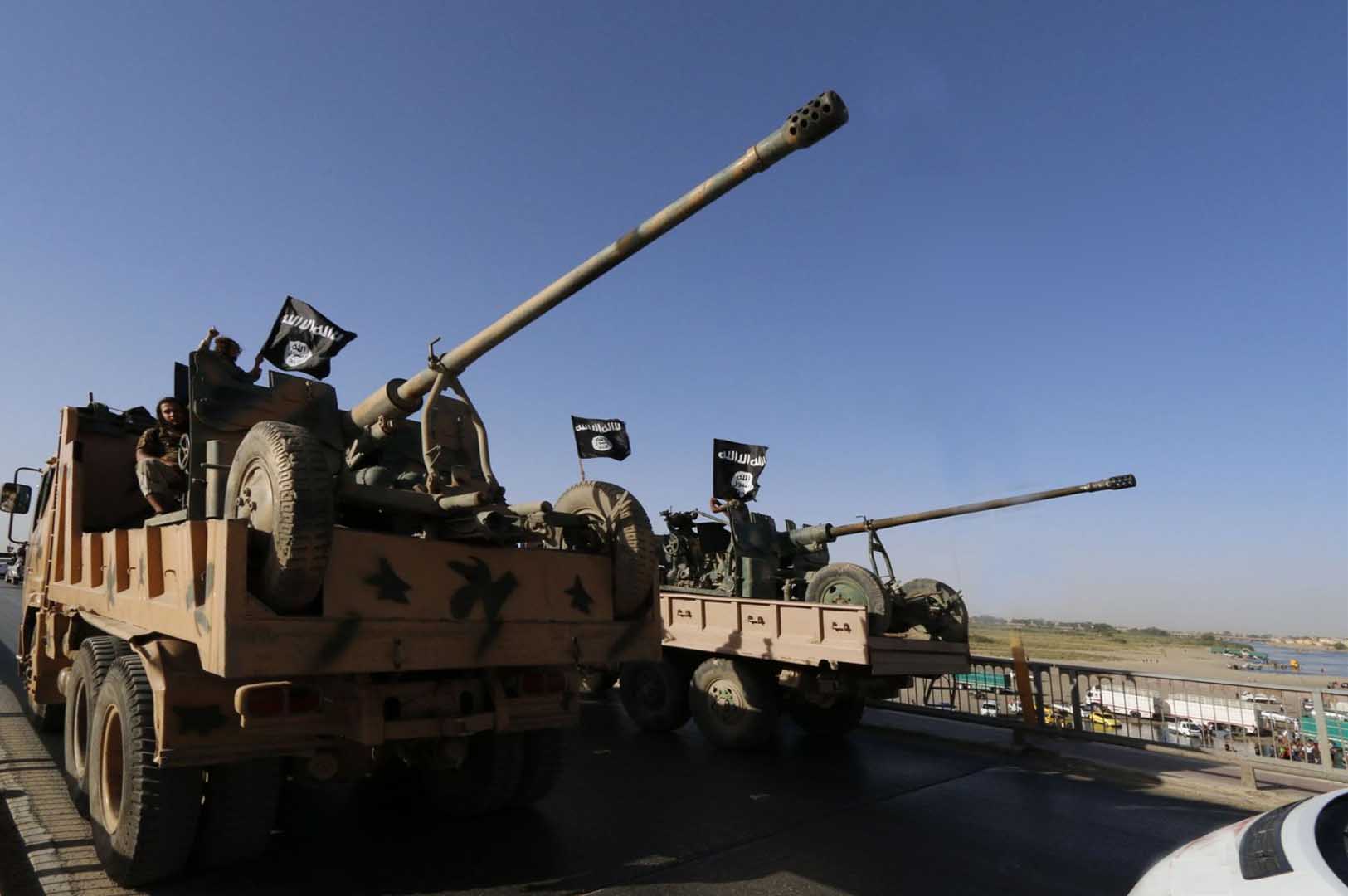
Russian Foreign Minister Sergey Lavrov called into question the effectiveness of the US-led coalition against IS and stated, that concerned colleagues from within the US-led coalition turned to him and informed him that the US-military did not give clearances to their fighter pilots even though they clearly had located and identified IS positions.
Major General Eizza Zawir, commander of the Kurdish Peshmerga’s fourth division, which is stationed on the hills overlooking the Iraq-Syria border, told reporters that he sees the busy supply lines of IS less than 3 kilometer away. They would be easy to hit — but General Zawir’s hands are tied.
“We’ve spoken to the US team here, the British team, the French team. They see it every day. They can see with their aircraft very clearly. Why don’t they do anything?” he complains.
Echoing the concerns of the Peshmerga, one senior Jordanian military officer describes seeing IS convoys and military formations crossing between Iraq and southern Syria on an almost daily basis. “But we’re not allowed to hit them,” he says.
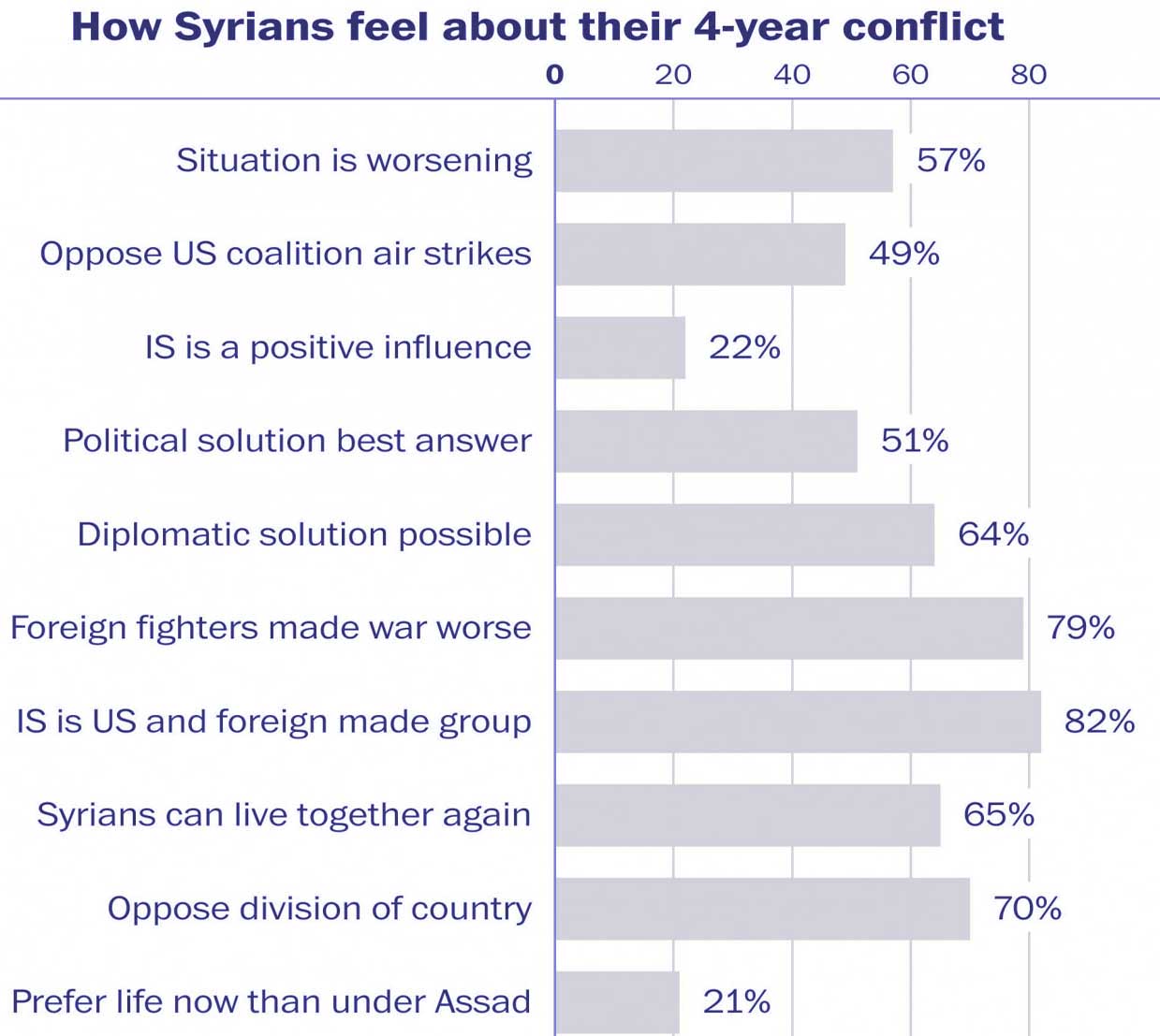
The British polling organization ORB International, an affiliate of WIN/Gallup International, repeatedly found that Syrians oppose IS by about 80 percent, while (according to the latest poll) 82 percent blame the US for IS.
It was known before that Iraqis and Syrians suspect, that the West is supporting IS and that US hostility to IS may be less than total. In short: IS = US.
Refugees
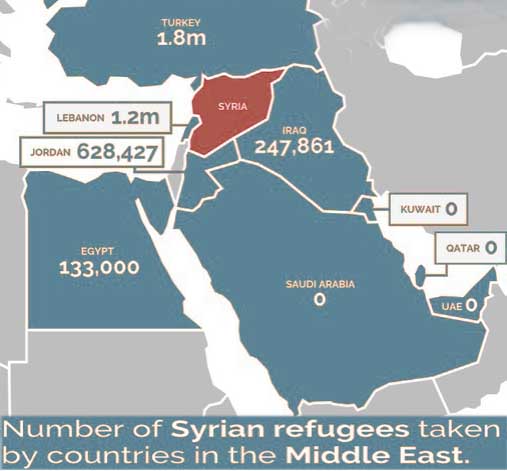
More than four million Syrians have fled the gruesome reign of Western funded Islamic terrorists. The majority until now lived in overcrowded refugee camps in Turkey, Lebanon, Jordan, Egypt, and Iraq, but increasing numbers are embarking on the perilously journey to Europe and are flooding into Austria and Germany.
The rich Gulf monarchies Saudi Arabia, UAE, Qatar, Kuwait, and Bahrain, main perpetrators of the criminal aggression against Syria, have only taken dismal numbers of Syrian refugee, because the idea of thousands of foreigners coming in, without employment or any definite return date, is deeply uncomfortable for Gulf states.
These nations rank in the world’s top 50 GDPs and have a combined military budget of close to 100 billion US$.
None of the Gulf monarchies signed the 1951 Refugee Convention which defines a refugee “outside the country of his nationality” because of “fear of being persecuted for reasons of race, religion, nationality”. Syrians can still apply for costly tourist visas and work permits to enter wealthy Gulf nations but such visas are rarely granted. The only Arab countries where Syrians can travel without a visa are Algeria, Mauritania, Sudan, and Yemen — hardly practical choices or desired destinations.
The Kuwaiti politician Fahed al-Shelaimi, who heads the Gulf Forum on Peace and Security, provided a candid answer for the reluctance of accepting refugees: ”Gulf states are expensive and aside from being laborers, these people are not suitable for life here,” he said and added: “At the end of the day, people from a different environment who suffer from emotional problems cannot be received in our society,”
The number of migrant workers exceeds the native population in every Gulf country except Saudi Arabia and Oman. In all of the Gulf countries, the vast majority of the workforce is foreign, ranging from 88 percent in Oman to 98 percent in the United Arab Emirates. Citizens in the UAE and Qatar number a little over 10 percent of the resident populations in their respective countries. The vast majority of residents are transitory economic workers.
Foreigners are only allowed residency if they or their spouses have full-time jobs. There is no possibility to remain permanently in the Gulf without work — and once their contracts are up almost all migrants return home.
This is how the Gulf works — with a high turnover of low and high skilled labour, which allows the native Gulf Arab populations to maintain their dominant status without being overrun by Arabs from other countries or South Asian laborers.
The refugees from Middle Eastern war zones have to look for other destinations.
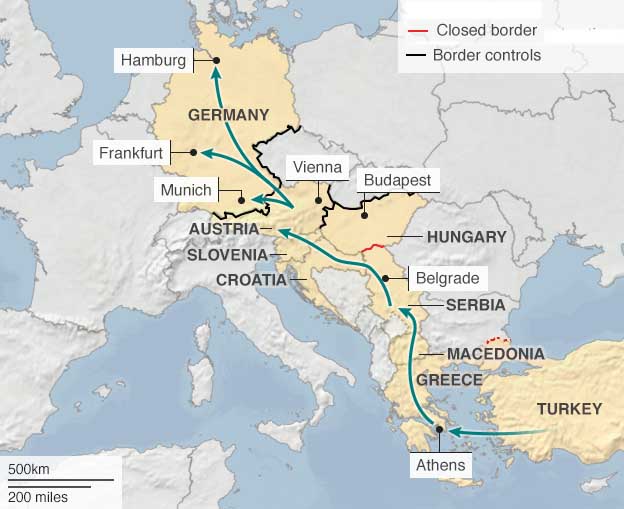
Since the start of the year 460.000 migrants have made the dangerous journey from Turkey and Libya over the Mediterranean Sea to the shores of Europe. Between 2.000 and 3.000 of them drowned. Their origin makes clear that most are fleeing conflicts: they come primarily from Syria, Afghanistan, Libya, Iraq, and Pakistan in the Middle East, and to a lesser extent from Eritrea, Somalia, and Nigeria in Africa.
This is the biggest migration in Europe since World War II, when Jews were driven out of Germany, Austria, and Poland by threat of extermination. 6 million didn’t make it then.
Some of the refugees seeking asylum are undoubtedly radical Islamists who take the chance to slip in, hiding among the crowd, to set up sleeper cells in the places where they are allowed to settle. A not very credible source spoke of 4,000 IS operatives, but 4,000 are less than one percent of the migrants, so there could be some truth in this.
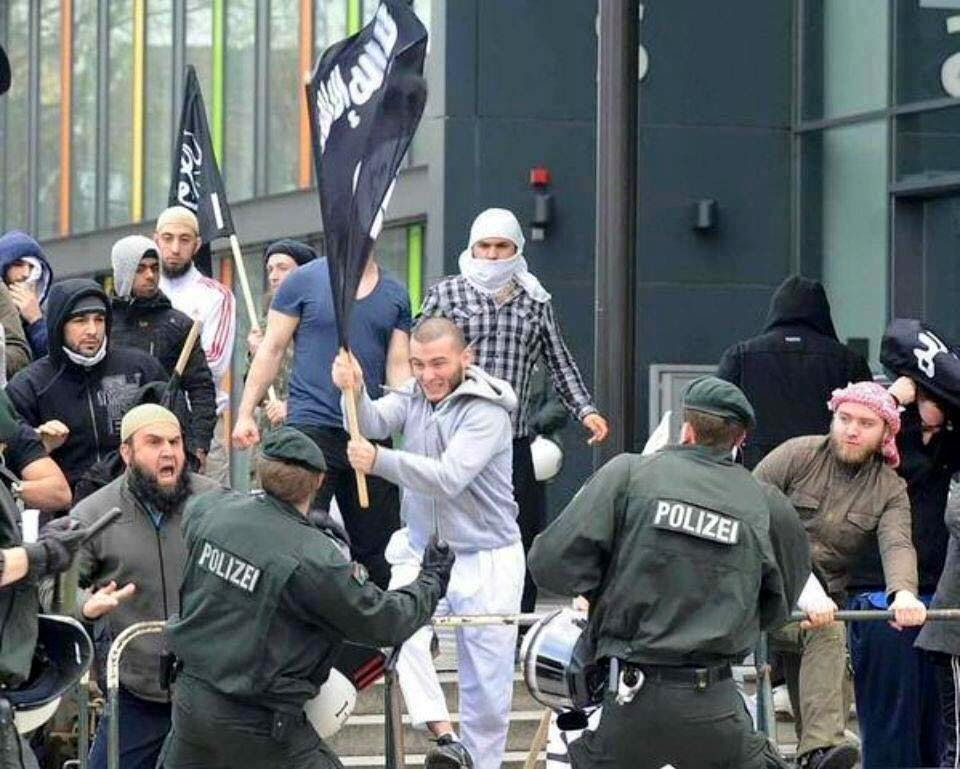
There are four causes for the present tidal wave of refugees:
1. Turkey has given up hope of utilizing the refugees as bargaining chip for creating a “safe zone (no fly zone) in northern Syria and herds them to the coastal towns. Turkey by its own assessment has spent 7.6 billion US$ to host the refugees and is running out of money.
Beside being tired of paying for the refugee camps President Erdogan wants to exert pressure on Europe to finally start bombing Syria. The Syrian refugees are not liked by the Turkish population which faces an economic downturn and falling living standards, looming elections in November therefore demand that Turkish authorities significantly reduce the presence of refugees.
2. Since months the WFP (World Food Program) has cut aid to the bone due to a lack of donations and it has dropped one-third of Syrian refugees from its food voucher program. It reduced the monthly stipend for about 210,000 Syrians in Jordan by half.
At the beginning of September it went further. 230,000 Syrian refugees who are living in cities had their aid stopped entirely. Help is still being provided for 100,000 living in camps, but there, too, funds could run out in November. The agency would need 236 million US$ to keep the program (even in its scaled-back version) funded through November, but no major donors have come forward until now.
3. The present mild weather makes the journey to Europe easier. As it will get colder, muddier, and more stormy in autumn the traveling conditions may deteriorate and make it impossible to reach Europe.
4. Syrian authorities are issuing new passports to refugees to increase much needed foreign currency income. A new passport costs 400 US$, an extension 200 US$. More than 10.000 new passports were issued alone in Jordan, the numbers in Lebanon are probably even higher.
There is also the bandwagon effect.
Initially people of good will (idealists with one word) warmly welcomed the migrants and donated blankets, cloth, food. The authorities organized shelters and transportation.
Yet, as the flood of migrants began to overwhelm EU-countries, the Schengen agreement, which guarantees open borders, was suspended, as Germany, Austria, the Netherlands, and Slovakia imposed border controls. Germany and Austria until now didn’t stop the flow of refugees.
German Minister of Defense Ursula von der Leyen ordered 4000 German soldiers into readiness. Hundreds of soldiers are already deployed to help accommodate newly arriving migrants.
Hungary has erected a 3.5 meter high barbed wire fence on the Serbian border and is now hastily working on a similar fence sealing the sections of the Croatian border where the countries are not separated by the Drava river. There are plans to extend the fence along the Romanian border. The railway lines to Serbia and Croatia are blocked.
When migrants tried to tear away a section of the fence, Hungarian riot police responded with tear gas and water canons, while the migrants countered with hurling rocks and parts of concrete at the police in a confrontation that had become a fool blown riot.
Croatia closed its border with Serbia. “We cannot register and accommodate these people any longer,” Croatian Prime Minister Zoran Milanovic told a press conference. “The European Union must know that Croatia will not become a migrant hotspot.” And in another statement: “Hungary has closed off its border with barbed wire; that’s not a solution, but these people remaining in Croatia is not a solution either.”
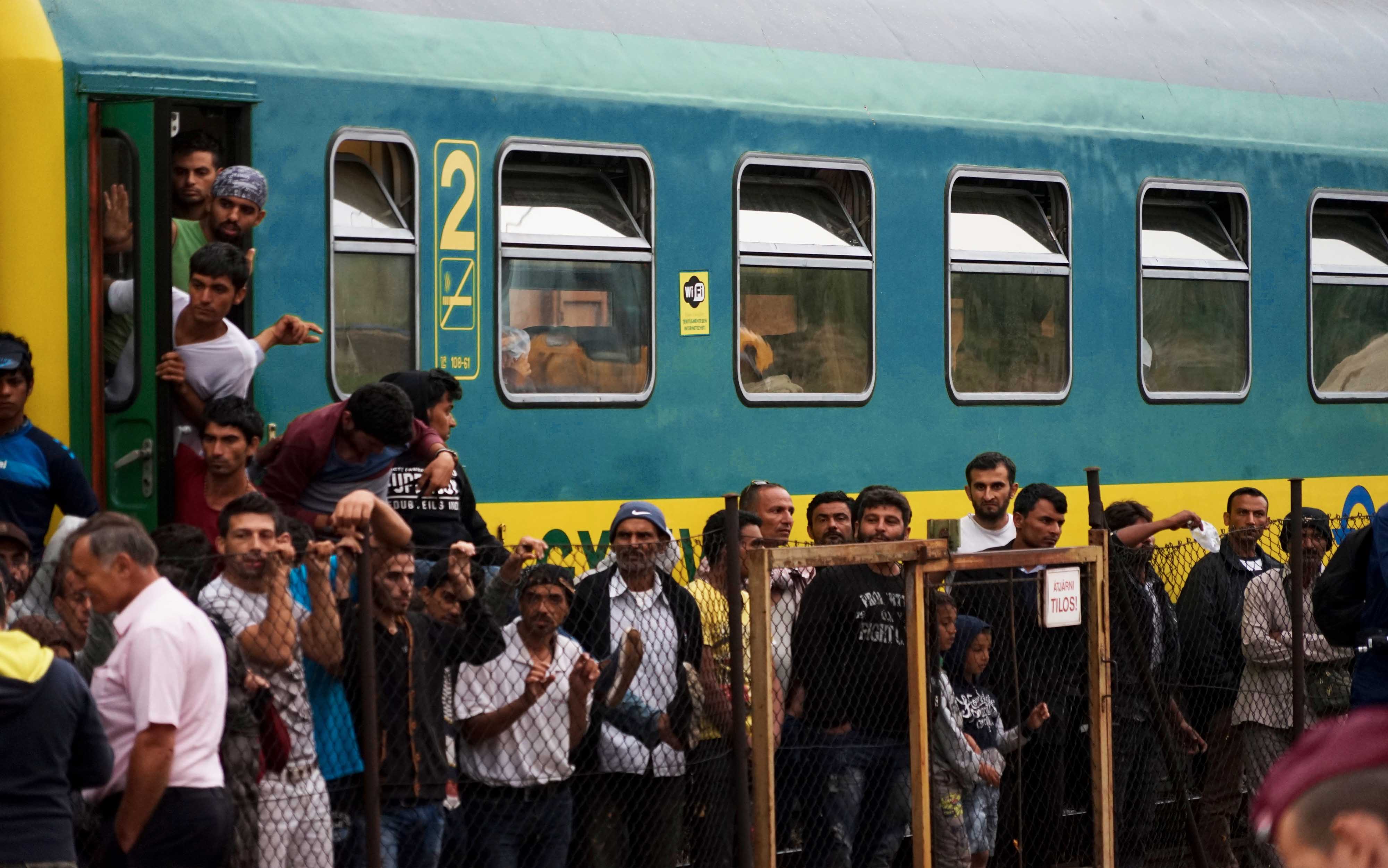
Hungary has sent armored vehicles to the Croatian border, while Slovenian police sealed most crossings after Croatia attempted to offload tens of thousands of refugees carried to the border in busses. Slovenian police used tear gas and pepper spray to ward off approaching refugees and stopped a train at Dobova carrying 200 refugees. Authorities only allow limited numbers of families with women and children to continue their journey.
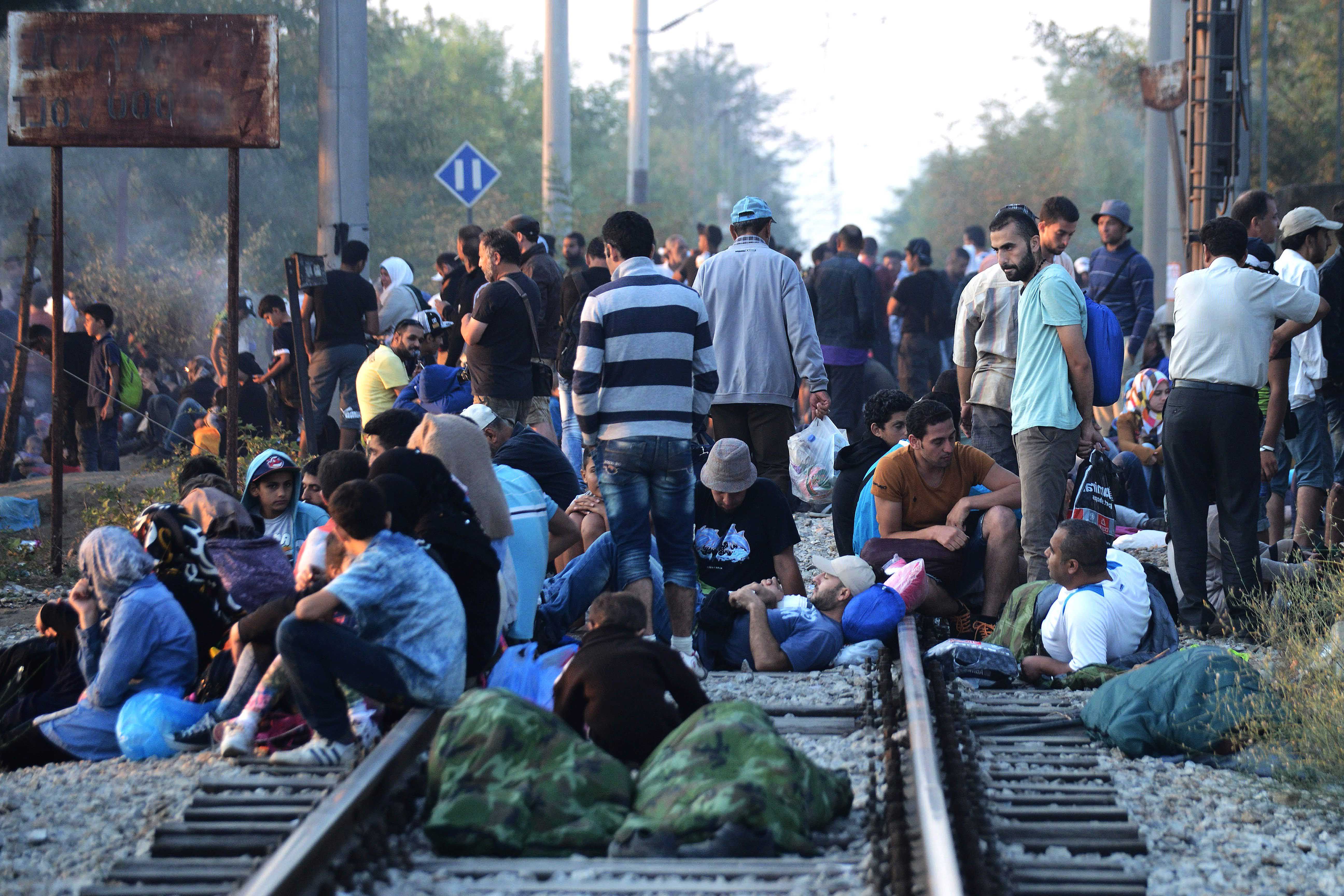
Unable to go back to Serbia, barred from Hungary, and hindered to enter Slovenia, 18,000 migrants are at the moment stranded in Croatia. Thousands are waiting at the tiny rail station of Tovarnik near Serbia for a train which never comes. Earlier in Tovarnik and Batina, another border town, migrants scuffled with police.
Israeli Prime Minister Benjamin Netanyahu proudly shows the way by pointing out that no illegal immigrants have gained access to Israel via Egypt since his erection of a fence along the southern border. Another fence is just built along Israel’s eastern border with Jordan. Gaza and the West Bank are walled off since a long time.
Netanyahu: “This is a success that almost no Western country — and very few countries at all — has been able to achieve, but Israel has achieved it, and I am determined to continue this on all of Israel’s borders.”
Defense Minister Moshe Ya’alon added, “We can see the stream of refugees washing over Europe. What is happening in Europe could have happened to us, had we not behaved in an intelligent manner.”
The silent majority of Europeans in the meantime frowns and waits for their moment in the voting booth to heave right-wing xenophobic parties into government. These parties are also anti-EU and they will further a EU-breakup with all their might.
Who expects that in a time of increasing egoism, individualism, and consumerism the ideals of solidarity and sharing are still held up? People are told that they have to be competitive in the job market, so it is logical that they try to get rid of the foreign competitors for jobs.
The argument, that Europe’s wealth was gained by colonial exploitation and ruthless resource extraction and that it is only “fair to share” will not weigh much for the broad population, as resources become scarce and food prices as well as utility fees rise. The rentier class wants a bigger part of the pie and prescribes austerity, end of social welfare, and the privatization of all common good. The migrants want a part of the pie too.
Something’s gotta give.
Germany has voiced the intent to get the newly arriving migrants into work as quickly as possible to speed their assimilation into German society, ignoring popular fears that the migrants will take away jobs and put pressure on wages. Companies are clearly happy with this policy, the unions understandably less so. Despite the reservations of the unions this is probably the most sensible thing to do and the only way out of the quagmire.
A part of the migrants will try to integrate and adapt, others will try to curb out cultural enclaves (ghettos) where they keep to themselves. This must not necessarily be a bad thing, the Jewish shtetls were cultural jewels which benefitted their surroundings and enriched eastern Europe. The destruction of the shtetls by Hitler was a human tragedy and a terrible loss for European culture.
The experience with muslim enclaves in Britain, the Netherlands, and France though is not encouraging.
The idealists will find out that multiculturalism is related to globalization, while localism (small is beautiful, buddhist economics) also means the preservation of indigenous national, regional, and local cultures.
The Palestinians in Syria were an example how migrants can be integrated peacefully. Palestinians had all citizen rights and lived comfortably in Yarmouk and other camps. Yarmouk had hospitals, schools, shops, and all other kinds of infrastructure, 120,000 people lived there and the camp had become a vibrant district of Damascus.
The integration of the Palestinian refugees was easier of course because the Palestinians were Arabs and Arab solidarity was always an important factor in Syrian politics. Palestinians also shared the same religions with Syrians (Islam and Orthodox Christianity).
Unfortunately many young Palestinian men joined the Islamic terror groups, lured by financial incentives and the fiery rhetoric of Saudi Arabia funded imams. This is a sad story of betrayal and the clearest explanation why the Palestinians will not be able to win their homeland back from Israel.
Yarmouk is now destroyed and only 8,000 people remain there.
One last word:
14 years ago on September 11, 2001 the USA was attacked by 0 Iraqis and 0 Afghans and 0 Iranians and 0 Libyans and 0 Syrians. The hijackers in the 9/11 attacks came from Saudi Arabia (15) the United Arab Emirates (2), Egypt (1), and Lebanon (1).
Something is fishy here.