20.10.2015

Honoring a great man


Visitors and readers of this blog, who solely rely on the opulent but unbalanced and insufficient diet of Western mainstream media, may shudder by the idea that one of the most defamed, demonized, ridiculed, and smeared world leaders could be regarded as a great man. Especially as this man was titled a military dictator, a “mad man,” an irrational, erratic, patronizing, and pompous despot with female bodyguards and golden toilets.

Why do people still believe the media lies? Why don’t people see the glaring discrepancies and contradictions in the official narrative? Why don’t people learn from disasters and why do they easily forget broken promises? Why do people still support a political system which fails them?

Anyway, the following text is meant only for readers who don’t uncritically believe Western media propaganda. Anybody else is asked kindly to ignore this post.
Mandela Gaddafi 2
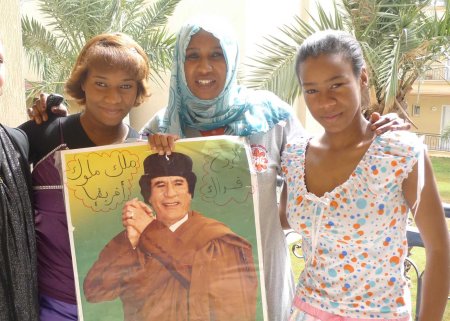
Today is the four-year anniversary of the NATO-instigated slaying of Libya’s leader Muammar Gaddafi. His barbarous torture and execution was the crowning of combined efforts by the USA and the European Union to destroy Africa’s then richest nation and with it the worlds most ambitious project to build a just and equal society free from colonial dictates.

Gaddafi’s shadow is still looming large. He called himself “Guide of the Revolution” and declared Libya a Jamahiriya or “state of the masses,” run by local committees. Contrary to Western propaganda, Gaddafi’s Libya was one of the world’s most democratic states.

The Jamahiriya vision

Under Gaddafi’s unique system of direct democracy, traditional institutions of government were disbanded and abolished, while the people decided directly through a multitude of committees and congresses on various levels.

Libya was highly decentralized and divided into several small communities that were essentially mini-autonomous States within a State. These autonomous States had control over their districts and could make a wide range of decisions, including how to allocate oil revenue and budgetary funds. Within these mini autonomous States, the three main bodies of Libya’s democracy were Local Committees, Basic People’s Congresses, and Executive Revolutionary Councils.

The BPC (Basic People’s Congress, or Mu’tamar shaʿbi asāsi) was Libya’s parliament, but it was not comprised merely of elected representatives who discussed and proposed legislation on behalf of the people; rather, the Congress allowed all Libyans to directly participate in this process. Eight hundred People’s Congresses were set up across the country and all Libyans were free to attend and shape national policy and make decisions over all major issues including budgets, education, industry, and the economy.
Basic Popular Congress
The fundamental difference between Western political systems and the Libyan “Jamahiriya’s direct democracy” was that in Libya all citizens were allowed to voice their views directly — not in one parliament of only a few hundred wealthy and detached politicians — but in hundreds of committees attended by tens of thousands of ordinary citizens.

On numerous occasions Muammar Gaddafi’s proposals were rejected by popular vote during Congresses and the opposite was approved and enacted as legislation.

For instance, Gaddafi several times proposed the abolition of capital punishment and he pushed for home schooling over traditional schools. However, the People’s Congresses wanted to maintain the death penalty and classic schools, and the will of the People’s Congresses prevailed. 

Caring for the people

In 1967 Colonel Gaddafi inherited one of the poorest nations in Africa; by the time he was murdered, he had transformed Libya into Africa’s richest nation. Prior to the NATO bombing campaign in 2011, Libya had the highest HDI (Human Development Index), the lowest infant mortality, and the highest life expectancy in all of Africa.

Education and health care were free. Before Gaddafi only 25 percent of Libyans were literate, at the time of his death the figure was 83 percent.
libya HDI
If Libyans could not find the educational institutions or medical facilities they needed inside the country, the government paid the costs to go abroad, and also paid an allowance of 2,300 US$ per month for accommodation and other expenses. 25 percent of Libyans had a university degree. If a graduate was unable to get employment, the state would pay the average salary of his/her profession until a job was found.

A portion of Libyan oil sales was credited directly to the bank account of every Libyan citizen. There was no interest on loans, banks in Libya were state-owned and loans were given to all citizens at zero percent interest by law. Libyans who wanted to take up farming would receive land, a house, farming equipment, seeds, and livestock for free to start their farm.

Having a home was considered a human right, electricity was free for all. All newlyweds in Libya received 50,000 US$ to buy an apartment and start up the family. A mother who gave birth to a child received 5,000 US$.

Libya had no external debt and its reserves amounted to 150 billion US$. Most of this money disappeared after Gaddafi’s death, stolen by the big Western banks.

Libya under Gaddafi built the world’s largest irrigation project, known as the Great Manmade River project, to make water easely available throughout the desert country.
Great Man Made River irrigation
The HDI (Human Development Index), a composite measure of health, education, and income, was 0.760, which gave the country rank 64 out of 187 nations with comparable data. The HDI of Arab states was 0.444 in 1980 and 0.641 in 2011, placing Libya far above the regional average. Life expectancy was 72.3 years in 2009, among the highest in the developing World.

All these facts and data are confirmed by WHO, UNESCO, and other international organizations, they cannot be disputed.

Destroying the vision

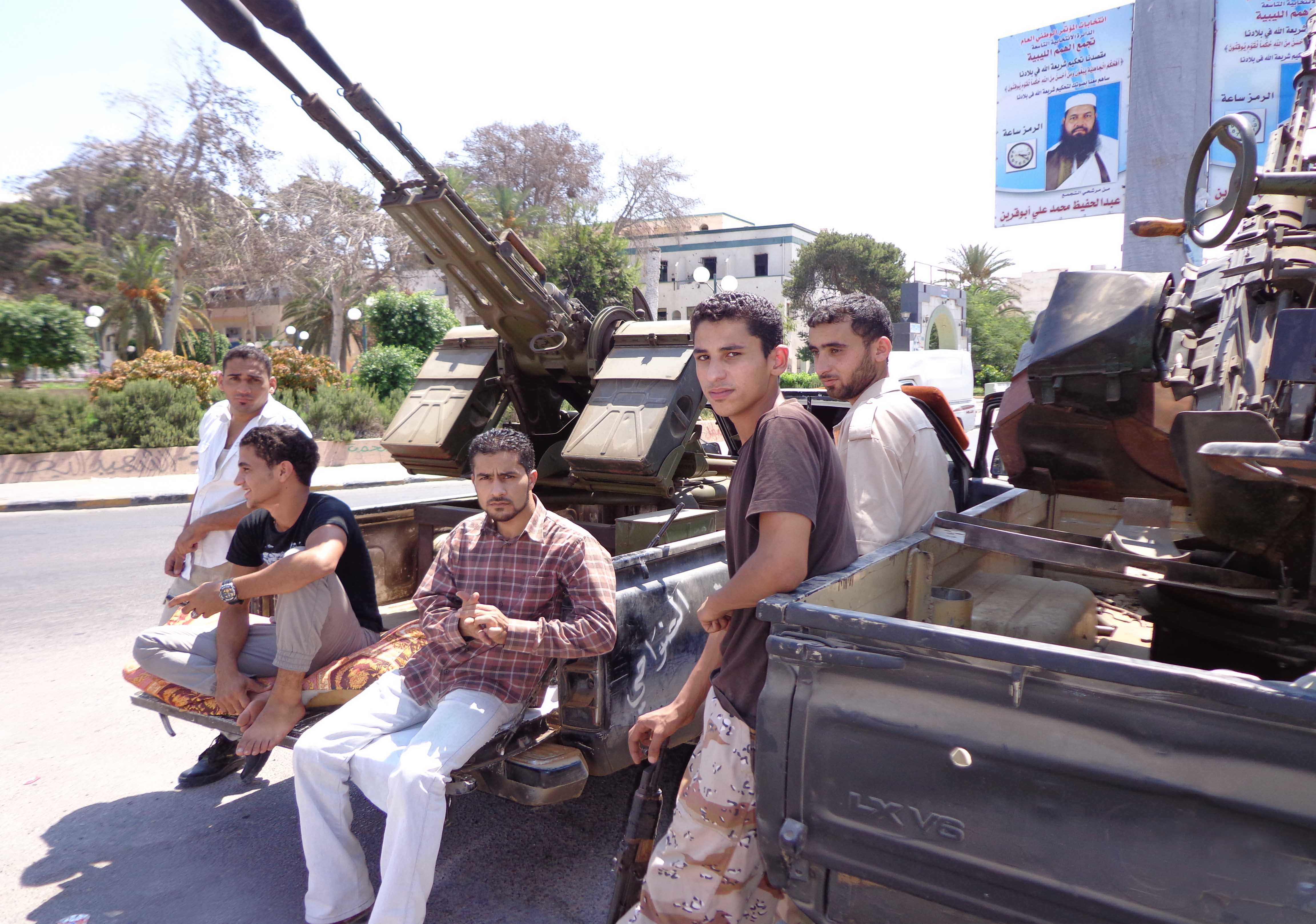
After the devastating NATO bombing campaign, which killed an estimated 40,000 Libyans, and the destruction of the state institutions by Islamic militants, which were funded, trained, equipped, and coordinated by Western agents, the country descended into chaos. At the moment two governments are vying for power and various armed groups battle for control of the energy resources.

The former capital city of Tripoli is under the control of a government recognized by no other state. A militia alliance of Islamists overran Tripoli in August 2014 in a bloody war that ended with the destruction of the airport and many residential areas. The Islamists established a rival government and parliament, while the internationally recognized administration was forced to flee to Tobruk in eastern Libya. The country is now divided in two, with many regions beyond state control.
Nobody talks about Libya 4
The local branch of IS (Islamic State) under the leadership of Abdelhakim Belhadj is metastasizing at an alarming rate. Belhadj was once courted by the US administration and he was an important Western ally in the quest to topple Gaddafi. In 2011, US Senator John McCain hailed Belhadj as a “heroic freedom fighter” and Washington gave his organization LIFG (Libyan Islamic Fighting Group) arms and logistical support despite its affiliation to Al Qaeda.

Less than two weeks ago, IS launched its most daring attack in Libya on a prison compound at Mitiga air base, a secure location in Tripoli.

Taking advantage of the chaos, IS has certainly gained a foothold, until now conquering three cities: Derna in the east, Subratha in the west, and Sirte in the middle. Sirte, Muammar Gaddafi’s hometown, was one of the last holdouts against the NATO bombing raids and it had to be completely destroyed in order to be liberated from Gaddafi’s rule. The remaining inhabitants of Sirte are now taken in by Bani Walid, another Gaddafi holdout which was badly damaged but miraculously managed to get rid of the Islamists. Bani Walid is now an oasis of social stability in a desert of chaos and crime.

Gaddafi’s vision is still alive in Bani Walid and in many other Libyan places, which cannot be named because this would attract attention by Islamic militias and Western agents.

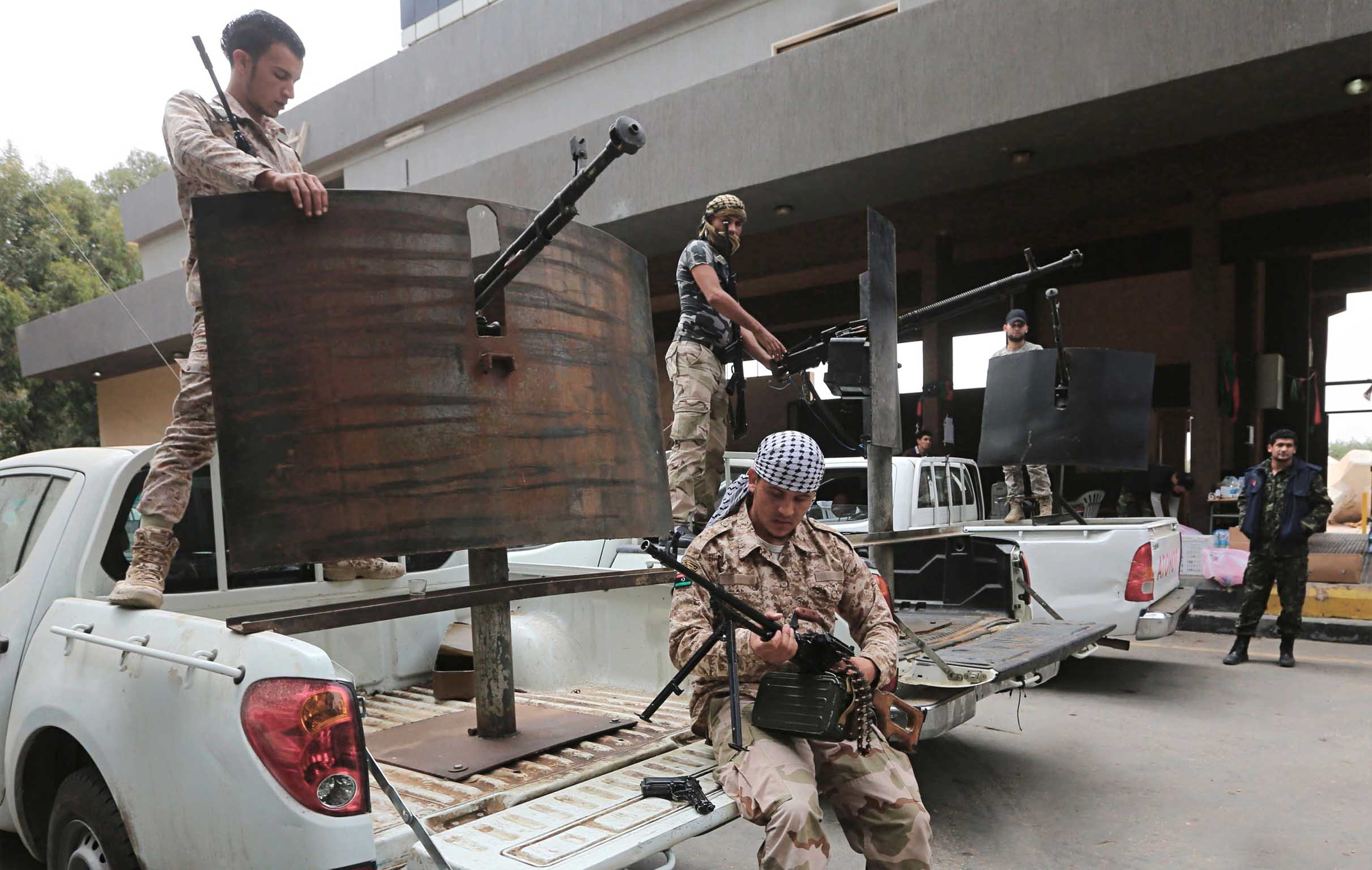
While the south has become a no man’s land and a haven for terrorists and criminals, in the north opposing militias battle for territory and have set up a reign of terror in their areas of influence. Thousands of Libyans are still displaced inside the country and an estimated one million people try to escape the chaos, crossing illegally into Egypt and Tunisia. In the coastal areas people-smugglers are ferrying migrants to Europe on flimsy boats, causing thousands to drown.
Nobody talks about Libya 2
Sporadic gunfire, roadblocks and power shortages have become routine. Most schools and universities have yet to open their doors for this academic year, and schoolchildren are spending most of their time outdoors playing in unsafe streets.

Robberies, evictions, arbitrary detentions, rapes, random murders, and general lawlessness characterize todays Libya. For instance criminal gangs from Al-Sayad and Al-Mamoura, who control the coastal road from Al-Sayad to Al-Mamoura in western Tripoli have abducted dozens of citizens from Al-Zawiyato for ramson, actions which will possibly cause an armed conflict between the Al-Aziziya and Wirshiffana tribes.

Benghazi, the second major city in Libya, has been almost completely destroyed in the ongoing war between the Libyan army of the internationally recognized government, based in El Bayada, and different Islamist factions concentrating mainly near the seafront north of the city.

All Western embassies and consulates in Libya closed after US Ambassador J. Christopher Stevens and three CIA officers were killed in Benghazi. Egypt, Algeria, and Tunisia have sealed their borders with Libya.

The Libyan economy has collapsed. Turkey and Qatar, which invested massively in the hope that their local conspirators, the Libyan Muslim Brotherhood, would pave the way to economic domination, have closed shop, suffering painful financial losses.

Oil production, the main source of government revenue, is down by three quarters, and the country now pumps less than half a million barrels a day, denying the treasury much-needed cash to pay the thousands of civil servants on its payroll. Government salaries are at least three months behind payment schedule.

All major infrastructure projects that were in progress before the NATO bombing campaign have been on hold since all major foreign companies left, leaving behind rusting building cranes dotting the Tripoli skyline.

Ordinary people struggle to make ends meet, with skyrocketing prices and little subsidized basic food available. Medical services are almost nonexistent, forcing people to seek treatment in neighboring Tunisia. Those with financial means trying to go to Europe for whatever reason find it even harder, since Western embassies are closed; in order to apply for a visa, Libyan citizens must travel to Tunis, Tunisia.
Seif al-Islam 2
Seif al-Islam, Gaddafi’s favorite son and his rumored successor, was arrested a few days after his father’s death as he was trying to flee the country. Those who caught him were Thuwwar from the Zintan region, in Libya’s southwest. They paraded Gaddafi’s son in front of cameras and people, and it was rumored that they cut off his fingers to torture him.

But when Tripoli, then the only central government, asked for him to be handed over, the Zintanis refused. Even when the ICC (International Criminal Court) asked, his captors refused. Later, videos of him in jail were smuggled out, in which he seemed much calmer and even revered by his prison guards. In the years since Gaddafi’s death, Zintan evolved from a staunch revolutionary city to a pro-Tobruk stronghold. In Libya’s de facto split of 2014, Zintan became Tobruk’s enclave in the west, in the heart of Tripoli’s zone of influence.

The government in Tobruk itself is now considered by insiders as a covert pro-Gaddafi government.

When a Tripoli court sentenced Seif Gaddafi to death, it was in absentia and he was well protected in the Zintan jail. While Saif al-Islam Gaddafi is relatively safe, other high-level figures of his father’s Jamahiriya are not. The most notable ones in Tripoli’s prisons are Abdullah Senussi, the last prime minister of Libya, Baghdadi al Mahmoudi, and Gaddafi’s younger son, al-Saadi. The two old men have no chance to ever be freed or to escape and they are now awaiting execution, which may happen at any time. In August 2015 a video surfaced of al-Saadi Gaddafi being tortured by his jailers.
death sentence for libya peace
Wile the Islamic State is waiting for its chance to come, the fighting between the two rival governments doesn’t abate. Months of UN-brokered talks to achieve a peace deal and form a national unity government have run aground.

Despite weariness and exhaustion, the most powerful players vow to continue fighting. On Tobruk’s side, it is General Khalifa Hafter and his militia-turned-army which continues fighting and bombing in Benghazi and near Tripoli. On Tripoli’s side, it is mainly the Islamic militia from Misrata who coalesce behind Salah Badi’s al-Sumud Front.

A very short epilog

Among all the countless crimes which Western colonial powers committed against former colonies, the destruction of Libya was the most insidious and heinous one. The carelessness, the disregard of life, and the resulting unimaginable bloodshed were accompanied by a cynical and contemptuous propaganda war which turned every fact on its head.

In 2012 the European Union, which is practically the political wing of NATO, got its Peace Nobel Price on behalf of NATO for the destruction of Libya. UN president Barrack Obama couldn’t be nominated for the Peace Nobel Price, he got it already in 2009.

This is an Orwellian scene.

And yet, it doesn’t help to feel outrage, to be incensed and furious. It doesn’t help to be engulfed by hate against the monstrous war criminals in the Oval Office, in Downing Street 10, in the Elysee Palace, in Brussels, in the Bundeskanzleramt, and other Western power centers.

It maybe helps to calmly and steadily inform, tell the truth, sow the seeds of doubt. It helps to boycott and opt out, to give an example how to bypass the system and how to avoid becoming guilty.

Not listening to the lies, not colluding with the masters of destruction, not playing their game, building one’s little paradise and refuge, and thereby spreading the message.

Remembering and praising the great persons who fought against evil for the sake of humanity.

18.10.2015

I wish to resign and cease to be a Jew


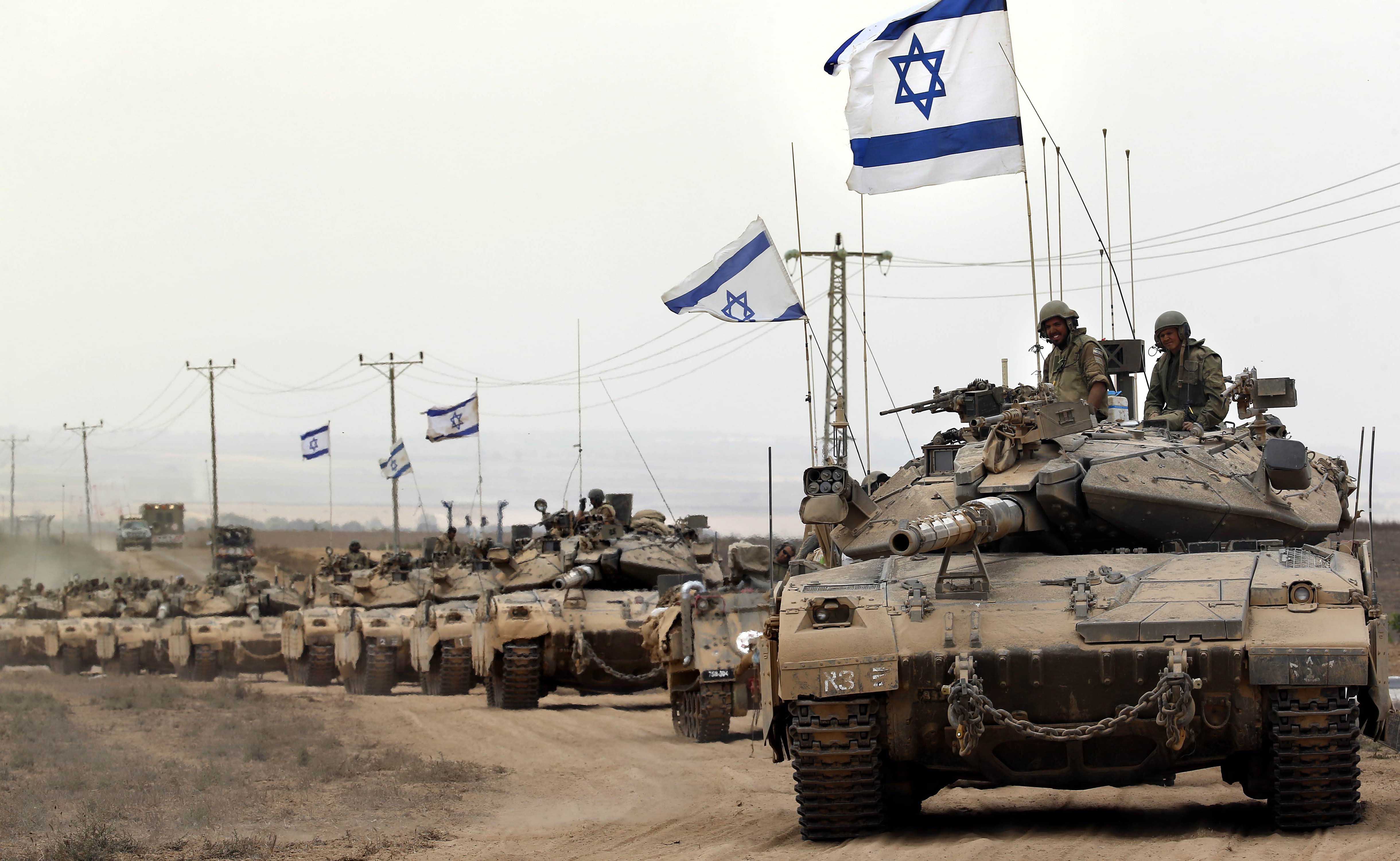
Israel has killed 40 Palestinians since the start of October, 2,000 others are injured, thousands suffer from aftereffects of toxic tear gas. The Jewish state seems to accelerate ethnic cleansing in the occupied territories, making life as miserable as possible for Arabs inside the envisioned Eretz Israel.

While Israelis jubilant watch Palestinian teenagers bleeding to death in the streets, Palestinian houses are continuously bulldozed, Palestinian olive trees are burned, fields are devastated, water is cut off. Nobody takes notice anymore because all this has become daily routine.

Life in Gaza, the biggest concentration camp in the world, is unbearable, as the drinking water is contaminated, food gets scarce, and the thousands of houses, which Israel has destroyed in air strikes and artillery bombardments, cannot be rebuild because supplies are blocked.

Will Gaza become an extermination camp?

Israeli Justice Minister Ayelet Shaked wrote during Israel’s attack on Gaza in the summer of 2014:

The Palestinian people has declared war on us, and we must respond with war. Not an operation, not a slow-moving one, not low-intensity, not controlled escalation, no destruction of terror infrastructure, no targeted killings. Enough with the oblique references. This is a war…It is not a war against terror, and not a war against extremists, and not even a war against the Palestinian Authority…This is a war between two people. Who is the enemy? The Palestinian people… What’s so horrifying about understanding that the entire Palestinian people is the enemy? Every war is between two peoples, and in every war the people who started the war, that whole people, is the enemy… Behind every terrorist stand dozens of men and women, without whom he could not engage in terrorism. They are all enemy combatants, and their blood shall be on all their heads. Now this also includes the mothers of the martyrs… They should follow their sons, nothing would be more just. They should go, as should the physical homes in which they raised the snakes. Otherwise, more little snakes will be raised there.
IDF Gaza 2014
Not every Israeli thinks this way. Shlomo Sand is an Emeritus Professor of History at Tel Aviv University. He was born in Austria to Polish Jewish survivors of the holocaust and his cultural background was grounded in Yiddish culture.

Though his past was Jewish, today he sees Israel as one of the most racist societies in the Western world. In his book How I Stopped Being a Jew, Shlomo Sand explains why he doesn’t want to be Jewish anymore. The following text is an edited excerpt from his book.

Shlomo Sand  Intifada Palestine

During the first half of the 20th century, my father abandoned Talmudic school, permanently stopped going to synagogue, and regularly expressed his aversion to rabbis. At this point in my own life, in the early 21st century, I feel in turn a moral obligation to break definitively with tribal Judeocentrism. I am today fully conscious of having never been a genuinely secular Jew, understanding that such an imaginary characteristic lacks any specific basis or cultural perspective, and that its existence is based on a hollow and ethnocentric view of the world. Earlier I mistakenly believed that the Yiddish culture of the family I grew up in was the embodiment of Jewish culture. A little later, inspired by Bernard Lazare, Mordechai Anielewicz, Marcel Rayman and Marek Edelman – who all fought antisemitism, nazism and Stalinism without adopting an ethnocentric view – I identified as part of an oppressed and rejected minority. In the company, so to speak, of the socialist leader Léon Blum, the poet Julian Tuwim and many others, I stubbornly remained a Jew who had accepted this identity on account of persecutions and murderers, crimes and their victims.

Now, having painfully become aware that I have undergone an adherence to Israel, been assimilated by law into a fictitious ethnos of persecutors and their supporters, and have appeared in the world as one of the exclusive club of the elect and their acolytes, I wish to resign and cease considering myself a Jew.

Although the state of Israel is not disposed to transform my official nationality from “Jew” to “Israeli”, I dare to hope that kindly philosemites, committed Zionists and exalted anti-Zionists, all of them so often nourished on essentialist conceptions, will respect my desire and cease to catalogue me as a Jew. As a matter of fact, what they think matters little to me, and still less what the remaining antisemitic idiots think. In the light of the historic tragedies of the 20th century, I am determined no longer to be a small minority in an exclusive club that others have neither the possibility nor the qualifications to join.

By my refusal to be a Jew, I represent a species in the course of disappearing. I know that by insisting that only my historical past was Jewish, while my everyday present (for better or worse) is Israeli, and finally that my future and that of my children (at least the future I wish for) must be guided by universal, open and generous principles, I run counter to the dominant fashion, which is oriented towards ethnocentrism.

As a historian of the modern age, I put forward the hypothesis that the cultural distance between my great-grandson and me will be as great or greater than that separating me from my own great-grandfather. All the better! I have the misfortune of living now among too many people who believe their descendants will resemble them in all respects, because for them peoples are eternal – a fortiori a race-people such as the Jews.
Israel bulldozer mosque
I am aware of living in one of the most racist societies in the western world. Racism is present to some degree everywhere, but in Israel it exists deep within the spirit of the laws. It is taught in schools and colleges, spread in the media, and above all and most dreadful, in Israel the racists do not know what they are doing and, because of this, feel in no way obliged to apologize. This absence of a need for self-justification has made Israel a particularly prized reference point for many movements of the far right throughout the world, movements whose past history of antisemitism is only too well known.

To live in such a society has become increasingly intolerable to me, but I must also admit that it is no less difficult to make my home elsewhere. I am myself a part of the cultural, linguistic and even conceptual production of the Zionist enterprise, and I cannot undo this. By my everyday life and my basic culture I am an Israeli. I am not especially proud of this, just as I have no reason to take pride in being a man with brown eyes and of average height. I am often even ashamed of Israel, particularly when I witness evidence of its cruel military colonization, with its weak and defenseless victims who are not part of the “chosen people”.

Earlier in my life I had a fleeting utopian dream that a Palestinian Israeli should feel as much at home in Tel Aviv as a Jewish American does in New York. I struggled and sought for the civil life of a Muslim Israeli in Jerusalem to be similar to that of the Jewish French person whose home is in Paris. I wanted Israeli children of Christian African immigrants to be treated as the British children of immigrants from the Indian subcontinent are in London. I hoped with all my heart that all Israeli children would be educated together in the same schools. Today I know that my dream is outrageously demanding, that my demands are exaggerated and impertinent, that the very fact of formulating them is viewed by Zionists and their supporters as an attack on the Jewish character of the state of Israel, and thus as antisemitism.

However, strange as it may seem, and in contrast to the locked-in character of secular Jewish identity, treating Israeli identity as politico-cultural rather than “ethnic” does appear to offer the potential for achieving an open and inclusive identity. According to the law, in fact, it is possible to be an Israeli citizen without being a secular “ethnic” Jew, to participate in its “supra-culture” while preserving one’s “infra-culture”, to speak the hegemonic language and cultivate in parallel another language, to maintain varied ways of life and fuse different ones together. To consolidate this republican political potential, it would be necessary, of course, to have long abandoned tribal hermeticism, to learn to respect the Other and welcome him or her as an equal, and to change the constitutional laws of Israel to make them compatible with democratic principles.

Most important, if it has been momentarily forgotten: before we put forward ideas on changing Israel’s identity policy, we must first free ourselves from the accursed and interminable occupation that is leading us on the road to hell. In fact, our relation to those who are second-class citizens of Israel is inextricably bound up with our relation to those who live in immense distress at the bottom of the chain of the Zionist rescue operation. That oppressed population, which has lived under the occupation for close to 50 years, deprived of political and civil rights, on land that the “state of the Jews” considers its own, remains abandoned and ignored by international politics. I recognize today that my dream of an end to the occupation and the creation of a confederation between two republics, Israeli and Palestinian, was a chimera that underestimated the balance of forces between the two parties.
Gaza children 4
Increasingly it appears to be already too late; all seems already lost, and any serious approach to a political solution is deadlocked. Israel has grown used to this, and is unable to rid itself of its colonial domination over another people. The world outside, unfortunately, does not do what is needed either. Its remorse and bad conscience prevent it from convincing Israel to withdraw to the 1948 frontiers. Nor is Israel ready to annex the occupied territories officially, as it would then have to grant equal citizenship to the occupied population and, by that fact alone, transform itself into a binational state. It’s rather like the mythological serpent that swallowed too big a victim, but prefers to choke rather than to abandon it.

Does this mean I, too, must abandon hope? I inhabit a deep contradiction. I feel like an exile in the face of the growing Jewish ethnicization that surrounds me, while at the same time the language in which I speak, write and dream is overwhelmingly Hebrew. When I find myself abroad, I feel nostalgia for this language, the vehicle of my emotions and thoughts. When I am far from Israel, I see my street corner in Tel Aviv and look forward to the moment I can return to it. I do not go to synagogues to dissipate this nostalgia, because they pray there in a language that is not mine, and the people I meet there have absolutely no interest in understanding what being Israeli means for me.

In London it is the universities and their students of both sexes, not the Talmudic schools (where there are no female students), that remind me of the campus where I work. In New York it is the Manhattan cafes, not the Brooklyn enclaves, that invite and attract me, like those of Tel Aviv. And when I visit the teeming Paris bookstores, what comes to my mind is the Hebrew book week organized each year in Israel, not the sacred literature of my ancestors.

My deep attachment to the place serves only to fuel the pessimism I feel towards it. And so I often plunge into despondency about the present and fear for the future. I am tired, and feel that the last leaves of reason are falling from our tree of political action, leaving us barren in the face of the caprices of the sleepwalking sorcerers of the tribe. But I cannot allow myself to be completely fatalistic. I dare to believe that if humanity succeeded in emerging from the 20th century without a nuclear war, everything is possible, even in the Middle East. We should remember the words of Theodor Herzl, the dreamer responsible for the fact that I am an Israeli: “If you will it, it is no legend.”

As a scion of the persecuted who emerged from the European hell of the 1940s without having abandoned the hope of a better life, I did not receive permission from the frightened archangel of history to abdicate and despair. Which is why, in order to hasten a different tomorrow, and whatever my detractors say, I shall continue to write.

Further reading:

http://www.counterpunch.org/2015/10/15/israel-the-media-and-the-anatomy-of-a-sick-society/
http://www.globalresearch.ca/palestinian-refugees-and-the-history-of-israels-ethnic-cleansing-the-role-of-unwa/
gaza woman morgue


14.10.2015

MH-17 revisited


My trust in the integrity of airplane crash investigative bodies or commissions is limited, especially since the Lockerbie Pan Am Flight 103 investigation, where Libya’s leader, the late Colonel Muammar Gaddafi, was framed and forced to pay for a crime which he didn’t commit.

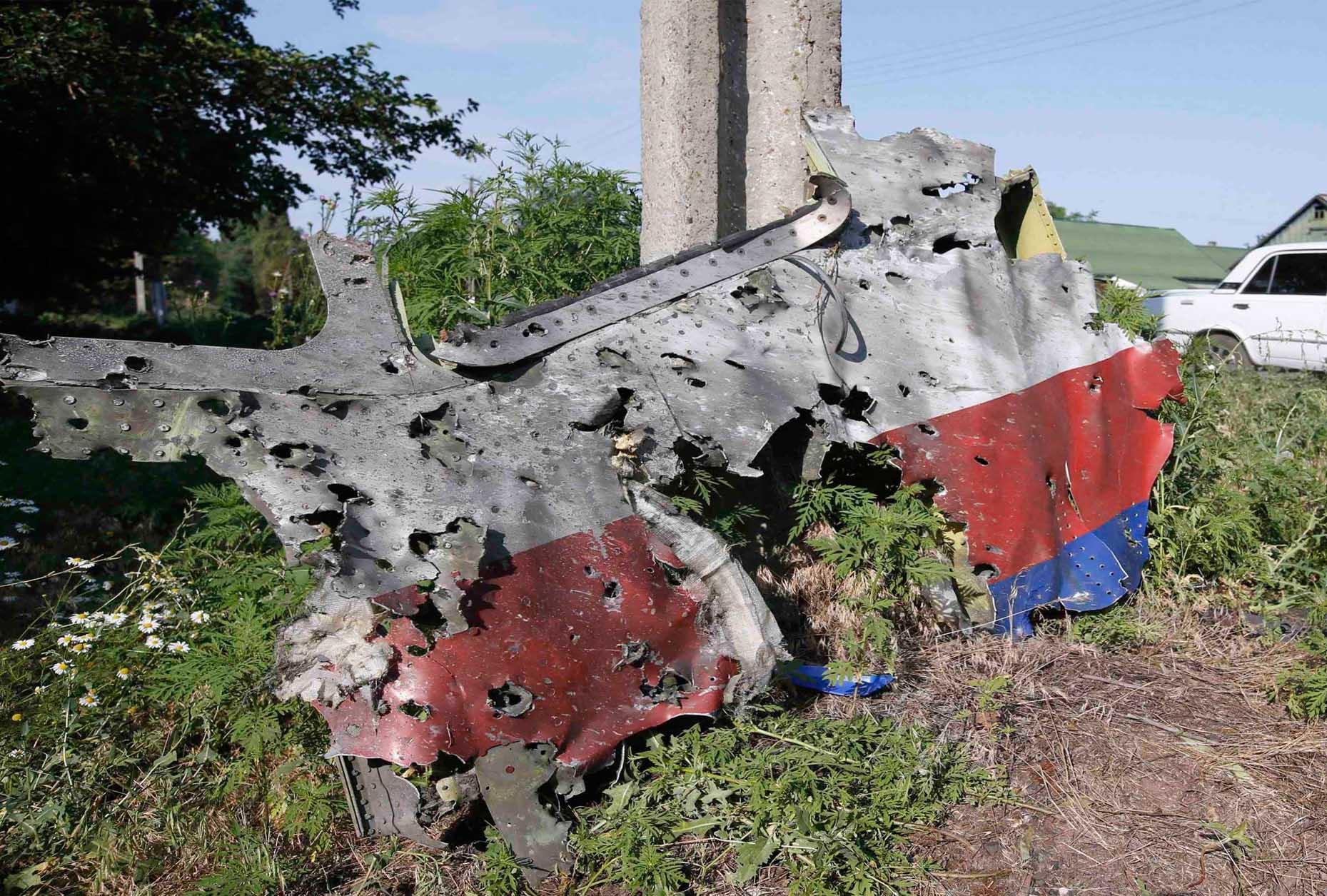
I further have to admit that I’m biased and always thought that the Ukraine was responsible for the terrible tragedy of the downed Malaysian Boing 777 Flight MH-17. From all the theories about this incident the hypothesis of an attack by a Ukrainian SU-25 fighter jet seemed most plausible and there were several witness reports who appeared to confirm this. Round bullet holes in fragments of the wings support this theory.
MH17 wreckage 1
The Dutch investigation into the downing of Flight MH-17 comes to a different conclusion and one has to take the findings seriously, though the published report leaves crucial questions unanswered and has the following week points:

The gathering of evidence was uneven and spotty — many pieces of the plane still remain on the ground in Ukraine. It cannot be ruled out that evidence was fabricated or tampered with. A local fire brigade commander, who had collected a lot of wreckage and personal belongings of victims, revealed in a TV-interview that he had to beg Dutch investigators for month to come and collect the material.

Evidence from the manufacturer of the Buk missile system Almaz-Antey was not used.

Russian government data was ignored.

Ukrainian Air Force records were not examined.

Dutch investigators only got data from Ukraine’s air traffic control’s secondary radar, as the primary radar was according to Ukrainian authorities not active.

The investigation was possibly compromised by a central role given to the Ukrainian government which had the power to veto parts of the report which it didn’t like and exclude them from the final version.

US data in the form of radar tracks and satellite images was not examined because it was never offered and never demanded.

On July 20, 2014, US Secretary of State John Kerry declared on NBC’s “Meet the Press” that “we picked up the imagery of this launch. We know the trajectory. We know where it came from. We know the timing. And it was exactly at the time that this aircraft disappeared from the radar.”

The fact that the USA never offered data which to a certainty exists — a US spy satellite was directly overhead at the time of the crash — is an incriminating fact which devalues the Dutch investigation.

The main finding of the report:

The aeroplane was struck by a 9N314M warhead as carried on a 9M38-series missile and launched by a Buk surface-to-air missile system. This conclusion is based on the combination of the following: The recorded sound peak, the damage pattern found on the wreckage caused by the blast and the impact of the fragments, the bow-tie and cubic shaped fragments found in the cockpit and in the bodies of the crew members in the cockpit, the injuries sustained by three crew members in the cockpit, the analysis of the in-flight break-up, the analysis of the explosive residues and paint found and the size and distinct, bow-tie, shape of some of the fragments.

The conclusion, that it was a Buk missile lies just on three small metal fragments found in the bodies of the pilots, which “although heavily deformed and damaged, had distinctive shapes; cubic and in the form of a bow-tie.”
MMH-17 8
Speaking to reporters after a news conference, Dutch Safety Board president Tjibbe Joustra said, pro-Russian rebels were in charge of the area from where the missile which hit MH-17 had been fired. But Joustra also confirmed that the MH-17 was bought down by a Buk surface to air missile, launched from a 320 square kilometer area. An area of this size would have included both rebel and government controlled locations. 

Tjibbe Joustra was national coordinator for counter terrorism in the Netherlands, in which function he closely worked with the Dutch secret service and the army. In February 2011 he was appointed president of the Safety Board by the government. The well respected former president Pieter van Vollenhoven said, that  because of this appointment the independence of the Safety Board was in danger.


The Buk missile is a Russian-made ground-to-air missile which has been produced for decades in various versions. Earlier versions are no longer in use in Russia, but are still in Ukrainian arsenals. Almaz-Antey, the manufacturer of Buk, conducted tests and concluded that an early version of the missile was responsible for impact holes in the MH-17 debris.

The experiments were carried out on July 31 and October 7 by detonating 9N314M BUK missile warheads, which are currently deployed by the Russian military. The results of the tests indicate that an explosion from such a missile leaves distinctive “butterfly-shaped” puncture holes due to the shape of the shrapnel.

The particles which hit the plane were cube-shaped, not bow-shaped. The last missile of this type was produced in the Soviet Union in 1986, and its life span is 25 years including all prolongations. All missiles of this type were decommissioned from the Russian Army in 2011. Almaz-Antey noted that in 2005 there were 991 missiles armed with 9M38M1 warheads in arms depots in Ukraine.
MMH-17 5
The Dutch report criticizes Ukraine for not closing the airspace for civilian flights:

“There was sufficient reason for the Ukrainian authorities to close the air space above the eastern part of their country,” because at least 16 Ukrainian military aircraft and helicopters had been shot down in the crash area in the months before the disaster.

About 160 civilian aircraft passed over the area on the day MH-17 was downed until the airspace was closed after the crash, the report found.

The report incriminates Russian authorities for not providing raw data of their radar systems:

“The Russian Federation did not provide the radar data stating that no radar data was saved, but instead provided the radar screen video replay, which showed combined surveillance primary and secondary radar. In the absence of the underlying radar data (so-called raw data), the video information could not be verified”
The Russian Federal Air Transport Agency told the Dutch board that it didn’t save radar data because the incident happened outside Russian territory (not a very credible explanation when every official on every level must have been aware of the disaster and the necessity to keep all evidence for an eventual investigation).

Both parties use every trick in the book to exonerate their side and smear the opponent. There is too much at stake to allow for nuance and fairness. The claims and counter claims make one’s head spin.

I’m still not convinced about anything. The investigation was politically charged. The cited evidence would be inadmissible in a criminal court. I don’t rule out a “false flag” operation, I don’t rule out that somebody thought this was Putin’s plane, I don’t rule out that pro-Russian rebels or Russian forces mistook the passenger plane for a Ukrainian military transport aircraft.

I wonder if we ever will know for sure who did it, but one thing I know: War is insanity and weapons are evil, even if they are needed for self defense and survival.

Essential reading:


MMH-17 4

11.10.2015

Words of caution


Western dissidents and anti-imperial activists around the globe were jubilant when Russia started a bombing campaign against Islamic terrorists in Syria, who have torn to shreds a comparatively stable country and since nearly five years try to topple one of the few governments in the Middle East who care for their people. Brilliant analyses and comments tried to illuminate the geopolitical scene and many lauded Russia for standing up to the imperial forces.

Yet, several questions remain unanswered: 

1. Does the ancient wisdom, that violence only begets more violence, not count here?

2. Were all peaceful means exhausted (considering the intense diplomatic efforts of Russia to organize negotiations between opposition and government it seems so).

3. Could Russia overplay its cards, get exhausted, fall into a trap?

4. What can be done to stop the imperial rampage across the globe?

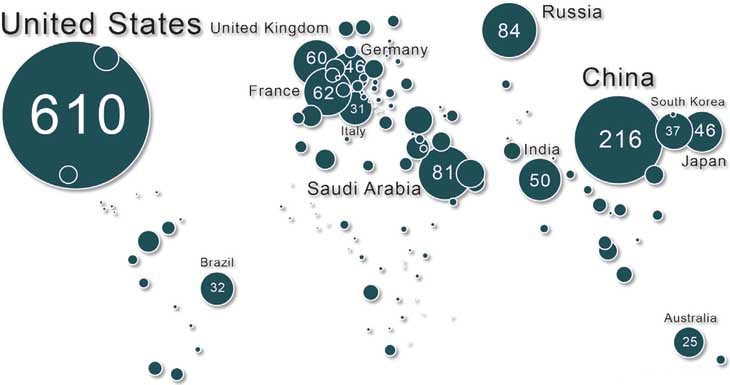
The US military budget of 620 billion US$ (including misnamed and secret funds rather one trillion US$) is matched by a 84 billion US$ (In reality some 100 billion US$) Russian military budget. The 7 – 10 times bigger US military budget will not result in an equally bigger military superiority because half of the money is wasted, payed for overpriced weapons and services, or embezzled.

Yet, if the financial efforts of the US taxpayers only result in a 3 – 4 times stronger military might it would be enough to squash Russia.
global military spending
The Russian air campaign is not a cakewalk. There will be losses and the Islamic terrorists will hide, build decoys, will strike unexpectedly, will deploy sophisticated anti aircraft missiles. Russia is the only nation besides the USA who can resort to comprehensive battlefield surveillance via drones, but drone reconnaissance was not decisive in recent US military conquests. This technology is overhyped, is prone to failures, the transmitted pictures and radio conversations can easily be misinterpreted.

There will be technical defects and fighter jets may crash. Did all cruise missiles from the Caspian Sea reach their intended targets? They are in service only since August. Western news agencies claim that four of them went down in Iran and one cannot say if this is just pure propaganda. British pilots reportedly have permission to attack Russian planes. Was a Russian jet indeed shot down by Turkey, as social media posts claim? (Possible but very unlikely).

Iranian General Hossein Hamedani was killed near Aleppo, senior Hezbollah commander Hasan Hossian al-Haj was killed in Idlib during an operation to win back the town of Mansoureh. The Syrian offensive in Idlib faces stiff resistance. Dozens of Syrian tanks have been destroyed and more than hundred soldiers died.
hands off Syria 3
A decapitation of the terrorist groups is not possible because there is no firm organizational structure on Syrian soil — the command rooms are in Turkey and Jordan. What Russia needs to do is to seal off the border to Turkey to enable a mopping-up operation of the Syrian and Iranian forces against the hundreds of marauding criminal gangs inside Syria.

Even if the Syrian offensive in Idlib is successful, the war will go on. The Gulf states will pour more funds onto the terrorist gangs. Turkish president Recep Tayyip Erdogan will seek comfort inside the NATO fold.

The US Air Force Central Command started deploying search and rescue helicopters and airmen at Turkey’s southeastern Diyarbakır Air Base in order to help with recovery operations in neighboring Iraq and Syria. A tent city within İncirlik air base has been undergoing reconstruction for modern prefabricated houses, which will host 2,250 US military personnel. The new area is named “Patriot Town,” and after construction is completed, the İncirlik base will be larger than any US base in Europe.

The empire will not be tamed by outside pressure and it has the resources to keep its firm grip on the world for decades to come.

Will a change come from inside? Guns are still in high demand, so what could be bad about shooting at other people? In average 90 US inhabitants per day are killed by guns — will the US culture of violence, cruelty, barbarism ever change? http://www.bradycampaign.org/about-gun-violence
iraq war protest
I have mentioned Cindy Sheehan on this blog several times. She keeps going despite having to care for her cancer sick sister. She is not the only admirable, larger than life figure, there are many other committed war resisters, social activists, dissidents, whistleblowers, conscientious objectors in the USA, but there is not yet a popular groundswell of activity against the imperial war adventures. There is maybe a groundswell of discontent, but as long as people remain glued to their TVs, computers, and smartphones, the regime in Washington and Wall Street will not be challenged and the machinations, ploys, conspiracies, the deceiving, pillaging, harassing, oppressing can go on unimpeded.

As for now the US population will only uprise when their favorite team scores a goal.

Do we have to wait for the financial crash, for riots and bloodshed in the ghettos, for a tidal wave of obstruction, subversion, and sabotage (monkey wrenching) up to the highest levels of state authority? Do we have to wait for tax boycotts, for millions of citizens opting out and joining the informal sector, for the wakeup calls of widespread absolute poverty, environmental destruction, and deadly epidemics?

Maybe Cindy Sheehan, Kshama Sawant, Kathy Kelly, Medea Benjamin, Jody Williams, Brian Willson, and their fellow activists (one could mention many other names) can make a contribution to change US culture.

Maybe Sibel Edmonds, Ann Garrison, Andre Vltchek, James Petras, Robert Parry, Seymor Hersh, Mike Whitney, Chris Hedges, and their fellow dissident journalists can wake up the US public.

One has to wish them the best of luck and much stamina — they have a long way to go.
MLK Peace Rally in Spokane
P.S.: In the meantime, in Iraq a group of IS (Islamic State) leaders and maybe even “caliph” Abu Bakr al-Baghdadi were killed by air strikes on Karabla near the Syrian border. The air strikes were carried out by Iraqi planes, not by the US-led anti-IS coalition.

If one is not a psychopath, there’s no joy in killing and also no joy in getting notice of a fellow humans death. Sometimes, if the deceased person was a danger, a menace, a curse, one may feel relieve though.

09.10.2015

Cultural Racketeering in Syria

Franklin Lamb  Intifada Palestine

One of the many gut-wrenching dimensions of the soon to be five-year Syrian crisis is that whenever one surveys the conflict on the ground and concludes that the maelstrom can’t possibly get any worse, it plummets deeper into the abyss. The condition of people in Syria has never been worse in modern times.

This is also the case with the spreading cultural cleansing of our shared global heritage in Syria which this observer views as a precursor to ethnic cleansing. This scourge has been documented in detail by studies from the UN, EU, Archaeologists, Syria’s DGAM (Directorate General of Museums and Antiquities) and others who closely monitor the desecration, looting and destruction at archaeological sites. According to APSA (Association for the Protection of Syrian Archaeology) and other surveys, more than a third of Syria’s 10,000 archaeological sites are currently under the control of IS (Islamic State), who are looting them on an industrial scale for sale globally on the black market.

It is not known, which or how many other Islamist nihilist militias are controlling other sites. A new report from the US Congress reports that 30,000 people have traveled, including 250 from the USA, to join terror groups in the Middle East and IS in particular, doubling the numbers of one year ago. “We are witnessing the largest global convergence of jihadists in history,” the report warned.

 According to the Antiquities Coalition, raising just one million US$ from illicit trafficking of historic artifact in Syria supplies the group with more than 11,000 AK-47 machine guns or 1,250 rocket launchers. This is one of the reasons why Satellite images are revealing that archaeological sites in Syria are increasingly dotted by thousands of illegal excavations.
Syria excavation
It is recalled that the looting following the United States-led 2003 invasion of Iraq involved organized international gangs, sometimes with corrupt “Operation Iraqi Freedom” coalition military personnel involved that were contracted to raid the National Museum in Baghdad and Mosul Museum. Mosul Museum director Bernadette Hanna-Metti and Mosul Museum curator Saba al-Omari reported that radio carrying looters also targeted specific antiquities at Nimrud, some with “shopping lists” in hand. Site director Muzahim Mahmud reported that the looters “ignored everything else, went right to that frieze” of a winged man carrying a sponge and a holy plant, “and took it” in a customized looting operation, fulfilling “orders from a buyer.”

The 18 statues that were intercepted as part of one lot in Jordan during 2004 were determined to be filling orders from dealers and within weeks of the looting of the National Museum in Baghdad, US customs officers intercepted an illicit shipment of 669 of its artifacts en route to an antiquities dealer in New York. But apart from police reports labeling these acts as “looting to order”, “theft to order”, “stolen to order” or “commissioned theft” no one has ever been charged with a crime. It is not surprising, that in 2005, when al Qaeda was trafficking in looted antiquities, it was second as a source of funding only to kidnappings and ransom.
Syria historic sites map 3 copy
Similar cultural crimes are being committed today in Syria. It has been documented that IS and Jabhat al-Nusra use WhatsApp and Skype, and some militias are using smartphones and are employing social-media savvy experts around the world (often teenagers) to design and apply looted antiquities marketing programs.

The financial incentives to looting are so powerful that to date the international community’s existing methods of prevention are largely ineffective.

But we must not be idle bystanders to a fire sale of our and Syria’s national and historical heritage.

So what can we do now that the continuing destruction of our cultural heritage has sparked a fresh round of global outrage? How can this outrage be harnessed to save other heritage sites under nihilist IS control? Short of defeating the entrenched jihadists militarily which appears highly unlikely anytime soon?
IS destroy history 4
The challenges are great. Tens of thousands of foreign would-be jihadists have poured into Syria, most to join the perceived “A-team-Varsity Squads” of IS and Jabhat Al-Nusra. There is little evidence of success from international efforts to diminish their ranks. Few on the ground are impressed by the new Russian hyped 4+1 planned coalition or the Russian proposed bilateral coordination with the USA against IS. This is partly because currently an average of about 1,000 foreign fighters are arriving every month via Turkey, ready to turn Syria into Russia’s new “Afghanistan” with pledges to fight for as long as it takes to expel Putin’s arriving forces. In the past year jihadists from 20 additional countries have crossed the Turkish border, bringing to more than 100 the total number of countries with fighters in Syria.
IS destroy history 13
Many suggestions have been heard by this observer in Syria, including from local officials and citizens who are on the front lines trying to preserve and protect the cultural heritage that we all share. Some are proposing that cultural heritage benefactors buy the looted objects off looters and errant regular citizens and secure them in safety vaults somewhere until the fighting ends. This has actually been done in Syria with modest success but given its sensitivity, without much publicity. It has been reported that nearly 330,000 artifacts, many from lawless non-state actor areas, have been moved to safety from imminent danger by jihadists and profiteers.

The Syrian government currently has 2,500 people working to save Syria’s past on both sides in many parts of Syria. Fourteen DGAM employees have been killed so far. It’s Director-General Dr. Abdul Karim has reported to this observer and others that “We saved 99 per cent of the collection in our museums. It’s good. It’s not just for the good of the government. It’s for the opposition, for humanity, for all Syria. It is our common identity, our common heritage.”
Palmyra Syria 12
Ricardo J. Elia, an archaeologist at Boston University, endorsed a moratorium on purchasing trafficked item, arguing that “looting is a function of a system that runs on supply and demand. Would it not be possible for museum associations, dealer associations, auction houses, and private collections to say “look: this is a horrific crisis. Let’s just stop these things. Let’s diminish the demand side.” To avoid collecting potentially looted antiquities, Richard Stengel, US under Secretary of State for Public Diplomacy and Public Affairs, recently proposed: “Don’t sell; don’t buy. That’s the best solution.”

A similar proposal comes from American cultural heritage lawyer Rick St. Hilaire who has prepared a proposal to avoid purchasing “blood antiquities.” It also promotes as a protective measure a “Don’t Buy” initiative backed by strict due diligence. It is worthy of implementation and can be linked to the 2009 Code of Ethics for Collectors of Ancient Artifacts authored by individual collectors that is being considered again given our current cultural heritage crisis. It urges the public and all buyers to protect archaeological heritage and uphold the law, check sources, collect sensitively, recognize the collector’s role as custodian, keep artifacts in one piece and consider the significance of groups of objects, promote further study, and dispose of artifacts responsibly.

To achieve these goals, the ethics code highlights common sense, due diligence, and acquisitions advice, including: “Ask the vendor for all relevant paperwork relating to provenance, export etc. Take extra care if collecting particular classes of objects which have been subjected to wide-scale recent looting. Verify a vendor’s reputation independently before buying. Assure yourself that they are using due diligence in their trading practices, and do not support those who knowingly sell fakes as authentic or offer items of questionable provenance. Do not dismember any item and don’t acquire a fragment which you believe to have been separated from a larger object except through natural means. Consider the implications of buying an item from an associated assemblage and the impact this could have on study. Liaise, where possible, with the academic and broader communities about your artifacts.”
IS protest 2
One encouraging sign that those destroying our cultural heritage may be more apt to face legal accountability before the International Criminal Court in The Hague is this month’s arrests and extradition of the alleged Islamic extremist Ahmad al-Faqi al-Mahdi, also known as “Abu Tourab,” who the ICC claims was a member of Ansar Dine, an affiliate of Al Qaida. He appeared on September 30 before the ICC and was formally charged with involvement in the 2012 destruction of 14 of the 16 mausoleums and other historic buildings, including a Mosque, in Timbuktu, Mali. The entire city of Timbuktu, nicknamed the “City of 333 Saints’” is listed as a World Heritage Site by UNESCO, and during the 15th and 16th centuries operated 180 schools and universities that received thousands of students from all over the Muslim world. According to Corrine Dufka of Human Rights Watch’s Africa division, “The Abu Tourab case signals that there will be a price to pay for destroying the world’s treasures.”

Several encouraging and admirable public and private initiatives are employing creative ways to protect Syria’s millennia-long cultural heritage are currently underway, as experts and locals scramble to save what they can. Others are about to be launched, and all warrant our support.
destroyed artefacts
Some of the current initiatives include, but are not limited to the following:

The Million Image Database is a large-scale scholarly project targeting both object documentation, and trafficked object identification. The project is sending thousands of low-cost, easy-to-use 3-D cameras to volunteers across the Middle East to document sites and objects in their area. Images and videos collected in this way are received for processing by the project’s technical team in Britain via uploads to the project’s website. Some of these images will be used to create detailed maps of Syrian sites, and to create 3-D models of buildings and artifacts that will be usable as blueprints for full-scale reconstruction.

The project website is closed to the public to protect volunteer’s anonymity and also to ensure that the initiative remains a purely scholarly venture, not a social media platform for activists, according to Alexy Karenowska, the project’s director of technology. But she assures that as project progresses, it will find a way to share storytelling from the material to the public. The images are to be collated in a huge, publicly accessible database. Available to all, and under development in collaboration with UNESCO, this project aims to become an ever-growing archaeological catalogue which includes all available scholarly information about sites and artifacts, rises awareness of cultural heritage and cultural heritage preservation, and provides a new platform for the identification of trafficked objects. The database will be integrable with existing catalogues and lists of known missing or stolen items and will employ the latest image comparison and feature recognition based search technology, removing the need for those who are inspecting suspect cargo or objects to have specialist knowledge.

Another project would carry out far more detailed scans of antiquities in Syria using laser scanners. The scanners bounce lasers off the surface of objects in the field, measuring millions of points a second to create a data set known as a point cloud. The data can be used to create 3-D images accurate to two or three millimeters to create models or virtual tours of the sites or allow full-scale reconstructions. This project, called “Anqa,” the Arabic word for the phoenix, the legendary bird that rises from the ashes, aims to laser-scan 200 objects in Syria, Iraq and other parts of the region, according to the California-based scanning company CyArk. It hopes to work with DGAM and other antiquities agencies in Syria, as well as UNESCO, to deploy teams in Damascus and other accessible areas.
Syria dead city
A recently launched campaign is taking a more low-tech approach aiming at directly protecting at least some sites. The project by ASOR (American Schools of Oriental Research), provides supplies and funding to local experts and volunteers for crates and other items to store artifacts and also sandbags to pack around unmovable structures to give some protection against shelling or bombs. According to LeeAnn Gordon, project manager for Conservation and Heritage Preservation at ASOR, satellite images are used to track destruction of antiquities. One problem this initiative has to deal with is, that US policy toward Syria prohibits the funding of governmental groups, thus limiting ASOR’s options in a country divided between government-controlled and jihadist held areas.

We can all help raise awareness in our communities and instruct our politicians to tighten and enforce current national and international laws and to ratify the instruments of international humanitarian law that protect cultural heritage.

Specifically the Convention for the Protection of Cultural Property in the Event of Armed Conflict (The Hague 1954) and its two Protocols (1954 and 1999), as well as the Convention on the Means of Prohibiting and Preventing the Illicit Import, Export, and Transfer of Ownership of Cultural Property (Paris 1970) should be implemented swiftly and efficiently into national legislation in accord with their spirit and overarching goal to preserve cultural heritage.

Irina Bokova, the Director of UNESCO has called on governments to implement the UN Security Council’s Resolution 2199, which was adopted in February of this year and lays out serious penalties for the illegal importation of antiquities trafficked from regions under cultural threat.
IS destroying Assyrian church 4
Traveling around Syria one comes upon many heritage unfunded preservation projects through the initiative of local private citizens who love their country and want to preserve the cultural heritage of all of us. Some are reportedly being accomplished in rebel held areas where there is little technology and no resources. One of countless examples is the work of a history teacher, Suleiman al-Eissa, who lives in Busra Sham, one of UNESCO‘s six World Heritage sites in Syria. As reported recently by the AP, Suleiman al-Eissa, a history teacher leads a self-created “revolutionary” antiquities department to protect the ruins in his hometown of Busra Sham in southern Daraa province, one of the six UNESCO World Heritage sites. Mr. Al-Eissa, like many Syrians, is documenting in writing current damage at local archaeological sites while guarding some sites from looting.

We can and must support new dedicated groups like Heritage for Peace and the more than two dozen NGO’s recently formed, that are working to protect archaeological sites in Syria and Iraq. In each of our communities we can work on strengthening our national capacities, providing more resources, experts on the ground, and better coordination with government forces, Interpol, and other actors while encouraging volunteer organizations willing to send international volunteers experts as Cultural Heritage Monitors to the scene. Their work would be to assess, protect, and investigate cultural property destruction and looting. All this while working with locals of all religions and ethnicity who want to protect our and their cultural heritage. In other words we need to establish the cultural equivalent of the Red Cross and Blue Shield, providing an emergency response to cultural property at risk from armed conflict.

The growing global groundswell of popular support spawning an international volunteer movement to confront and expel the non-state actors endangering our cultural heritage in Syria is cause for hope. And it’s a clarion call for each of us to join the growing public support for confronting ‘looting to order’ and ‘cultural racketeering’ in Syria to preserve and protect our shared culture heritage for those who follow us.
Museum cat