04.09.2015

Who will stop the Islamic State?

After an article by the Israeli news agency Ynet claimed, that a Russian expeditionary force has arrived in Syria to prepare air operations against IS (Islamic State) terrorists, the internet is abuzz with speculations and wise commentaries.

Ynet writes, that the current makeup of the expeditionary force is still unknown, but that Russian pilots, flying combat missions with fighter jets and attack helicopters in Syrian skies, will undoubtedly change the existing dynamics in the Middle East.

“The Russian arrivals have set up camp in a government-controlled airbase near Damascus. In the coming weeks thousands of additional military personnel are set to touch down in Syria, including advisors, instructors, logistics personnel, technical personnel, members of the aerial protection division, and the pilots of course.”
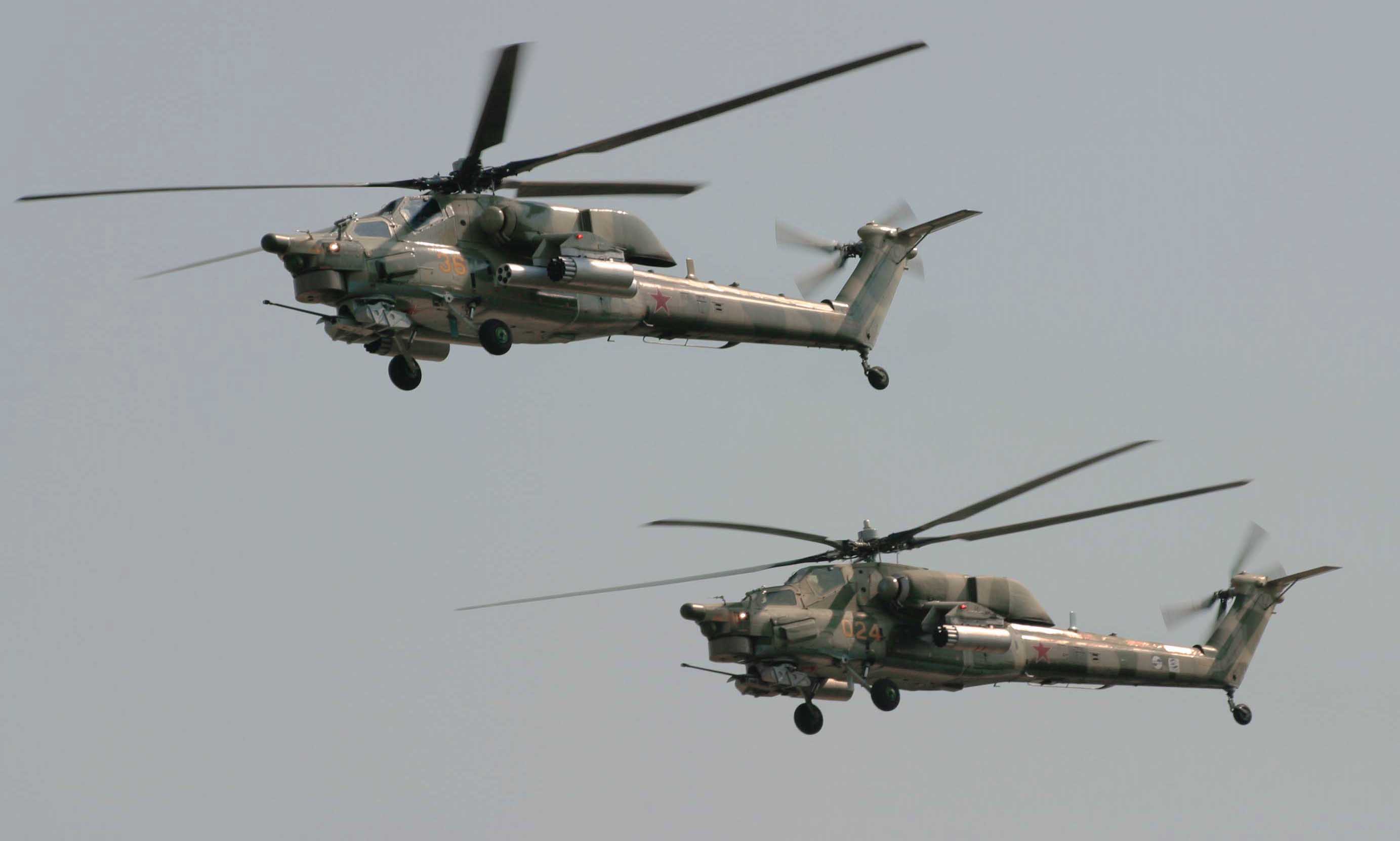
Mi-28 N
Israeli news organizations are not known for their reliability and truthfulness. The infamous DEBKAfile agency for instance has discredited itself so profoundly by countless fake news stories that nobody cites its reports anymore.

DEBKAfile has also in this case tried to outdo the competitor Ynet with the following stunning details:

1. On Aug. 18, six of Russia’s advanced MIG-31 Foxhound interceptor aircraft landed at the Syrian Air Force’s Mezze Airbase, which is the military section of Damascus international airport. After the fighters landed, they were immediately followed by giant Russian Antonov AN-124 Condor cargo planes carrying 1,000 of Russia’s 9M133 Kornet anti-tank missiles.

The advanced jets are intended to serve as air support for the Russian units that arrive in Syria. 

2. Before the Russian planes landed in Damascus, Moscow reached an agreement with Washington for the removal of NATO’s Patriot missile batteries from Turkey. The removal was carried out gradually during the month of August, thus preventing the possibility that NATO Patriot missiles could hit Russian fighters carrying out operations in Syrian airspace.

3. During the last week of August, a large number of Russian troops, mostly logistical teams whose job is to lay the groundwork for the arrival of the combat units, arrived in Syria. The troops were seen in Damascus and in Jablah district of Latakia province, where the Russian forces are building a military base. 

4. Intelligence sources also report that Moscow has started to supply Damascus with satellite imagery of the ground situation on the different fronts.

Patriot missiles have indeed been removed from Turkey, which gives the DEBKAfile report some legitimacy, but it is nearly inconceivable that the Syrian military didn’t have access to Russian satellite data from the very onset of the conflict. 

DEBKAfile also reports a complete paralysis of the CCFJ (US Central Command-Forward-Jordan), where operations of the Islamic rebels in southern Syria are coordinated by officers from Jordan, Saudi Arabia, Qatar, Israel, and the USA. According to DEBKAfile, operations of the CCFJ have been halted due to a conflict that erupted between the rebels and CENTCOM (US Central Command) about the cooperating with Jabhat Al-Nusra and other Al-Qaeda-linked groups.

This conflict was already reported years ago, it is nothing new and appears just to be the obligatory whitewashing of the USA from the accusation of fostering Islamic terrorism.

Both reports have to be viewed with extreme caution. They are most likely politically motivated, sending a message from Jerusalem to Moscow: “We know, where you are and what you are doing, and we will not let that thing go on unobstructed.”

Israel has bombed Syrian military installations several times and it doesn’t even need to fly into Syria to do that, its long range air to ground missiles easily reach Damascus from the safety of the Golan Heights area.
MIG-31 3
A week point of the reports is, that the mentioned MIG-31 are not counter-insurgency weapons but interceptor aircrafts. It would be much more logical to deploy SU-24 and SU-25 planes against IS.

The Russian military is defensive and not designed for military interventions far away from the Russian border, a military intervention in Syria would definitely be a logistical challenge.

An official from the Russian Defense Ministry flatly denied claims that Moscow will deploy fighter jets against IS (Islamic State). Speaking to Russian television channel RT, the official said: “There has been no redeployment of Russian combat aircraft to the Syrian Arab Republic. The Russian Air Force is at its permanent bases and carrying out normal troop training and combat duty.” After similar rumors in August Kremlin spokesman Dmitry Peskov already stated that an intervention of the Russian military in the Syrian conflict was not on the agenda.

Alex Fishman, the author of Ynet’s report, refused to comment on the legitimacy of his sources, but the plausibility of the reported moves and correctly outlaid background facts demonstrate at least an advanced knowledge of the military situation.

Both reports (from Ynet and DEBKAfile) speak about a coordination of the impending Russian intervention between Moscow, Washington, and Teheran. Why would the USA do that? Why should it consent to Russian military moves when the longtime strategic goal of destroying Syria is after 4 years of a debilitating war and 300,000 deaths finally in reach?

There are several possible reasons:

1. Teaching a lesson and get even with megalomaniac Turkish President Recep Tayyip Erdogan.

2. Teaching a lesson to Israeli Prime Minister Benjamin Netanyahu, who is regarded as mean-spirited, rude, dishonest, and utterly evil even from the viewpoint of his fellow monsters.

3. Teaching a lesson to the imbecile Saudi rulers, who think they can outsmart their Western handlers with unapproved moves and attempts of a “seesaw policy.”

4. Luring Russia into a trap.

Many unexpected things can happen in such a delicate and complicated operation like a Russian air-campaign over Syria. The Islamic terrorists could suddenly possess sophisticated radar guided missiles able to overcome the electronic defenses of Russian fighter jets. Miraculously out of nowhere appearing unidentifiable aircrafts could shoot down the Russian jets. Captured Russian pilots could be burned alive in cages by IS. Israel could launch a devastating attack on the airfields near Damascus, destroying most of the Russian fleet on the ground.

As they say: All is fair in love and war.

5. There is also the remote possibility that US President Barack Obama had an unexpected epiphany and starts to worry about his legacy and the prospect, that in case of a nuclear war between the USA and Russia there will be no legacy.

Western diplomatic sources allegedly emphasized that the Obama administration is fully aware of the Russian intent to intervene directly in Syria, but has yet to issue any reaction. The absence of a vocal opposition from the Obama administration is compounded by a softened rhetoric (no more “butcher” Assad) and its cessation of calls for the ouster of Bashar al-Assad.

Al-Monitor in Washington, a Western propaganda instrument, recently published several articles by author Fehim Tastekin, which diverge from the usual storyline and show the Islamic rebels in an unfavorable light. Several other Western media channels seem to follow suit. Changed marching order? Or a sense that Syria has lost the battle against the Islamic insurgents and a more nuanced view doesn’t hurt the paramount cause of regime change anymore?

If there is indeed a Washington — Moscow coordination or even kind of rapprochement, will Samantha Power, Victoria Nuland, and Susan Rice allow this? Will Obama end like JFK?
S-400 a
There are many things going on under the surface which are not known and maybe never will be known. If there is indeed a Russian air-campaign, it will slowly creeping in and not start with a big bang. Russia will deny it even if the jets are carpet bombing IS territory. With or without Russian jets, it is clear that increased military efforts will be taken to prop up the Syrian army, because the consequences of a defeat would be catastrophic.

Dependable diplomatic sources recently reported that a series of negotiations had been held between the Russians and the Iranians, mainly focusing on IS and the threat it poses to the Syrian government. The influential Iranian Quds Force commander Major General Qasem Soleimani visited Moscow in the framework of these talks. As a result the Russians and the Iranians reached a strategic decision, which is: To undertake any effort necessary to preserve the Syrian state, so that Syria may act as a security barrier and prevent the spread of IS and other Islamist militias into the former Soviet republics with an Islamic majority.

Russia has also economic interests, as the present Syrian government prevents the passage of regional pipelines from Qatar and Saudi Arabia into Europe, which would be a threat to Gazprom’s market share.

The Iranians and the Russians have begun the struggle to reequip the Syrian army, which has been left in tatters by the four years of war against tens of thousands well funded and thoroughly supported terrorist invaders. They intend not only to equip the army, but also to train and reorganize it. During the entire duration of the war, the Russians have consistently sent weapons supply ships to the port of Tartus on a weekly basis. The ships bring missiles, replacement parts, and various types of ammunition for the Syrian army.

Arab media outlets have published reports that Syria and Russia were looking for an additional port on the Syrian Mediterranean coast in order to hasten the pace of a Syrian rearmament. There are also reports that the Russians intend to sell Syria a package of MiG-29 fighters and Yak-130 trainer jets (which can also serve as attack planes.)

A stepped up military effort by Russia is inevitable, because the Syrian Arab Army can barely hold ground and is in full scale retreat in the strategic southwestern province of Idlib. Just recently a force from Jaysh al-Fatah (a coalition of rebel groups including Jabhat al-Nusra) advanced on the Abu Duhur military airfield in Iblib province, which borders on Latakia. Alawite and Christian residents of the area have fled to the remaining Alawite enclaves along the country’s coastline. On August 31 IS launched a surprise attack on the Qadam district of southern Damascus and took over parts of the district.
SU-35 h
If the Israeli reports are true, it would be again brilliant policy. In a decisive move Russian President Putin, who until this moment has been officially non-committed in regard to Syria’s various internal wars, border violations, and external aggressions, would just have made the one step that puts everyone else in check: With Russian forces in Damascus implicitly supporting and guarding Assad, the Western plans would instantly fall apart.

And just like the US and Turkish air forces are supposedly in the region to “eradicate the IS threat”, there couldn’t be any possible complaints that Russia has also decided to take its fight to the jihadist monsters – even if it is doing so from the territory of what the real goal of US and Turkish interventions is: Syria.

After all, joining the fight against IS should only be laudable, or not?

Unfortunately it is also entirely possible that, though the USA can’t possibly admit that the whole situation is one made up farce, the world will witness the first war where everyone is fighting a dummy, proxy enemy which doesn’t exist (at least not in the portrayed form), when in reality the Western powers are fighting Russia and its Middle Eastern allies Syria, Iran, Iraq, and Lebanon’s Hezbollah.

A frightening prospect and a dangerous escalation. Good to know that Russian President Putin is a cautious person and that he has a record of avoiding risks. He will hopefully not gamble away our future in a nuclear confrontation, even if that means free rein to the IS = US monsters.
S300 lounge

IS approaches Damascus

The Islamic State has entered the relatively stable Damascene suburb of Al-Qadam from their positions inside the city of al-Hajar al-Aswad, killing a number of Islamist rebel fighters from Jaysh Al-Islam (Army of Islam) en route to staking their claim at the southern axis of these two areas near Damascus.

IS’ presence in Al-Qadam is serious threat to the Syrian capital, as the terrorist group is now within a few hundred meters of the Syrian Arab Army’s positions inside this Damascene suburb that was once in the process of reconciliation before negotiations were placed on hold due to increased violence in the neighboring district of Yarmouk Camp.

Until now there was an uneasy calm in these areas and the Syrian armed forces have refrained for some time from carrying out attacks on the Islamist rebels of Jaysh Al-Islam and Ajnad Al-Sham despite prior hostilities that plagued the civilian population and forced a diaspora to Damascus’ Old City neighborhoods.

For the Islamist rebels, the loss of Al-Qadam’s southern sector could have an adverse affect on their current counter-assault in West Ghouta, as IS’ potential targeting of their weak defenses in the southwestern countryside of these collection of farms located between Damascus and the Golan Heights will create chaos among their ranks.
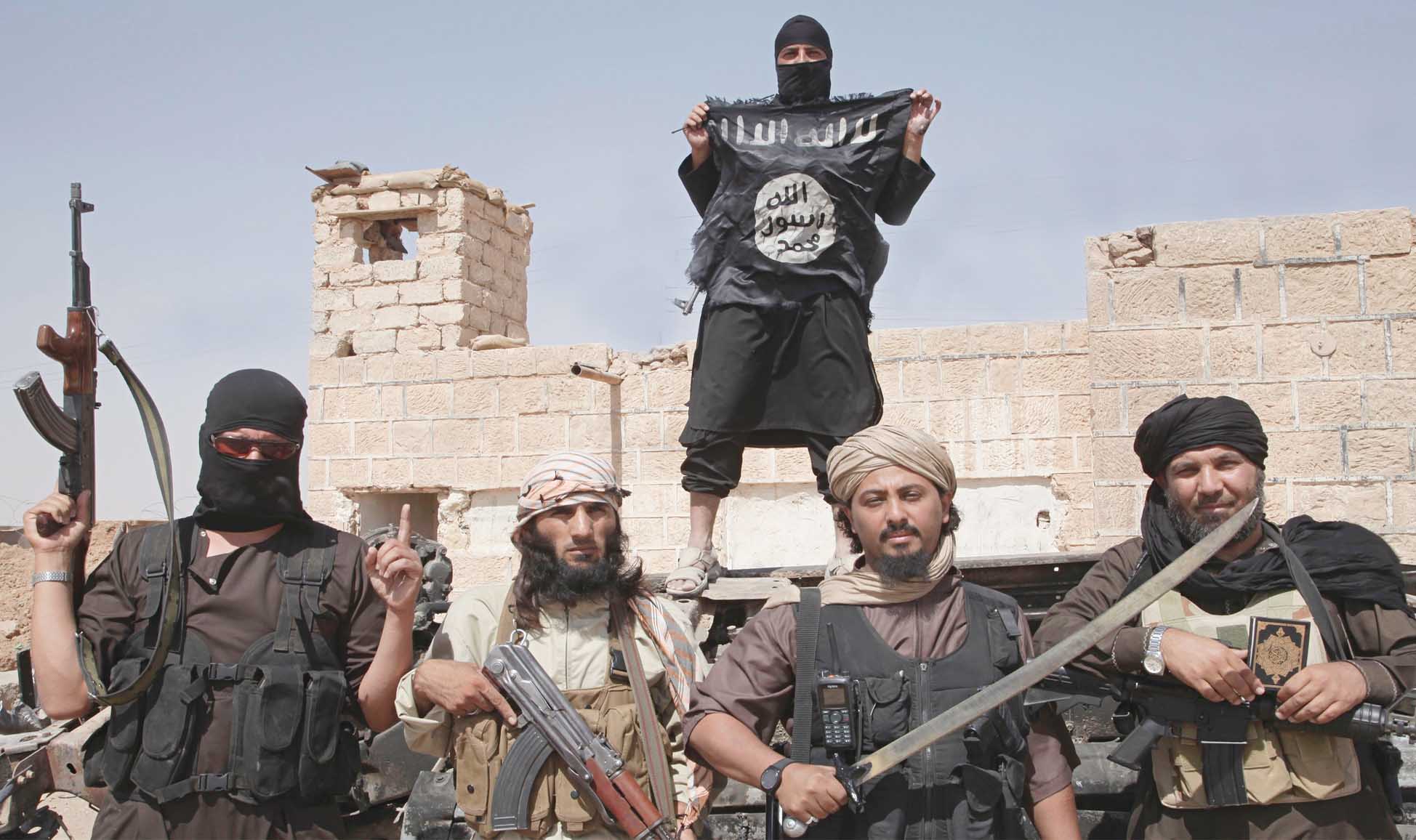
IS selfie 2
Following is an article in As-Safir with further details:

Abdallah Suleiman Ali  As-Safir

The Yarmouk camp scenario is playing out once again in the al-Qadam neighborhood south of Damascus. IS (Islamic State) has stormed the neighborhood and makes rapid progress, while other factions are reeling back from the shock.

It seems that the sleeper cells, the secretive pledges of allegiances and the vague stances have become part of the flaring scene south of the capital.

On August 31, IS advanced in al-Qadam and took control of about half of the area, including al-Assali, which is the eastern part of the neighborhood near the al-Hajar al-Aswad area — the stronghold of the organization south of Damascus for almost over a year.

IS also advanced toward the city of al-Madaniyah, where clashes are flaring in Arnaout Street in the vicinity of the Hudhayfah ibn al-Yaman mosque. The group has made clear progress and has trapped some of the Ajnad al-Sham fighters, demanding them to surrender if they wish to be safe.

Ajnad al-Sham remains positioned in about six neighborhoods that are yet to fall under IS control and is trying to prevent the organization’s advance.

The clashes are not limited to al-Qadam, as IS is also spreading in the al-Zayn neighborhood separating al-Hajar al-Aswad and Yalda, where battles are raging between IS and Jaysh al-Islam.

Similarly, in the al-Tadamon neighborhood, battles are raging between the Ababil Houran Brigade plus Sham al-Rasoul Brigade and IS.
yarmouk camp 1
There are also clashes on the outskirts of the Yarmouk camp to the side of the Cultural Center overlooking Yalda between Jabhat al-Nusra and Aknaf Bait al-Maqdis in Yalda (which is supported by Sham al-Rasoul). This suggests that southern Damascus, where settlements have been ostensibly reached with the Syrian army, is teetering on the brink of the abyss, and resulting losses are likely to be immense should things continue down this path.

The al-Qadam neighborhood was the last area in southern Damascus that signed a settlement agreement with the Syrian army in August 2014.

According to the agreement, militants ought to be deployed in the western side of the neighborhood only. However, the agreement did not provide for putting down arms, nor did it stipulate that militants are allowed to go out to settle their matters, as was the case in other areas.

Despite the settlement, one must say that the al-Qadam neighborhood was not actually under the control of the Syrian army, as it remained controlled by the armed factions. The Syrian army is deployed in some checkpoints only, most importantly in the neighborhood entrance to the side of Nahr Esh, and another checkpoint on Daraa highway. The Syrian troops are heavily present in the Sbeneh neighborhood, near al-Madaniyah.

The Syrian army forces stationed in this area have been on full alert, mobilizing troops on the demarcation lines with the neighborhood.
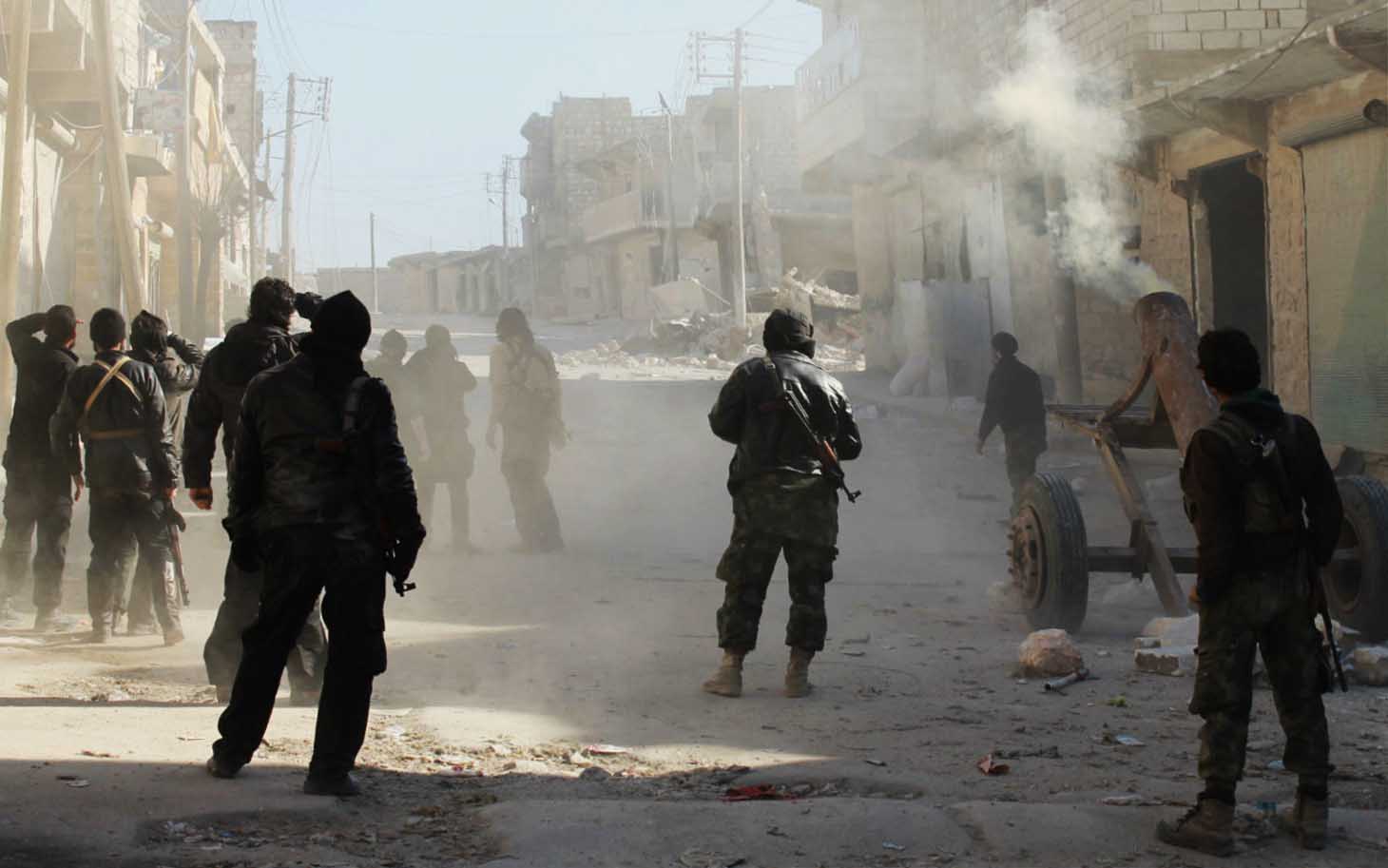
Syria destruction 06 2015
There have been indications that the Ajnad al-Sham Islamic Union has been controlling the al-Qadam neighborhood, while the strongholds of al-Nusra are located nearby. IS members were clearly present in al-Assali, in addition to some cells that have secretly pledged allegiance to the group and played a role in facilitating its storming into the area.

The situation is really bad. IS is advancing amidst the collapse of Ajnad al-Sham, especially in Arnaout Street, as the organization managed to trap them,” a source from al-Assali told As-Safir.

Regarding the al-Nusra stance vis-a-vis these developments, the source confirmed that the group “stood on the sidelines and did not intervene in favor of any party. It sought to conclude an agreement between the two sides, but the deal was canceled only hours after being signed.”

In the al-Qadam neighborhood, al-Nusra took a different stance than in Yarmouk camp, where it was allied with IS,” the source added.

However, this raises many questions as to the reasons behind al-Nusra’s vague stances in southern Damascus, while its branches in other Syrian areas make no secret of their hostility toward IS.

There has been news about the desertion of about 150 fighters under the command of Saleh al-Zammar from IS to join the ranks of Ajnad al-Sham, after he heard some of the organization’s leaders talking about capturing women in the neighborhood.

However, the source confirmed that Zammar did not pledge allegiance to IS, but was presenting himself as such to preserve his interests.

The number of IS fighters in southern Damascus is estimated at 2,000 militants, mostly stationed in al-Hajar al-Aswad, which was overtaken by IS last year following its withdrawal from other southern Damascus areas that have entered into a settlement with the Syrian army, such as the towns of Yalda, Babbila and Beit Sahem.

About 300 IS militants were involved in clashes in al-Asali, while the number of Ajnad al-Sham fighters is estimated at about 250 militants.
al-Nusra withdraws
A media activist in the Yarmouk refugee camp, who spoke on condition of anonymity, told As-Safir that he has been noticing over the past few months the increasing number of fighters joining IS, especially after the group increased the wages of the men joining its camp. Each fighter is being paid now about 80,000 Syrian pounds [426 US$], which is prompting many young people to fight in its ranks even if not convinced of its ideology.

The recent clashes broke out against the backdrop of the assassination of Abu Malik al-Shami, the commander of Ajnad al-Sham, and the subsequent hostilities that led to the death of one of the IS fighters who was accused of the assassination. However, all indications suggest that the attack comes as a continuation of previous steps, whereby IS has been trying to consolidate its presence in the vicinity of the capital, as happened previously in the Yarmouk camp.

The ongoing developments in the al-Qadam neighborhood are critical, especially in case IS manages to take control of the entire area, which is located less than two kilometers away from the capital and only five kilometers from the Umayyad Mosque. Moreover, IS control over the neighborhood would mean that the Daraa highway will be within its range of fire, and thus it will cut off supply lines for the Syrian army. Many believe that this highway is no less important than the Damascus International Airport.

18.08.2015

Ukraine – Update 2


A series of wildfires have been registered in the exclusion zone around the Chernobyl nuclear power plant and several hundred firemen along with trucks and aircrafts are battling the blazes that until now have swept through about 600 hectares. Officially, there are a number of localized fires but considering the trustworthiness of Ukrainian authorities one cannot rule out that the flames will spread further.

This is already the second emergency after on April 28 a massive fire broke out 16 kilometers from the nuclear plant. The first fire was the largest in Ukraine since 1992 and more than 300 firefighters were deployed to stop it spreading.

If the trees around Chernobyl, which have been absorbing radioactivity for almost 30 years, are on fire, then radioactive particles may be disbursed with the wind over long distances and they will have a cumulative negative effect on the health of those who breathe them in or eat contaminated food.

An air sample taken on June 30 in the fire area near the abandoned settlement of Poleskoye contained a level of Caesium-137 (which has a half-life of 30 years) one order of magnitude higher than what is considered to be safe.

The head of the State Emergency Service of Ukraine Nikolay Chechetkin said that up to 70 percent of all the wildfires in Chernobyl exclusion zone are due to arson.
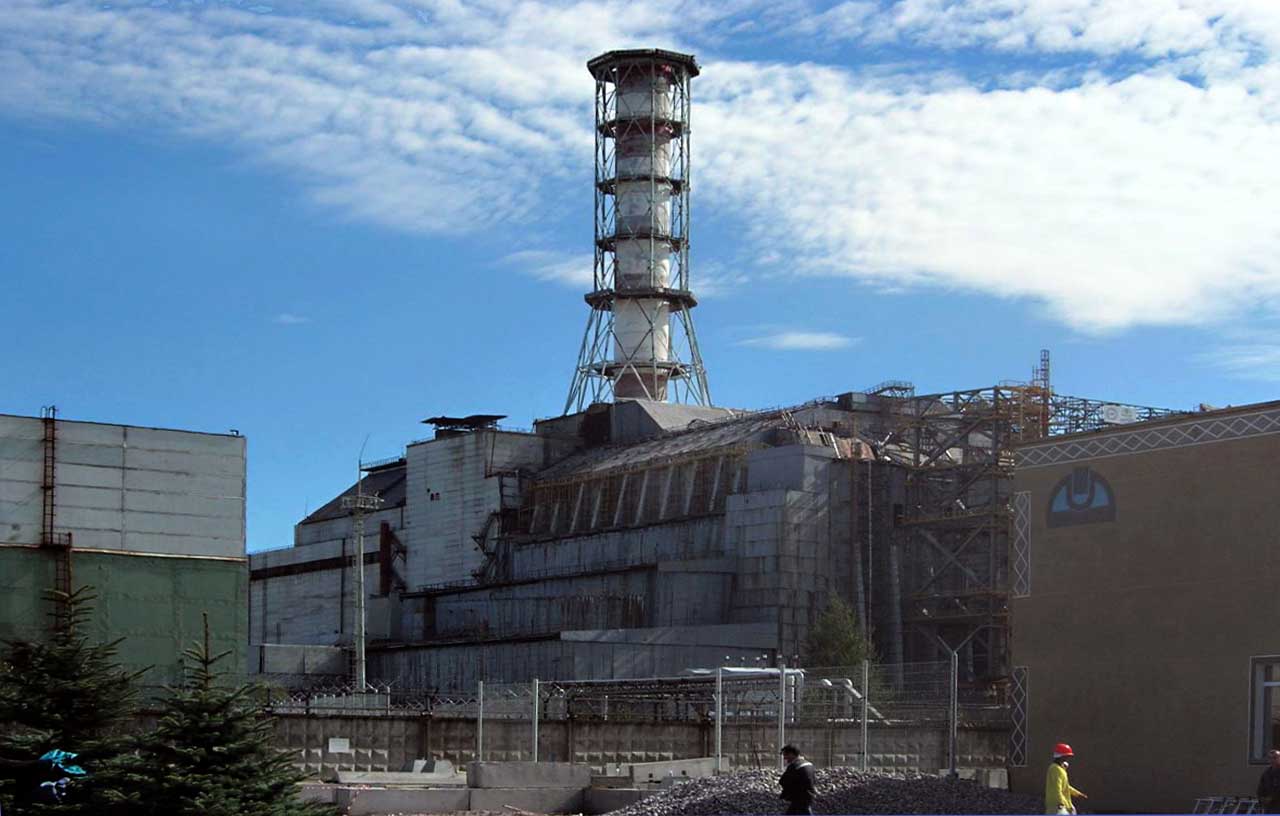
Chernobyl 8 1
The SBU (Ukrainian Security Service) has seized a shipment of uranium in the western Ivano-Frankovskaya Oblast region and arrested four men attempting to sell the material. The four gang members were caught red-handed in the middle of a sale. Preliminary forensic reports suggest the material seized is Uranium-238.

The incident comes on the heels of recent fighting in western Ukraine, as Pravy Sektor members clashed with local police. The epicenter of the fighting was in Mukachevo, a city in the southwest of the country.

The ultranationalists are refusing to lay down arms and negotiations with the government are in a stalemate. 6,000 Pravy Sektor supporters marched in central Kiev, calling for the administration’s resignation — a sign of the continued fracturing in Ukraine. According to recent polls the Pravy Sektor’s popular support now stands at 5.4 percent, while President Pedro Poroshenkos popularity has fallen to 26.9 percent and Prime Minister Arseniy Yatsenyuk’s popularity to just 2.8 percent.

The Mukachevo standoff has compelled President Poroshenko to order the disarming of all illegal fighting units in the country. However, unrest persists across Ukraine. Three rural councils were set ablaze in the western Prikarpatye region on August 2. The following day, hooligans in Kharkov attacked the offices of the Party of Regions.
Pravy Sektor 8 1
About the ATO (Anti Terrorist Operation):

The Military Prosecutor of Ukraine Anatoly Matios recently acknowledged that his department has listed eight thousand law enforcement officers and military personnel who defected to the Donetsk and Luhansk People’s Republic.

On August 12 the city of Donetsk was hit by a record 800 artillery shells. The Telmanovo suburb was struck particularly hard, but the shelling was also very violent in the airport region. The Novorussian intelligence services reported a steady movement of Ukrainian forces towards the line of contact. These forces included tanks, artillery systems, and multiple rocket launchers. The next day a group of 8 tanks backed by armored personnel carriers attacked Novorussian positions but were beaten back. Ukrainian hospitals are filling up with wounded, suggesting serious casualties on the Ukrainian side.

The logical conclusion would be that an Ukrainian offensive is imminent and that the current attacks are probing the Novorussian defenses.

But mass resistance by young men against military conscription is a major impediment to Kiev’s war efforts in eastern Ukraine. Segodnya news reported that during the fifth mobilization drive only one in 12 recipients who received their conscription notice appeared at the recruitment office.

On June 19 the Ukrainian government and military embarked upon their sixth wave of military conscription since April 2014. Novoye Vremya magazine reports that the results are bad and that Vladimir Kydon, military commissioner for Kiev, is worrying about the situation. “The mobilization is difficult,” he admits. “It’s summer, people are on vacation.”

Stanislav Gurak, Deputy Head of the Defense and Security Policy Center think tank in Kiev, explained to the magazine: “People do not see the point of this war and do not want to risk their lives.”

Unfortunately, we have very poor motivation. It is frustrating for people — it’s not clear what we are fighting for or against whom we are fighting.”
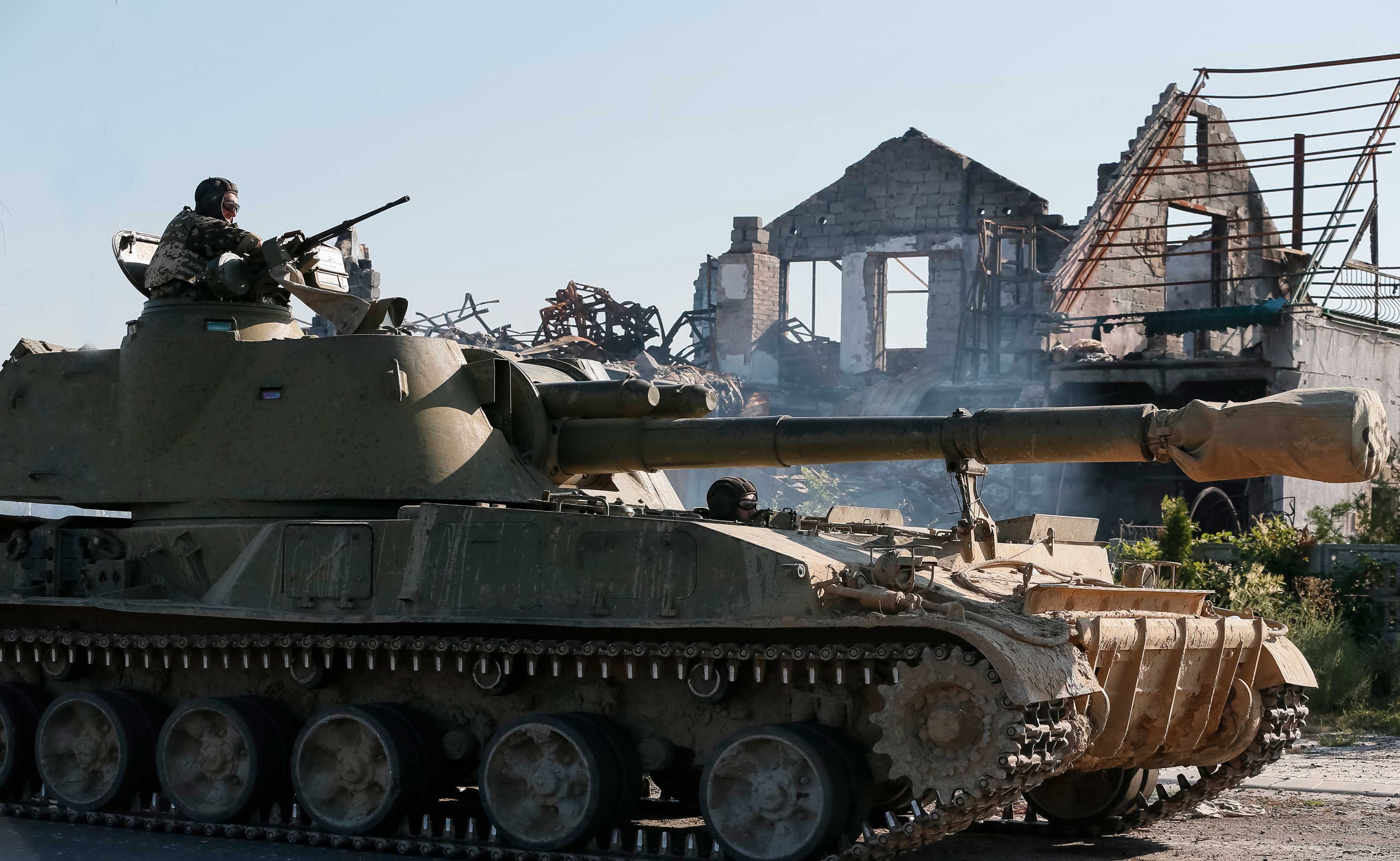
destruction donbass 8 2
The newspaper Vesti reported on August 3 that the sixth wave of conscription is faltering. The conscription service in Kyiv has reporting results of only 23 percent in the city. In Cherkassy, half of those who could potentially be conscripted are hiding in Belarus while the other half is hiding in Kyiv.”

Recruiters are routinely raiding public spaces to hunt down and grab men of conscription age. They block exits to shopping centers, transit vehicles, parks, and other public spaces and then conduct identification checks. Those found to have dodged service or whose call-up dates are approaching are hauled away.

Consequently people are now creating online maps to mark the locations where recruiters commonly hunt. Men and their families use the maps as a guide to avoid these locations. “Before you go to a local shop, first check whether there is a patrol on your way, otherwise you may find yourself in the trenches of Donbass,” reads the instruction accompanying one of the regional maps. War resisters are also using online social networks to inform about the activities of the recruiters.

But the biggest obstacle to the mobilization efforts are the young men who are opting to “disappear” from the eyes of the authorities. They change their address and refuse to inform any branch of government. This phenomenon is now universal in large and small urban centers in Ukraine.

Many Ukrainian men, joined by their spouses in some cases, have taken refuge in Crimea, because it is relatively easy to pass into the now Russian territory and apart from very lengthy queues there are no formal barriers to entry.  Even pro-Maidan nationalists who wholeheartedly supported the February 2014 coup but are too craven of fighting choose this destination. They enjoy the existing freedom of expression in Crimea, wear symbolic Ukrainian dresses and carry national flags and badges. No one touches them as long as they don’t provoke the locals.

A lot of Maidan nationalists from the upper and middle class write and post from tourist centers in Western Europe, but also from Thailand, Malaysia, India, Dubai, and other exotic places, calling upon Ukrainians at home to “defend the country” while living comfortably abroad.

There are a lot of jokes circulating on social media of how these “exile volunteer battalions,” consisting of children from rich families, are bravely defending Ukraine from “Russian aggression” as they write from Paris and London.
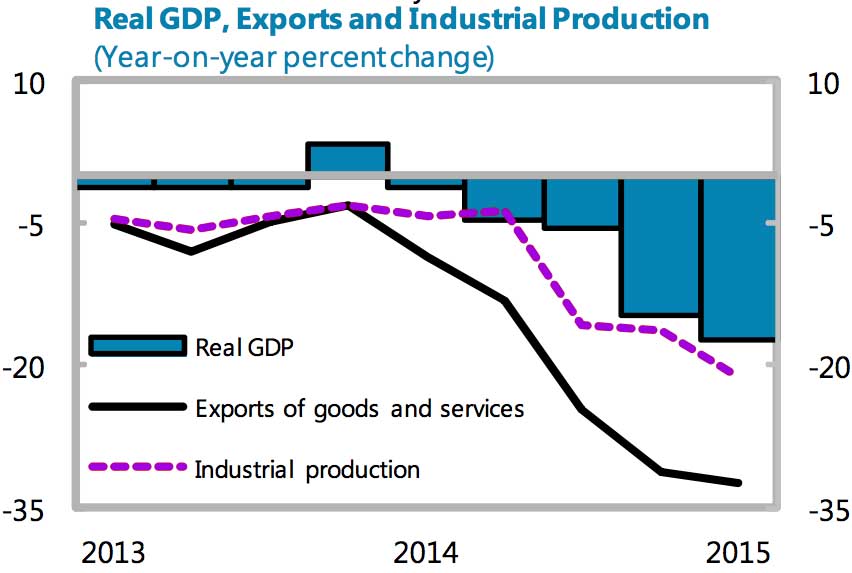
Ukraine real GDP
About the economy:

The shadow economy has further increased and is now officially estimated at 47 percent of total GDP, though knowledgable people think that it could be up to 70 percent.

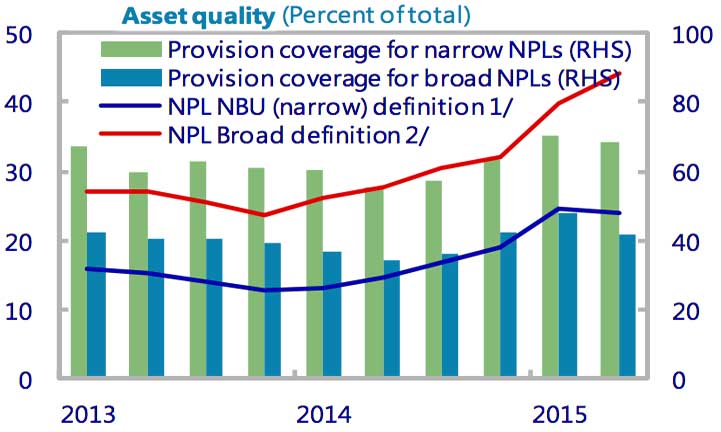
40 banks have been declared insolvent since Maidan, with the country’s fourth largest lender, Delta Bank, being closed in March.
Ukraine asset quality
The latest IMF report is discouraging despite brave face, encouraging words, putting lipstick on a…

”Risks to the outlook remain exceptionally high. Risks to economic growth are predominantly on the downside reflecting uncertainty about the duration and depth of the conflict in Eastern Ukraine; prolongation of the discussions on the debt operation (which could disrupt capital flows) and slippages in policy implementation. In addition, confidence could fail to revive due to these factors, or due to a more protracted bank resolution process. Higher-than-expected inflation — due to inflation expectations becoming more entrenched — could reduce domestic demand further.”

Just the numbers:

• 2015 contraction: 9 percent (at the moment 14.7 percent)
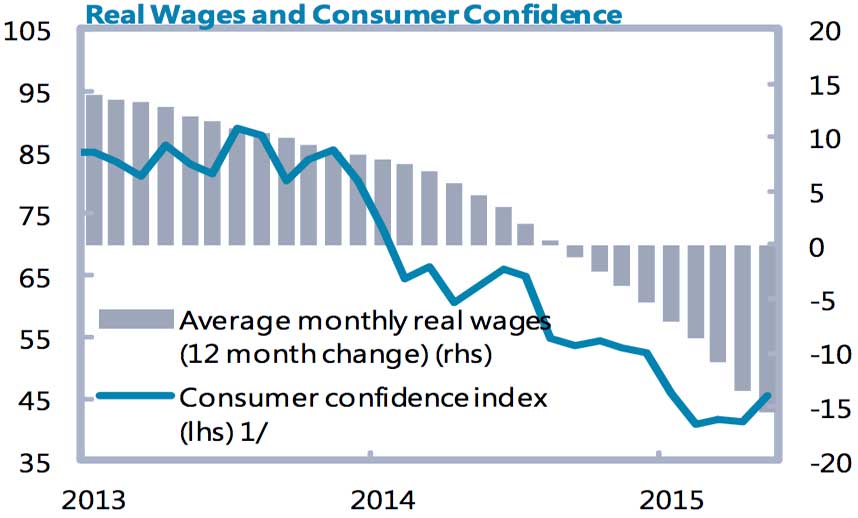
• Real wages: down 15 percent
• Inflation: 61 percent
• Heating prices: up 67 percent
• Non-performing loans: 46 percent (broad definition)
• Debt to GDP: 150 percent

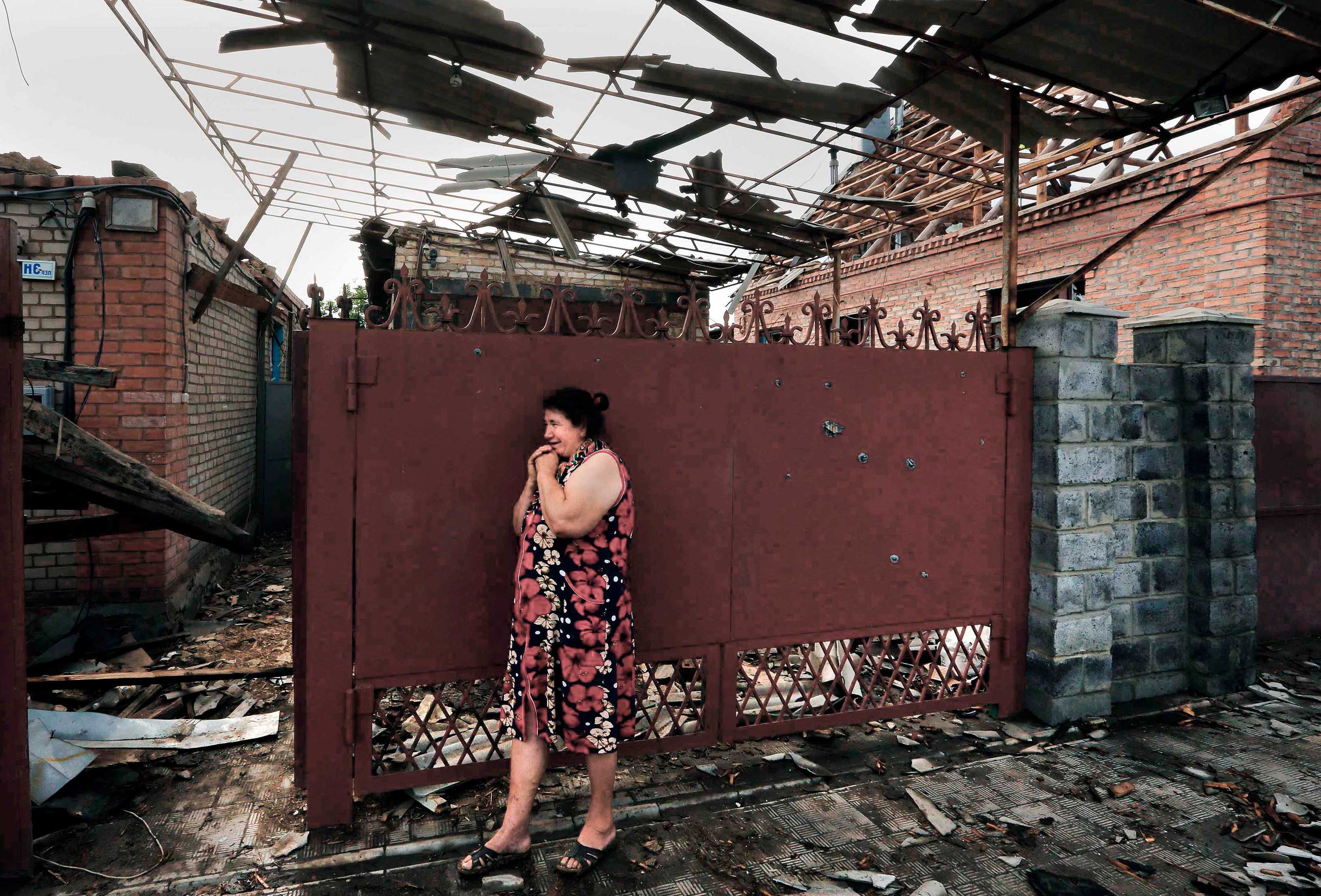
Ukrainians have a hard time and most will feel betrayed by the Maidan revolutionaries who promised prosperity and unlimited opportunities after being welcomed into the family of Western European nations. The promises came true only for a tiny class of disaster capitalists (the oligarchs and their sycophants) who profit from the political and social turmoil with criminal schemes. Anybody else struggles to make ends meet. Living in rebel controlled Donetsk and Luhansk may be even harder because of the economic blockade by Ukraine. According to the United Nations 4.8 million Ukrainians — almost one in eight — need humanitarian assistance.
destruction donbass 8 3
Beyond that there is also a humanitarian crisis unfolding in middle and western Ukraine because of the persons uprooted by the war in the Donbass. 1.36 million people are registered as IDPs (internally displaced people) and this situation could last for years or even decades. Work is hard to find as more and more companies go bankrupt, most IDPs live from charity handouts and the negligible government allowance of 440 hryvnia (20 US$) a month. There is no adequate housing policy for the displaced and less than 4 percent of them live in special centers set up to accommodate IDPs.

The misery of the IPDs is aggravated by the government hate propaganda against Russia and ethnic Russians from eastern Ukraine. The IPDs are met with suspicion, they are suspected of sympathizing with the pro-Russian rebels, they are of course also unwanted competitors for scarce jobs.
Ukraine real wages
A new survey commissioned by the IOM (International Organization for Migration) shows that eight per cent of Ukrainians (some 3.5 million people) are hoping to leave the country and work abroad. The IOM survey also reports a sharp rise in the proportion of Ukrainians working abroad who are doing so illegally. The proportion has risen from 28 percent in 2011 to 44 percent at the moment.

Poland acts as an important gateway to Western Europe. According to Eurostat, 236,700 Ukrainians were granted residency permits by EU states in 2013, and 171,800 of those permits were granted in Poland, one of the main routes for Ukrainians to travel to western Europe.”

At the moment though the EU has created a “cordon sanitaire,” summarily rejecting visa applications and asylum requests. Ukrainians in search of the promised land will have to wait for better times and they will probably have to wait many, many years.
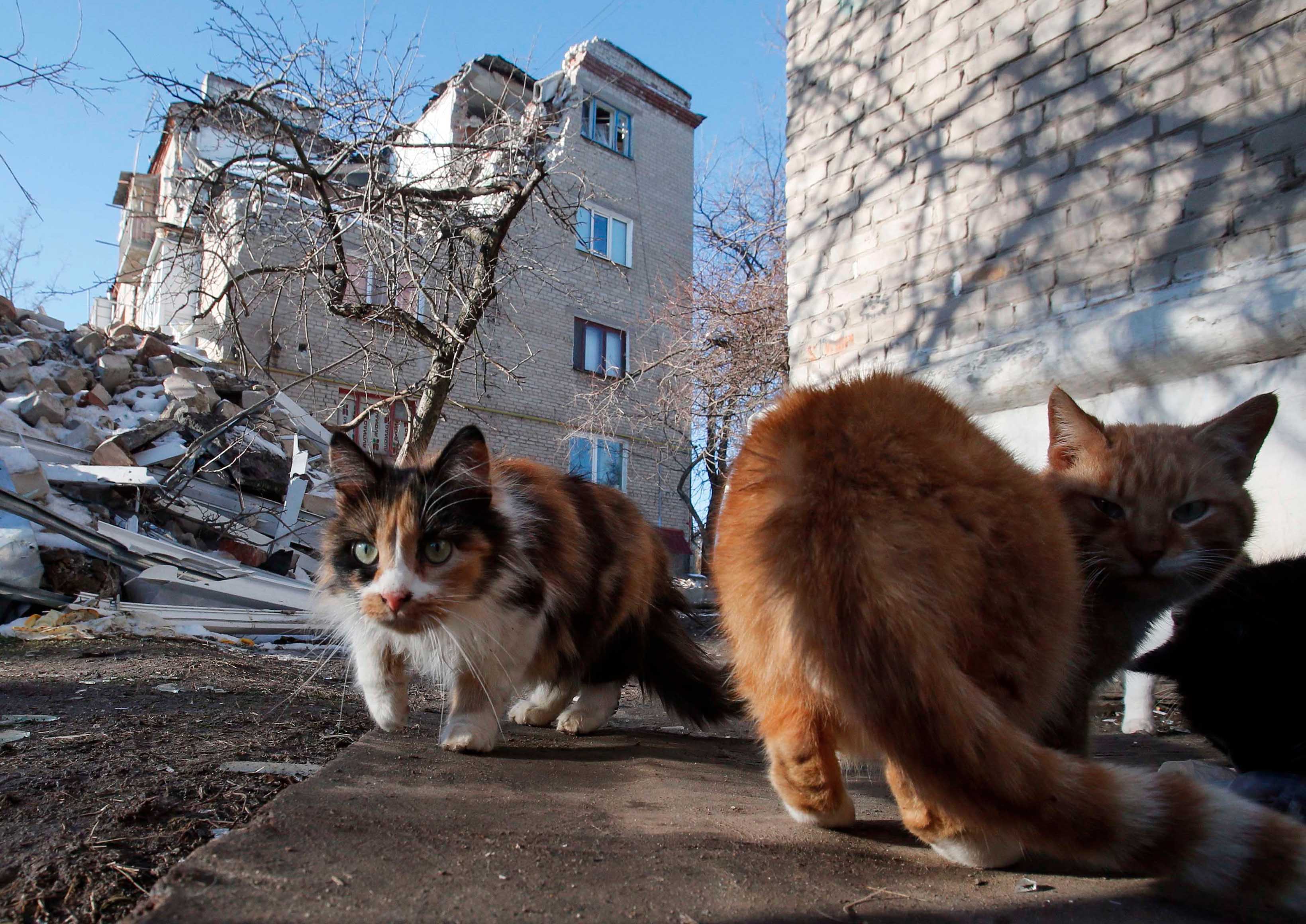
Donbass cats
Further reading:
http://mato48.com/2015/02/08/ukrainian-unknowns-and-uncertainties-part-1/
http://mato48.com/2015/02/18/ukrainian-unknowns-and-uncertainties-part-2/
http://mato48.com/2015/01/25/there-is-no-meltdown/
http://mato48.com/2014/11/23/shattered-dreams-of-victory-and-prosperity/
http://mato48.com/2015/01/20/a-new-phase-in-the-ukrainian-war/
http://mato48.com/2014/12/07/news-from-novorussia/
http://mato48.com/2014/09/14/strange-bedfellows/
http://mato48.com/2014/09/06/against-oligarchs-and-false-politicians/
http://mato48.com/2014/09/02/report-from-a-war-zone/
http://mato48.com/2014/08/30/interview-with-alexej-mozgovoi/
http://mato48.com/2015/05/24/end-of-a-dream-birth-of-a-legend/
http://mato48.com/2014/08/11/did-the-ukraine-shoot-down-mh17/
http://mato48.com/2014/12/28/a-testimony-to-be-considered/
http://mato48.com/2014/03/09/ukraine-update-1/
http://mato48.com/2014/03/04/latest-news-from-ukraine/
http://mato48.com/2014/02/26/the-freedom-snipers-of-maidan-part-2/
http://mato48.com/2015/06/20/they-are-most-likely-dead/

Links August 2015


News roundup

Saudi Arabia and its Gulf allies are escalating the war effort in Yemen, but the Houthi rebels and former President Saleh show no sign of bending. The Saudis seized Aden and the air base  Al-Anad north of Aden. In Taiz, forces loyal to Saudi ally Mansour Hadi claim to control much of the city. The UAE has deployed over 1,500 troops to Aden. Yet capital Sanaa and most of what used to be North Yemen remain firmly in the Houthi’s control.

Al-Qaeda controls Al-Mukkala — the Saudis don’t touch them.

As the war continues, the Yemeni people are heading toward a humanitarian disaster, facing shortages of water, food, and medical supplies.

For its part, the USA is accelerating arms deliveries to the Saudi kingdom and other Gulf states, to help them continue the air and naval blockade. Without the US and UK supply of weapons, ammunition, logistical and technical assistance, and diplomatic protection in the UN, the Saudis would not be able to wage this war.

Syria

Ankara is going after the Kurds and totally ignoring IS (Islamic State). Turkey’s purported new stance against IS is nothing more than a smokescreen for an all-out war against the PKK. Turkish foreign minister Mevlut Cavusoglu put it bluntly: “There is no difference between PKK and Daesh [Arabic acronym for IS].”

President Erdogan’s offensive against the PKK comes at a price and has left Turkey with a bill of up to 40 billion US$ due to the costs of a weakened lira, higher interest rates, lower exports, and reduced tourism revenues. The more the conflict escalates, the more the bill will increase.
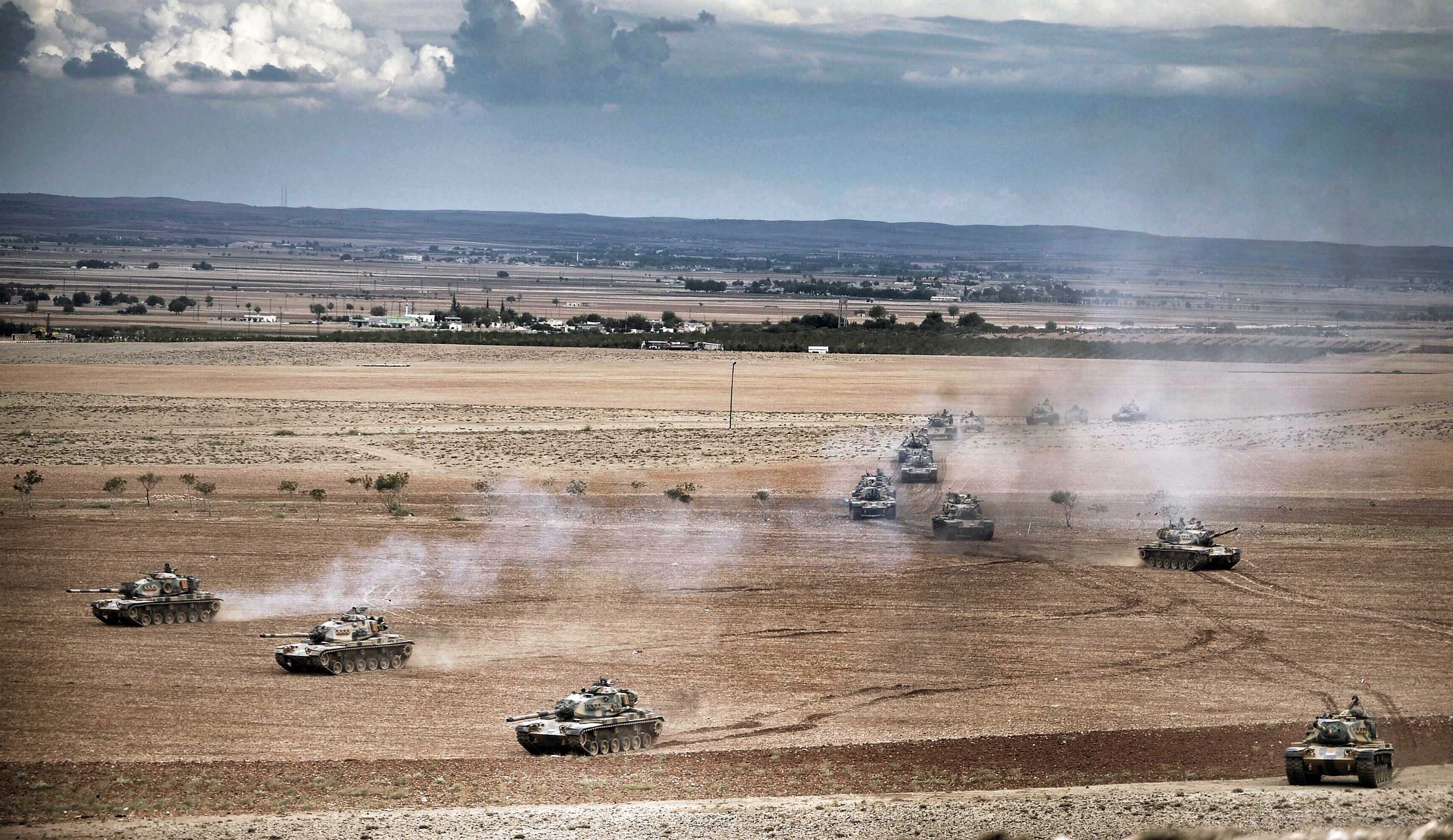
Turkish tanks 5
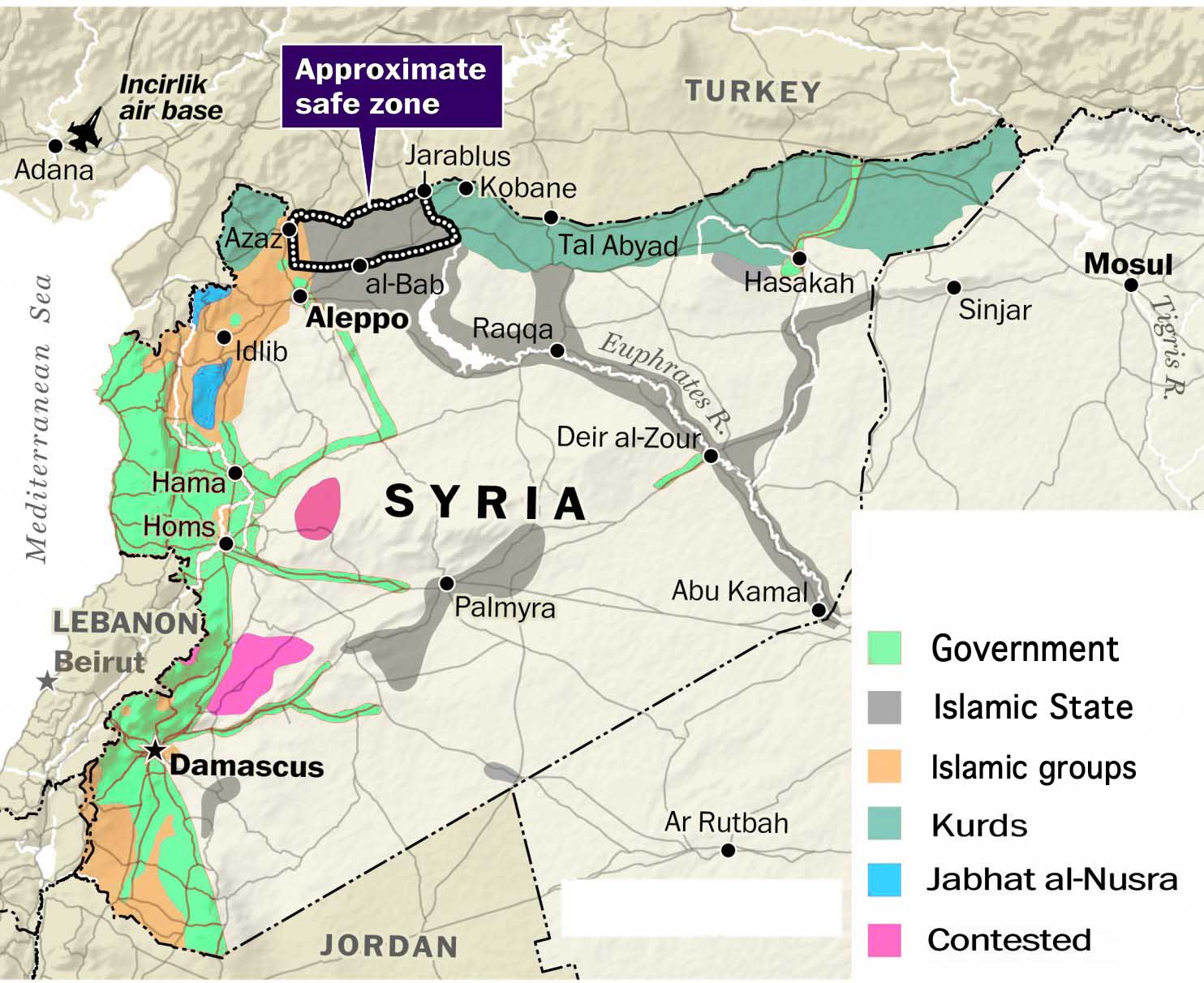
The long time discussed “security zone” (no-fly-zone / buffer zone) in northern Syria takes slowly and clandestinely shape. The zone is meant to be 90 kilometers deep, stretching from Aleppo to the Euphrates. Western media are completely silent about the Turkish invasion, which is, after all, a blatant bridge of national sovereignty, the universally disrespected but still nominally upheld basic principle of the dominant Westphalian model of state foundation.

According to DEBKAfile (Israel’s notorious disinformation outlet) a large Turkish military contingent crossed into northern Syria via Bab Al-Salame on August 11. It is made up mainly of ethnic Turkmeni fighters (Sultan Murad brigade and Fatih Sultan Mehmet Brigade) trained for their mission by Turkish MIT officers. This arrangement aims to let Ankara off owning up to a Turkish military invasion of Syria. The units are armed with tanks and artillery and have Turkish fighter jet air cover. At least 5,000 soldiers are involved.

Until now the operation apparently proceeds smoothly with the Turkish soldiers just taking over positions of retreating Islamic militants. If the Turkish forces ever encounter IS, Jabhat al-Nusra, Jabhat al-Shamiya, Jaish al-Islam, Ahrar al-Sham, Jund al-Aqsa, or other more or less moderate Islamic terror groups, there will be most likely fierce exchanges of celebratory gunfire, aiming high enough not to hurt the other party. Western media will report heavy clashes.

Al-Nusra has already retreated from the envisioned security zone, staging fake battles for the media is seemingly not deemed worth the effort.
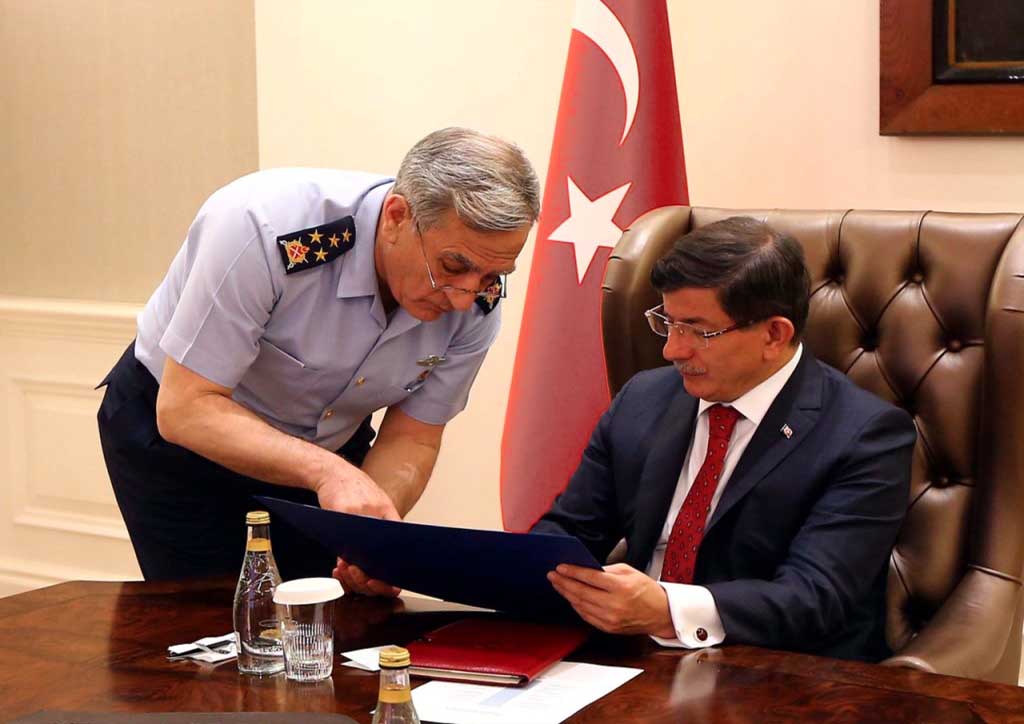
Ahmet Davutoglu
The US and its Turkish ally know that they have only a few months to finish what they started and depose of the elected government in Syria before part of the billions of dollars of frozen Iranian funds are returned to Tehran and used to assist with Damascus’ defense.

In addition to this particular threat the political situation in Turkey and Saudi Arabia is volatile, both countries face an economic downturn and internal dissent.

And yet:

The alienation between the Bashar al-Assad regime in Syria and the rest of the Arab world is maybe not as irreversible, as commonly thought. The head of Syria’s powerful National Security Bureau Brig. Gen. Ali Mamlouk was received by Crown Prince Mohammad bin Salman in Riyadh in late July.

Syrian Foreign Minister Walid al-Moallem arrived in Muscat after a two-day visit to Tehran. Oman has a rare genius for undertaking mediatory missions and pursues a unique foreign policy amongst the GCC states of keeping a line open to Tehran at all times.

Russia’s diplomatic efforts were spearheaded by Sergey Lavrov’s meeting with his Saudi and Qatari counterparts in Doha at the GCC conference, which also saw him have a conversation with Kerry. Syria was obviously on the agenda, and it’s likely that Russia spoke with the Saudis about a possible proxy pull-out, with the Qataris about dropping their support for Al Nusra, and with the US about the practicality of working with President Assad. The meeting with the Saudi and Qatar ministers was reportedly not overly productive.

Simultaneously with Lavrov’s visit to Doha, Russian Special Envoy to the Middle East Mikhail Bogdanov attended a meeting with the Syrian and Iranian Foreign Ministers in Tehran.

There is growing speculation about a likely meeting of the foreign ministers of Saudi Arabia, Iran and Syria. The eminence grise of Iranian politics, former president Hashemi Rafsanjani made a significant remark:

“We do not inherently have any issues with Saudi Arabia … Syria, Iraq, Yemen, and Bahrain are among the issues that have created a distance … It is possible to normalize the situation with a swift move … I really believe it is possible.”

There are no fail-safe measure that Russia can resort to in the event that diplomacy doesn’t reach the desired results, but Russia could embed its active Syrian-based military advisors into the Syrian Arab Army’s frontline positions and send airborne troops to deter US or Turkish air strikes.

Russia will clearly use diplomacy until that way gets exhausted. If diplomacy fails all bets are off but Russia has signaled that it is prepared for a military solution to defend Syria and Russian interests (Tartus) in the Mediterranean.
Syria map safe zone
Ecuador’s Cotopaxi volcano has become active and President Rafael Correa declared a nationwide state of emergency to prepare for a possible major eruption. This could make the Tianjin explosion (104 dead and counting) look benign.

Japan restarted a reactor at the Sendai Nuclear Power Plan, ending a 2-year ban on nuclear power generation. One Fukushima is not enough to chain the minds of energy addicted humans.


Environmental news
https://medium.com/matter/it-s-not-climate-change-it-s-everything-change-8fd9aa671804
http://www.tomdispatch.com/post/176029/tomgram%3A_subhankar_banerjee%2C_fire_at_world%27s_end/
http://www.rollingstone.com/politics/news/the-point-of-no-return-climate-change-nightmares-are-already-here-20150805?page=7
http://phys.org/news/2015-08-amazon-slowly-eaten-gold-illegal.html
http://www.truthdig.com/report/item/a_haven_from_the_animal_holocaust_20150802
http://www.spiegel.de/international/world/global-water-shortage-exacerbated-by-droughts-and-misuse-a-1047527.html Bringing one of the most pressing ecological problems to mainstream consciousness could be seen as honorable, but the Spiegel, Germany’s notorious disinformation magazine uses the opportunity to praise Israel’s water policies while ignoring the annexation of the Golan Heights, which supply 16 percent of Israel’s water, the for Israel very favorable water treaty of 1994 with Jordan, and the illegal exploitation of the West Bank aquifers. Israel, and Israeli settlements, take about 80 percent of the aquifer’s flow, leaving the Palestinians with just 20 percent. The Spiegel staff also seems to be ambivalent on water privatization.
https://firstlook.org/theintercept/2015/08/11/dupont-chemistry-deception/ Important!

Economic news
http://petras.lahaine.org/?p=2044
http://www.globalresearch.ca/tsipras-and-varoufakis-approve-of-home-evictions-and-expropriation-of-depositors/5464886
http://mycatbirdseat.com/2015/07/92337-greece-rescue-without-debt/
http://www.nakedcapitalism.com/2015/07/the-coming-greek-bank-nationalization-bail-in-and-privatization.html
http://triblive.com/opinion/featuredcommentary/8811564-74/thomae-economy-greece#axzz3hcdHrH7X
https://www.jacobinmag.com/2015/07/germany-greece-austerity-grexit/
http://blogs.lse.ac.uk/europpblog/2015/07/29/extreme-working-hours-have-radically-increased-in-many-western-european-countries-since-the-start-of-the-1990s/
http://www.globalresearch.ca/the-quadrillion-dollar-derivative-debt-and-the-bail-in-when-you-deposit-funds-in-a-bank-it-becomes-their-money/5466586 The waiting game (for the financial breakdown).
http://rbth.co.uk/business/2015/08/10/grants_worth_23000_to_give_russian_farmers_a_boost_48393.html
global debt 60 trillion
Imperial news
http://www.washingtonpost.com/blogs/the-fix/wp/2015/07/27/gun-control-americans-increasingly-see-more-guns-as-the-solution-not-the-problem/
http://www.alternet.org/civil-liberties/5-black-women-have-been-found-dead-jail-last-month
http://shadowproof.com/2015/08/13/black-women-with-mental-illness-suffer-horrific-abuses-in-la-county-jails/
http://www.theguardian.com/us-news/2015/jul/30/samuel-dubose-officers-kelly-brinson
http://www.globalresearch.ca/puerto-rico-in-the-hurricane-of-americas-economic-crisis/5466018
http://www.workers.org/articles/2015/08/02/workers-distressed-as-infrastructure-crumbles/
http://www.deseretnews.com/article/865633375/Job-insecurity-is-the-new-normal-Heres-how-its-affecting-your-family-life.html
http://hosted.ap.org/dynamic/stories/U/US_FOOD_BANKS_IN_DEMAND?SITE=AP&SECTION=HOME&TEMPLATE=DEFAULT&CTIME=2015-08-13-13-27-53
http://www.alternet.org/news-amp-politics/who-are-biggest-killers-america-numbers-will-shock-you
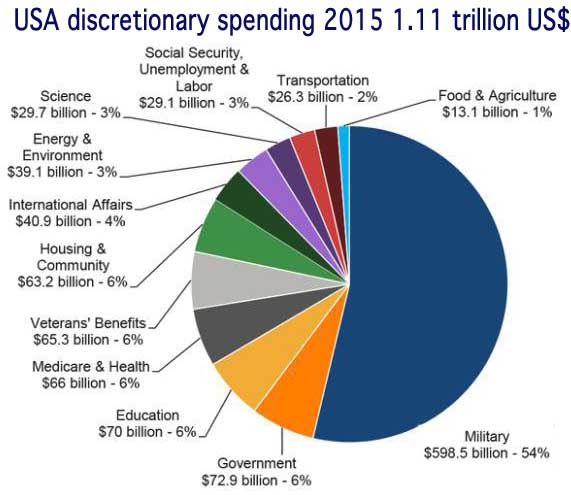
USA spending 2015
Imperial conquest news
http://petras.lahaine.org/?p=2045
http://www.bloomberg.com/news/articles/2015-07-29/how-war-has-destroyed-syria-s-economy-in-four-charts
http://www.zenit.org/en/articles/syrian-patriarch-aid-given-to-moderates-is-taken-by-extremists
http://news.yahoo.com/family-islamic-state-leader-raped-american-hostage-190501666–politics.html Not to forget: IS = US.
http://www.counterpunch.org/2015/07/29/the-ichkerization-crime-wave-in-ukraine/
http://slavyangrad.org/2015/08/10/whitewashing-bandera-for-a-us-audience/
http://slavyangrad.org/2015/08/10/americas-dark-history-of-supporting-ukrainian-fascists-and-war-criminals/
http://www.workers.org/articles/2015/08/07/a-personal-essay-on-two-cubas-on-july-26-in-miami/ One only has to compare Haiti, Jamaica, the Dominican Republic, and Costa Rica with Cuba to realize how beneficial the US blockade for Cubans was. Cubans will hopefully resist the siren calls of US propaganda.
http://www.middleeasteye.net/columns/pentagon-prepares-century-climate-emergencies-and-oil-wars-2021134422

Armageddon news
http://thearchdruidreport.blogspot.co.at/2015/07/the-cimmerian-hypothesis-part-three-end.html The Archdruid has written better texts but this is still high above the average blog or newspaper article. It presents the interesting theory of a positive feedback loop which make city dwellers lose contact with nature and consequently with reality. This is only one of the many things which are going on in industrialized societies but it surely has an impact.

Local/personal/gardening news

The second heatwave here was even more taxing than the first. The month of July has been the hottest in the 248 years since temperatures have been recorded. August will probably be the same. The number of hours of sunshine for June was 20 percent higher than the long-term average across the country, while 20 percent less rain than average was recorded. Night temperatures were not below 21 degrees Celsius.

Heat and drought have caused massive crop failures especially for fruits, corn, and soy. The national crop insurance estimates the damage to be over 100 million Euros until now, a significant sum for a small European country.
drought vine 1
It was the same in all of Europe, with record breaking temperature between 37 and 41 degrees Celsius (Cyrus 57 degrees Celsius), damaged crops and dying trees. In Germany a third of all newly planted trees are said to have died.

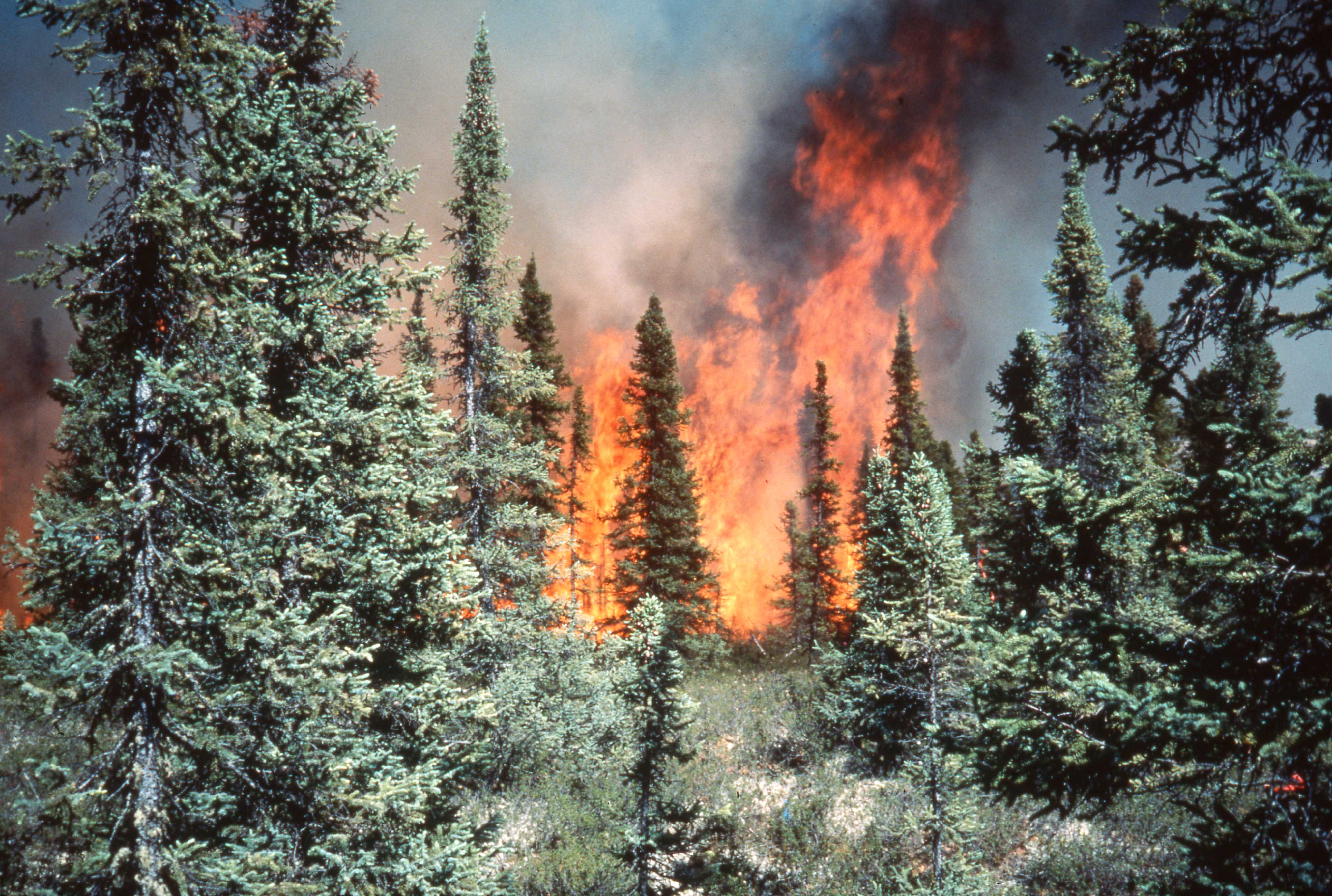
Severe Wildfires were (and in some cases still are) raging in Bulgaria, Croatia, Ukraine, and in all southern European countries.

The weather conditions were hampering electricity transmission as low river levels resulted in cooling restrictions of the thermal power plants, while higher demand for air-conditioning squeezed the reserve margins required by the system. Poland’s national supplier had to cut electricity for factories and the local unit of the world’s largest steel maker ArcelorMittal halted some of its operations.
forest fire 8
The heatwave disrupted ship traffic on main European rivers (Danube, Rhine, Elbe).

Climate change is now getting serious, but I was prepared for this, wearing appropriate (or no) cloth, spending a lot of time in the cellar, where it is some 10 degrees cooler, having the windows and curtains open in the night and closed during daytime.

The cellar is big and comfortable, two rooms are usable as office and bedroom, there is even an ethernet connection via power line adapters and I have a computer installed.

I changed my work schedule and was working in the garden from 5 am to 11 am, after that having lunch, a nap, or doing housework, and being out in the garden again from 6 pm to 9 pm.

The big problem was water. I expected the heat but I didn’t quite expect the severe drought. I knew of course that hotter means drier since evaporation increases with temperature. But I didn’t grasp that the relationship between the two is non-linear: as temperature creeps up, evaporation rises exponentially.
  
My homeland is fortunately a rainy place but during the second heatwave in August the ground in the forest was bone dry. There were even warnings about the possibility of forest fires and a farmers association advised all members to fill up the sewage trailers with water just in case.

I collect all rainwater from the roofs of the house and the bigger greenhouse with four diverters and have 16 rain barrels with some 2600 liter capacity installed, but the rainwater was used up in a few days. In my dire need I excavated a 30 year old lawn sprinkler from one of the treasure boxes on the loft. I kept this piece through all the years despite its ostensible uselessness because I hate to throw things away which still work.

The sprinkler worked well indeed and when I looked around in the hardware stores I found out that it is still sold in a slightly modified version and beyond that it is clearly the most efficient and intelligent system. Also the cheapest, and for that reason it is most times hidden in the very back of the shelves.

I bought a second sprinkler of the cheap and efficient kind and a few advanced garden hose nozzles and installed the sprinklers at two points which together cover half of the garden. The rest of the garden was irrigated with the hoses or with watering cans. All irrigation was done in the morning from 5 am to 9 am. Fortunately there is a huge fir tree in the southeast of the garden which provides shadow during the morning hours. The forest on the east side of the property also provides shadow in the morning. 

I used lot of municipal water and it will be costly. I will have to inform myself about drip irrigation though at the moment it seems that it will not bring any advantage. The best I can do is to further increase the humus layer, which is still the superb water storage, and plant more trees and bushes to increase foliage. I have now 28 fruit trees, some 160 blueberry bushes, a thousand strawberry plants, and many colonies of mint, lemon balm, sage, etc.

Unfortunately the fruit trees will need many years to form a protecting canopy but there is a faster growing alternative: 11 grapevines and uncounted profusely growing blackberry bushes cover a respectable area and there are 2 meter high trellis set up on which they can climb, creep, entwine, and grow. The trellis form covered passageways where one can walk around without being exposed to the stinging sun. There are several areas that are completely covered by the grapevines and where it is substantially cooler as in the open. If anything goes well, a microclimate like in the tropical forests will evolve, keeping most of the humidity inside the shielding canopy.

Despite my irrigation efforts I lost about 10 blueberry bushes. In Fall and Spring 20 new bushes will be planted, but only in shadow areas. Lemon balm, mint, and strawberries have reached the status of weeds, Sage, thyme, yarrow stand their ground, while marigold and camomile need protection and additional seeding. Fennel came by itself, I have now three plants which are more than 2 meters high. I never imagined that fennel could become that big. Dill unfortunately has disappeared, next year I’ll try to introduce it again. The ferns are doing surprisingly well in spite of the drought.

Glechoma hederacea (ground-ivy) at the moment is the most prevalent weed and I’m not even sure if I should call it a weed. It belongs to the mint family, is rich in vitamin C, and can be used for tee and as salad. Creeping buttercup (ranunculus repens) is indeed creeping up everywhere and it has tenacious roots. It has no practical use and is poisonous, so I have to be careful and eliminate it with every possible method. Ground elder (Aegopodium podagraria) is also tenacious and regarded as a nuisance, but it is a minor problem here.

==========

The heatwave has ended and it is significantly cooler. It has rained for two days and all the rain barrels are filled up again. It feels like Autumn. When I looked around during the forest walk with the cats yesterday I saw a lot of dead bushes. I also have never before seen so many yellow leaves in August.

Meteorologists say, that there will be a third (or fourth) heatwave, but it should not be that severe because the days get shorter as the season progresses. Anyway, a continuous period of high temperatures and drought with a few rainy days in between cannot be called a heatwave anymore, this is the new normal climate that we have to get used to in the coming years.

The new climate had also three positive effects, two of which I didn’t foresee. First, most plants grew with unprecedented fervor due to the higher sun radiation and the yields were exceptional high (that was expected). Second, fungal infection were not a problem because of the dryness. Third, there were nearly no mosquitos, horse flies, ticks, or other blood sucking insects. In August I always had to apply repellents to exposed skin (face, hands), which I don’t like because of possible unknown side effects of the chemical ingredients (Icaridin, DEET, Citriodiol). This year no repellents were needed.

Call me crazy but somehow I enjoyed the heatwave, I could get used to this climate. The big problem  is the water scarcity and there is also the prospect that it will get even hotter as climate change progresses. Scary!
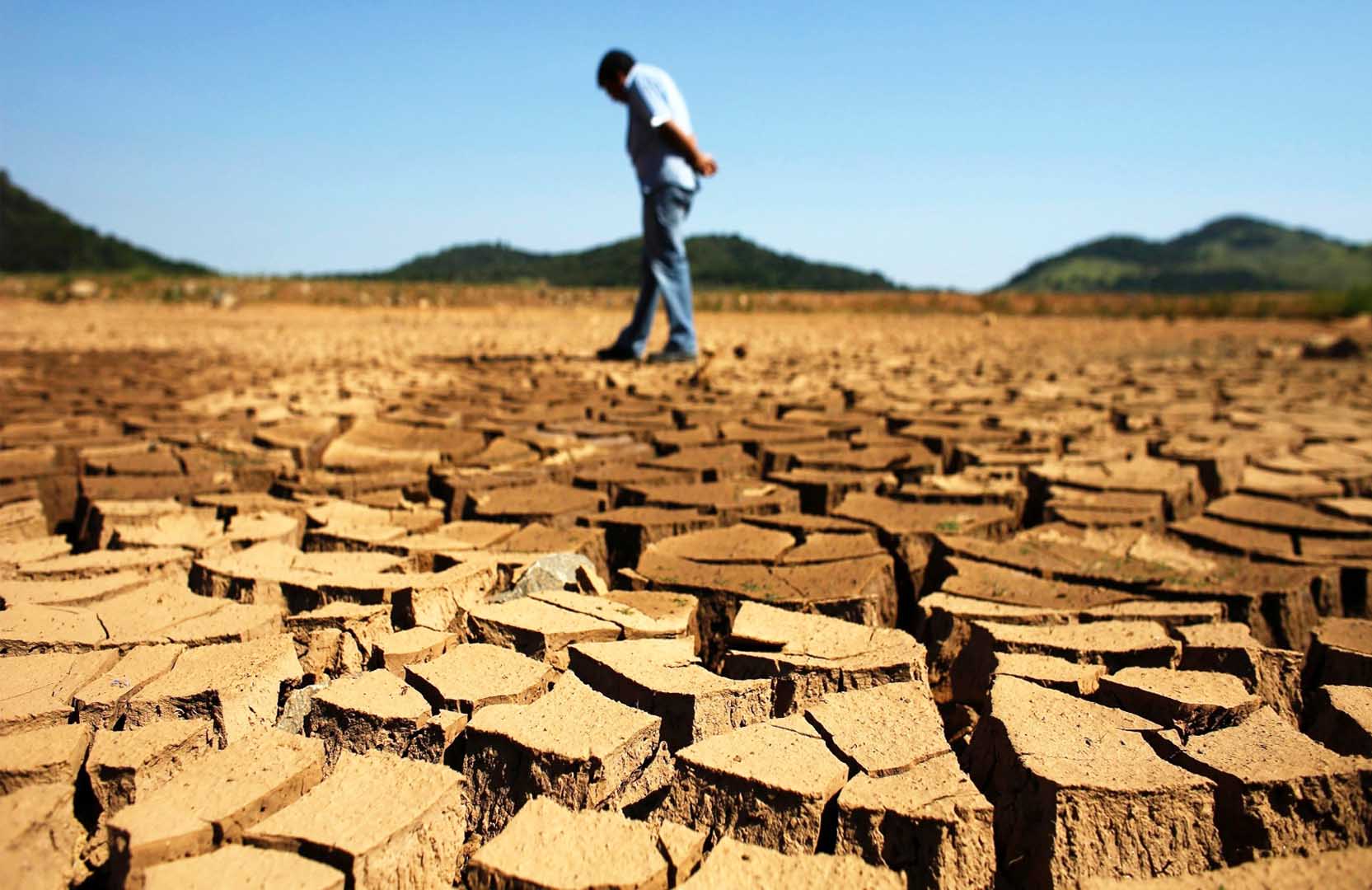
drought walking
Will we be one of the species being wiped out in the first phase of the human caused sixth mass extinction, the Holocene extinction? Or will we last a little bit longer to witness the result of our destructive activity, the unfolding horror of famine and pandemics, the dying of the last tropical forests, the fight for the last drops of potable water, the complete silence of a barren landscape — bereaved of any life?

Many people say now we have passed the point of no return, but I don’t give up hope. There are many uncertainties in human predictions, we are not as clever as we pretend to be. I still think that nature is more adaptable and forgiving than we imagine.