11.12.2013

Links December 2013


Environmental news:


Imperial news:
http://www.globalresearch.ca/decline-of-the-american-empire-global-configurations-of-power-the-swindle-economy-and-the-criminal-state/This analysis of US global influence has weaknesses (for instance a debatable assessment of the coup in Egypt), but presents an over all conclusive picture of an empire, which still can strike back with deadly force and will not be defeated from the outside. It will maybe crumble and fall by its inner contradictions, but even that is not for sure.
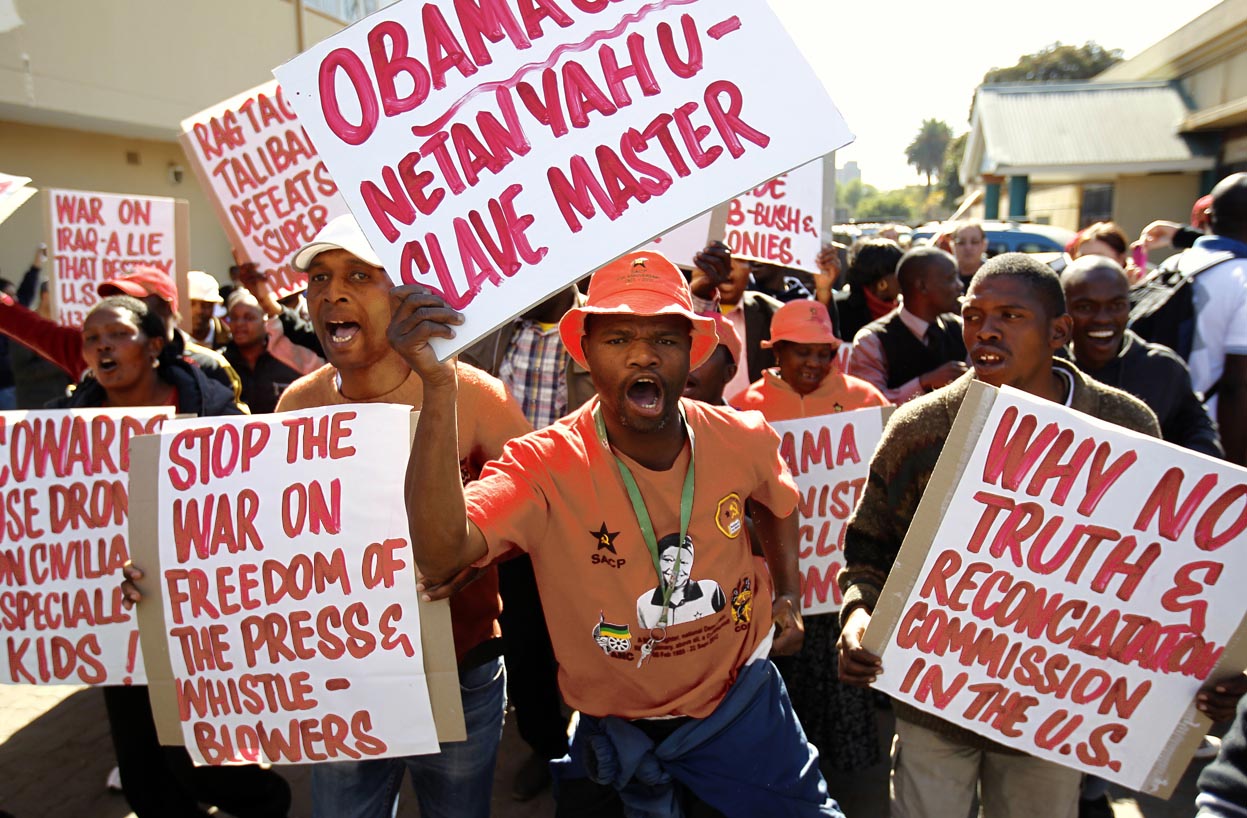
slave masters
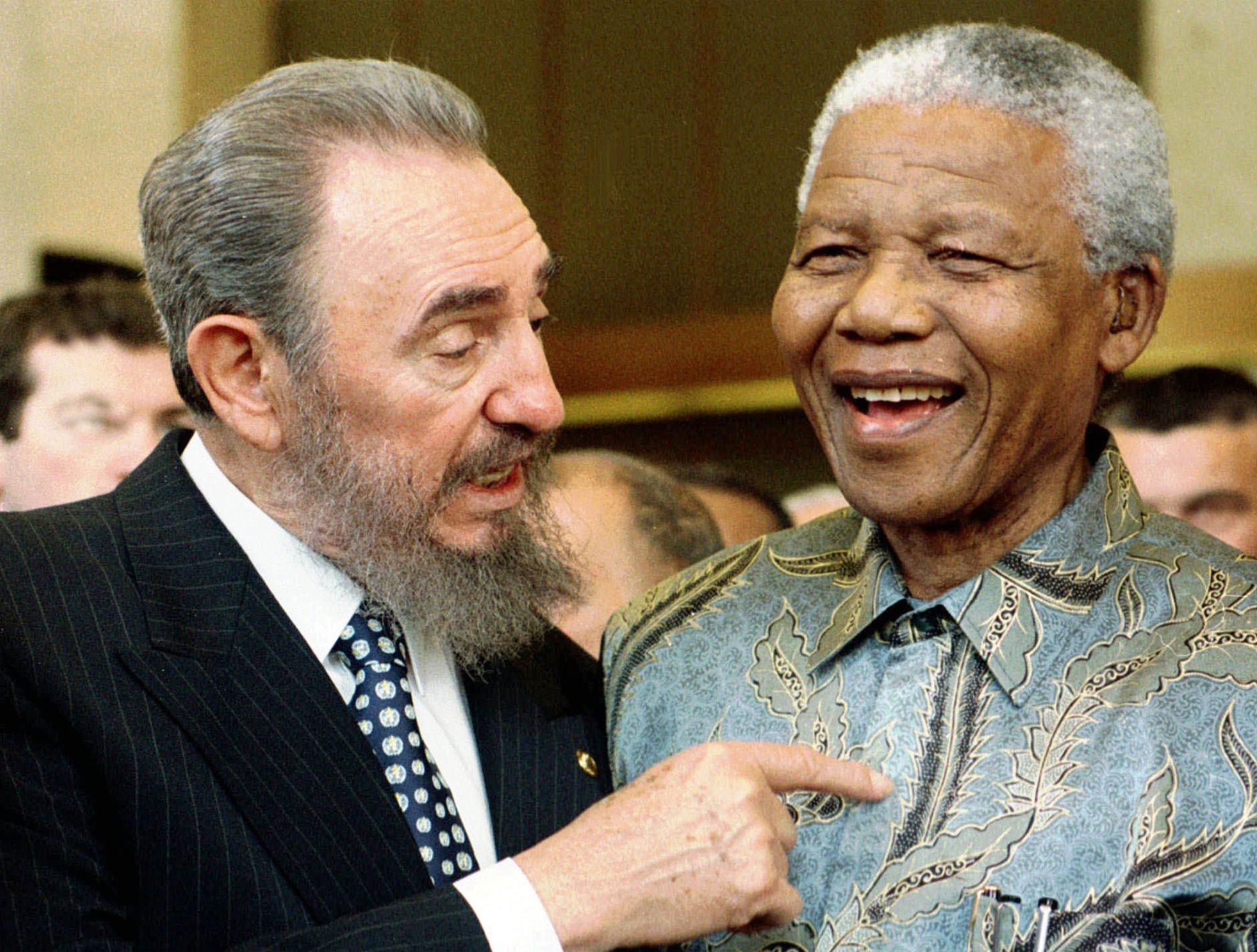
Mandela Gaddafi 3Mandela Castro 3

This month link list is combined again with pictures of the cat family. This time it is Sumo’s turn. Sumo is also known as Indi, Old Lady, Miss Marple — I’ll tell more about that later.

It is raining. A cold spell last week has killed the remaining marigold and camomile blooms. The plants fought bravely till the end, holding their blooms high up in defiance of the cold weather. But the frost broke them down and finally killed them. Good by, my wonderful flowers, I hope, you will live on by your seeds.
There is not much to do in the garden now, except repair work after a hefty storm, which blew out a few panels of the two greenhouses and damaged the roof of the big toolshed. The panels were still intact, just laying around somewhere in the garden, so with a lot of bending, pushing, and squeezing I could put them in place again. The roof of the toolshed has to be replaced, which will be a major action, because the toolshed is big (5.4 meters wide and 3 meters deep). I have already fetched all necessary material, I only wait for dry and mild weather.

The holes in the roof are temporarily covered with various sheets, which doesn’t look pretty, but seems to work.
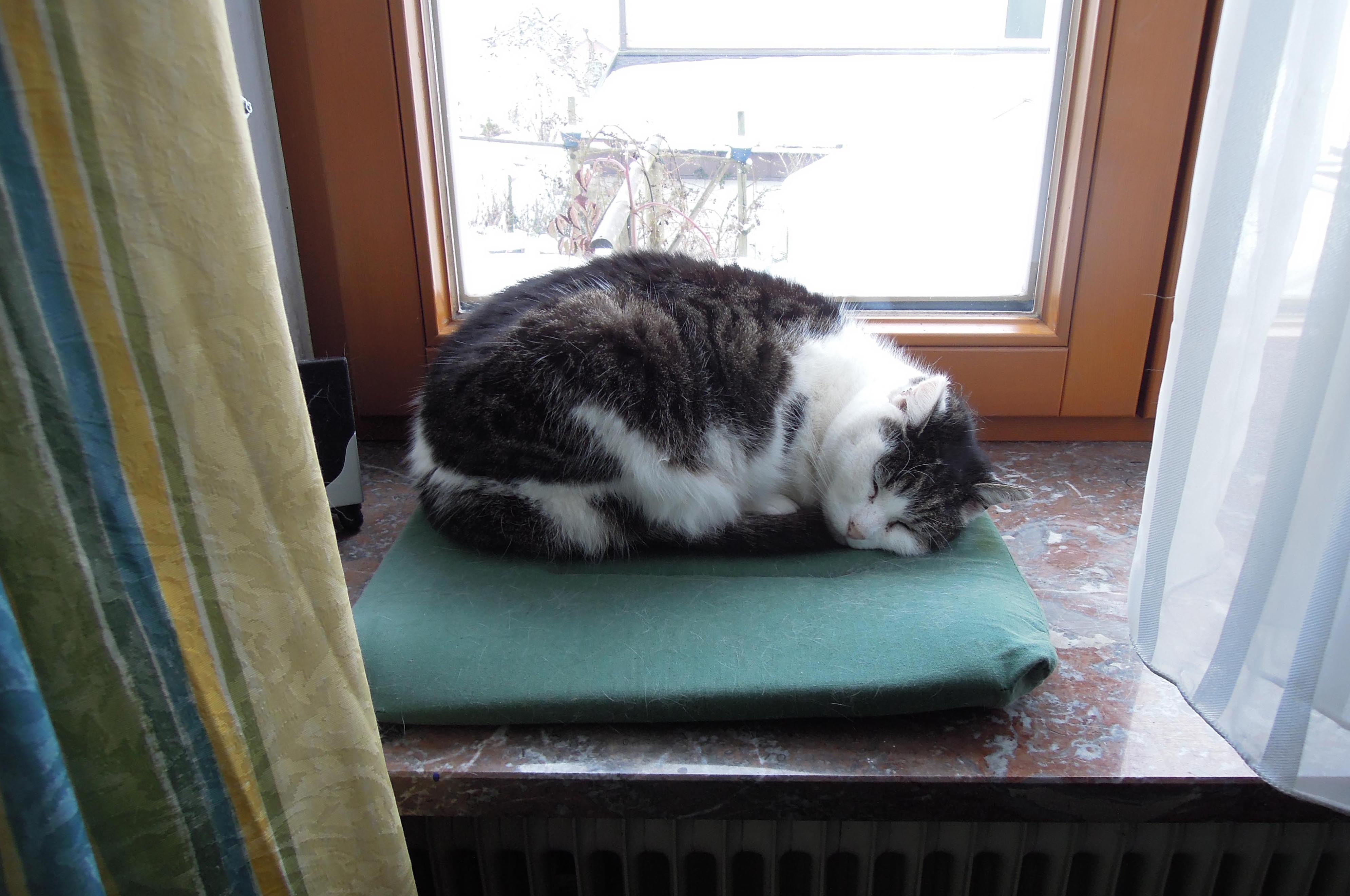
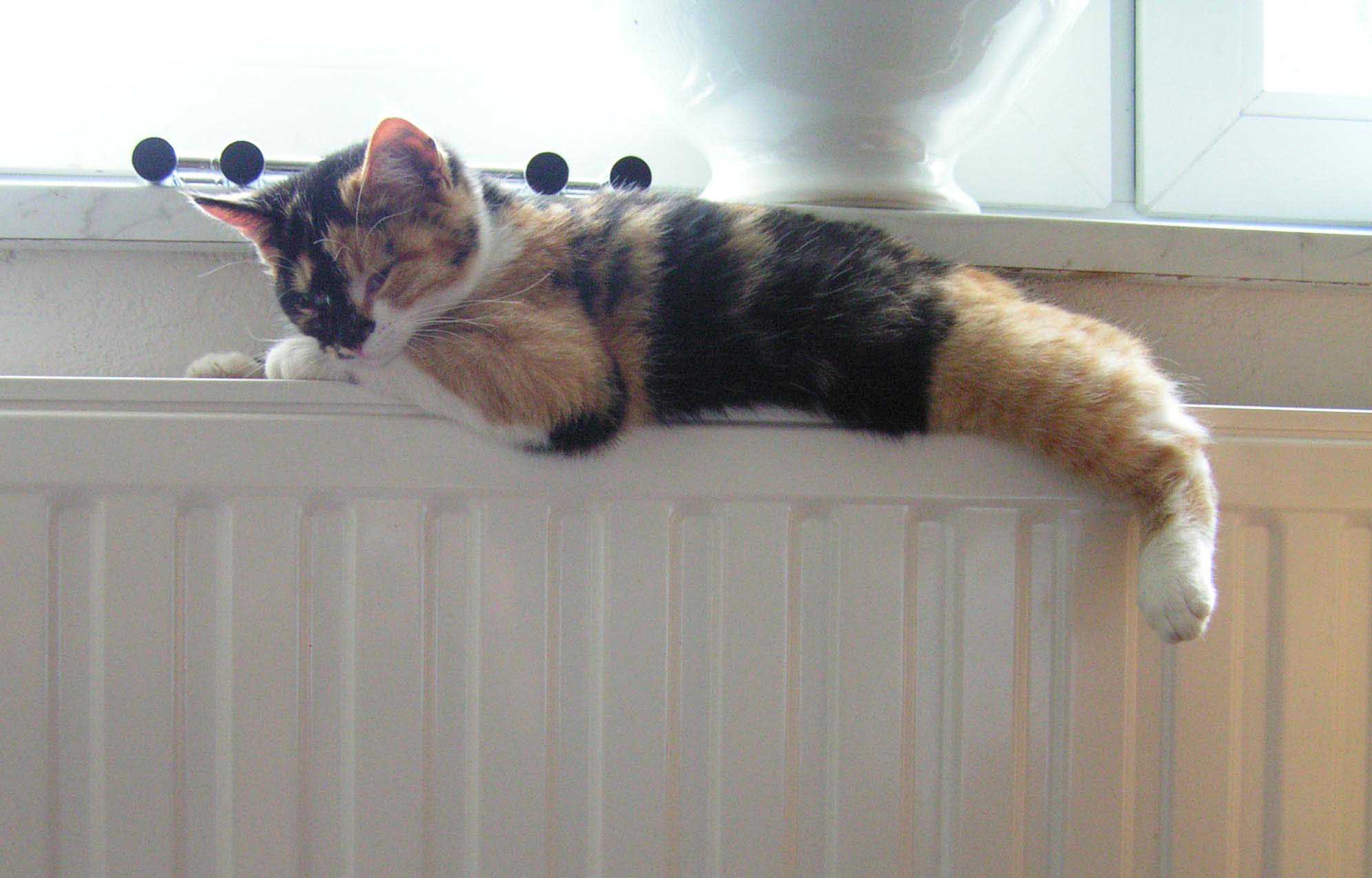
Sumo sleeping windowsill DSCN2586
The cats have gathered around the stove. Only Sumo is missing, she just wanted to go out. Sumo knows well how to pass the cat flap, yet she refuses to use it and instead always sits in front of the patio door, looking at me entreatingly and hoping, that I open the door to let her out.

A few hours ago she was away for a longer time and I became anxious and ran out into the rain to look for her — I cannot leave my old cat lady lonesome, forsaken, and desolate strolling around in the poring rain. I looked into every corner of the garden, but she was not there. Then I went across the road into the forest and called her, but no luck. I walked in the wood for a little while before I decided to give up and just as I turned back to the house she was behind me.

She probably was near me all the time, stalking me and watching me secretly — cats like to do that.
Sumo is now 16 years old. I don’t know where she was born, but she grew up in the home of a near neighbor, guided and tutored by an older cat, who became her dear friend and companion. When her old cat friend and mentor died, she became withdrawn and moody, spending most of the time outside and only visiting her then host family to get food.
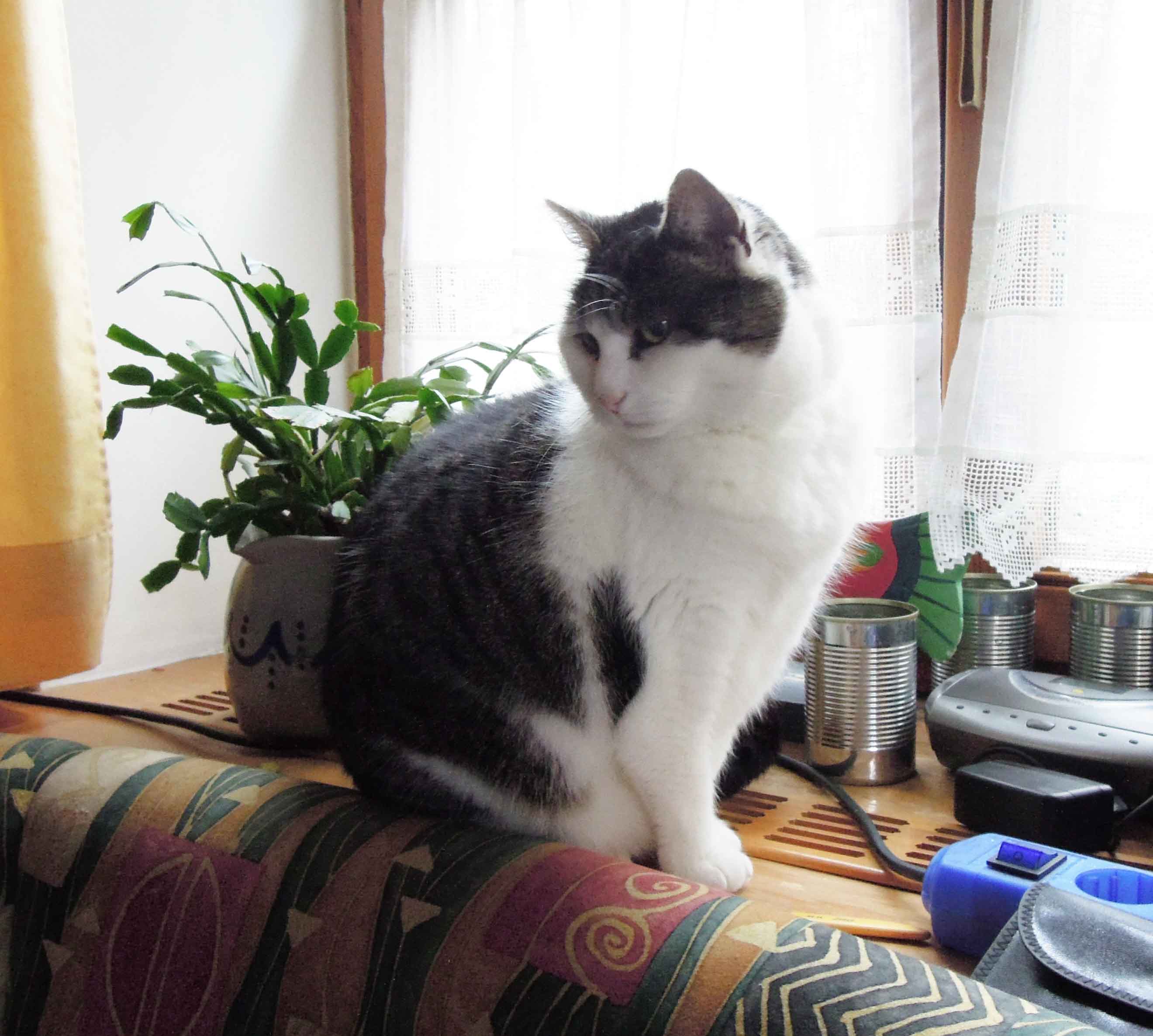
Sumo window DSCN0554
Nobody know why, but in spring 2010, half a year after I had moved in, Sumo decided to join the cat family which resides at my house (Mato’s cat family). She was not at all welcomed, and I vividly remember the hissing and growling, when Rosy chased her out of the garden (which happened quite a few times).

Sumo btw was not the first cat lady to join the family by her own decision, four years earlier Princess Min Ki had done the same, only Min Ki did it more clever and with remarkable social instinct and sensitivity.

One cannot accuse Sumo to have even the slightest tendency or trait of something which could be called social instinct, she is a loner like most cats, but in addition to that she is an outsider, she is unfriendly, ill-tempered, suspicious, and always ready to defend herself.

But she is a fighter, she is dauntless, intrepid, unflinching. Her persistence and courage are admirable, and this character trait in the end secured her a place in the family. Sumo did not sneak into the family like Min Ki, she broke in, choose a place and stood her ground against any attempt to expel her.
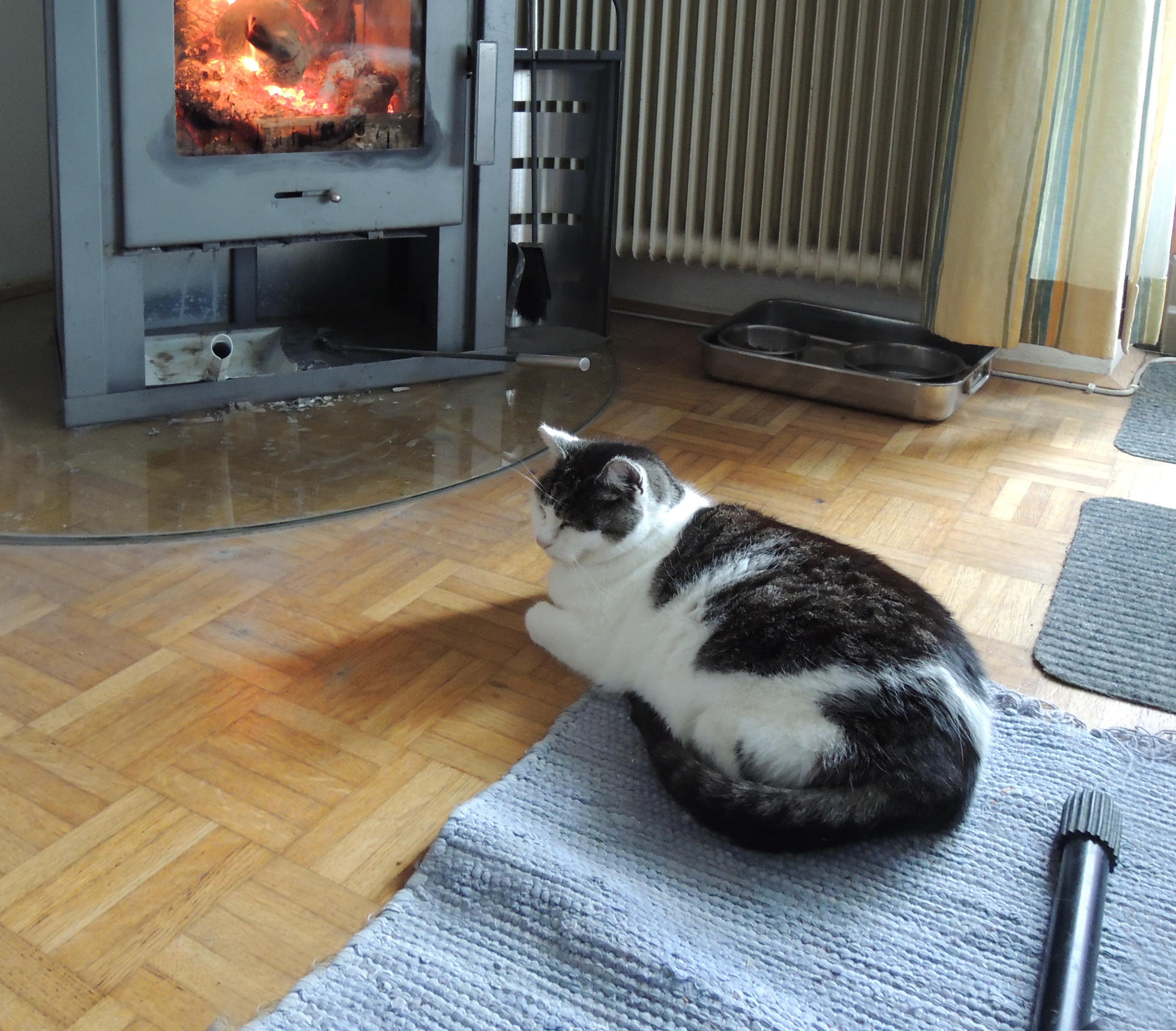
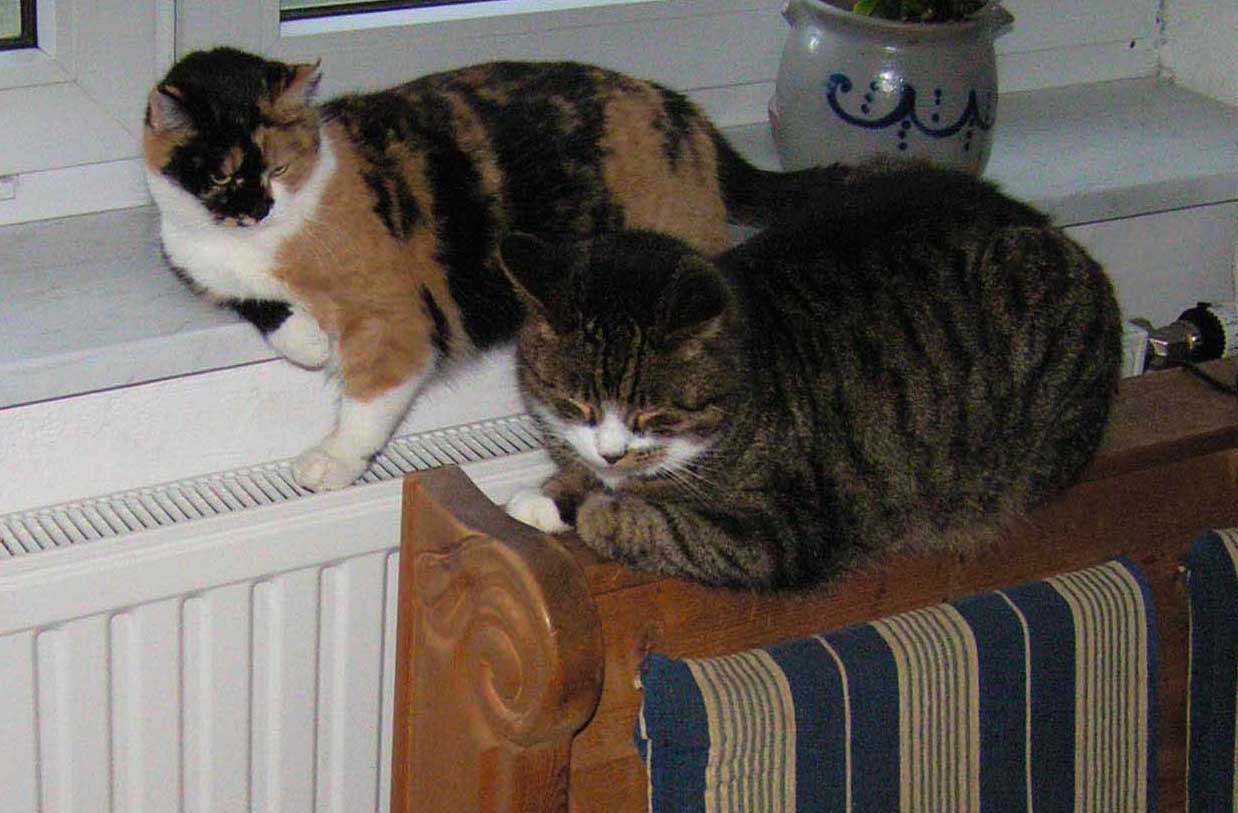
Sumo stove DSCN0879
Sumo was not called Sumo at that time, her former host had given her the name Indi. I changed her name to Sumo because after joining the family she soon gained weight and has now considerable six kilo. She seemingly likes the cuisine here and also appreciates my policy, to serve the cats as much food as they want.
Humans can eat as much as they want (at least in affluent Western countries). The intelligent ones choose their diet wisely and eat as much as they need and not more. My feline friends are clearly able to do the same, if obesity should ever endanger their health I will take action, but right now no special measures seem to be necessary.

Since one year Sumo suffers from a slight form of arthritis but she runs around in the garden and jumps high up onto walls, she surly does enough exercise and is astonishing fit for her age. Sumo also has a mild but persistent constipation and I have started to give her laxatives, we will see if that helps.

Sumo doesn’t care about her name, she just reacts to the sound of my voice. I occasionally call her “old lady” (which is self-explanatory) or “Miss Marple.” Please let me tell how I came to use the name of Agatha Christie’s main character for my lovely old cat lady.
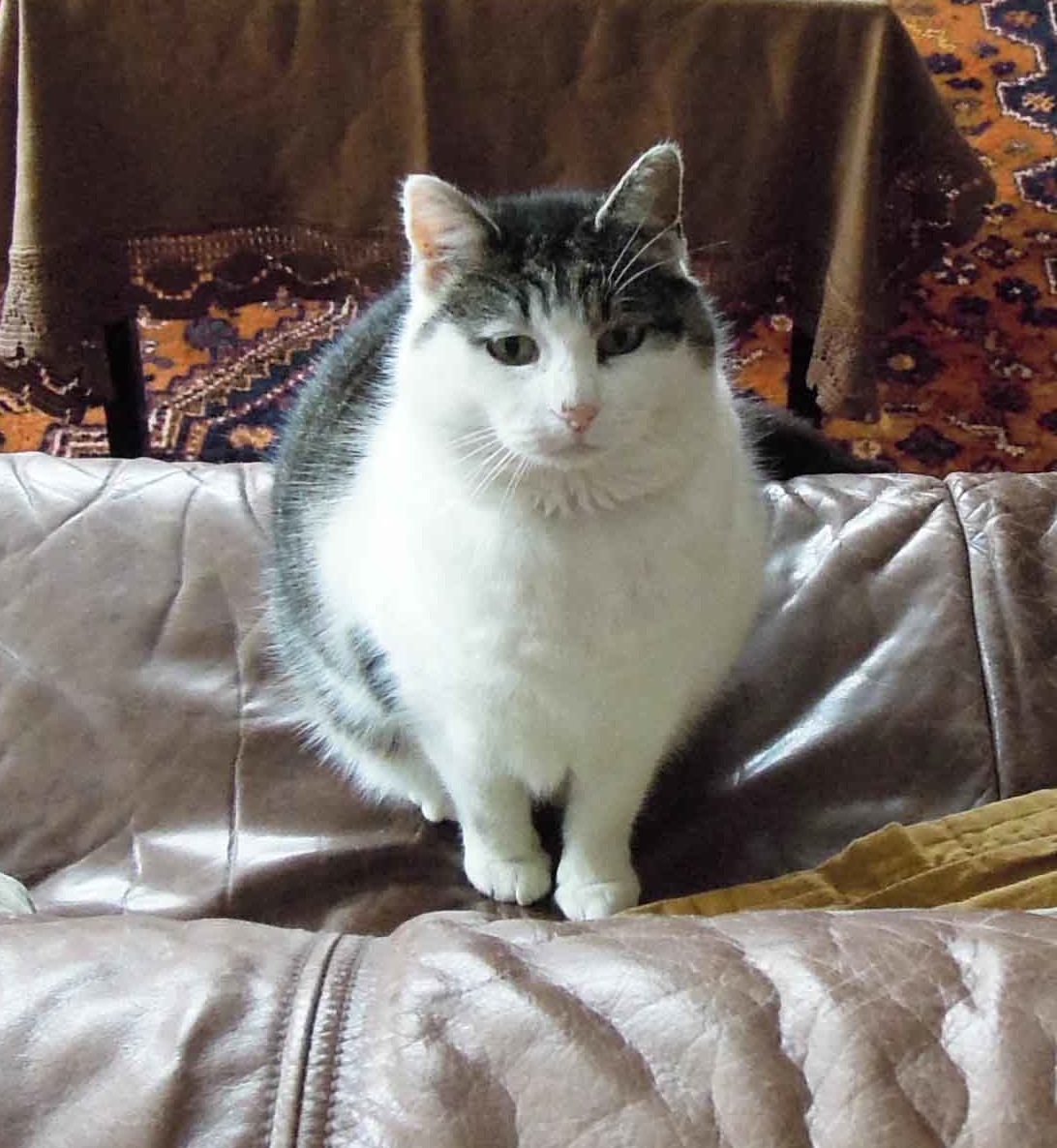
Sumo DSCN0077
It was in early spring this year when Sumo joined one of our obligatory daily walks in the forest. Readers of the blog know already, that these walks of the cats with me are an indispensable part of our life and the high point and crowning of the day. What the readers maybe not know is, that the walks have a long tradition and go on now for more than ten years. 

Sumo is not a regular participant and I was delighted to see her joining the group. Usually she follows the other cats and me in a few meters distance but this time she was right beside me. We went up to the clearing in the middle of the forest, then turned right and walked down into the valley near the tree nursery at the southeastern border of the wood. From there we could have diverted right to go back to the house via various routes or left to follow a way along the edge of the forest which ultimately leads to a small lake. 

When Sumo accompanies me I usually take a shorter route to make it easier for her, but this time her behavior encouraged me to choose a small path parallel to the beforehand mentioned way which leads into a jungle of scrubs and young trees. This particular region is only accessible in early spring and late fall, because the vegetation is so dense, that in spring the path soon is completely overgrown and impassable.

In fall last year Sumo had walked with us the same path, but she gave up when the terrain became difficult and I had to fetch her later separately. She had fortunately waited at the point where she gave up — she knew, that I would not forsake her and leave her alone in the wilderness.
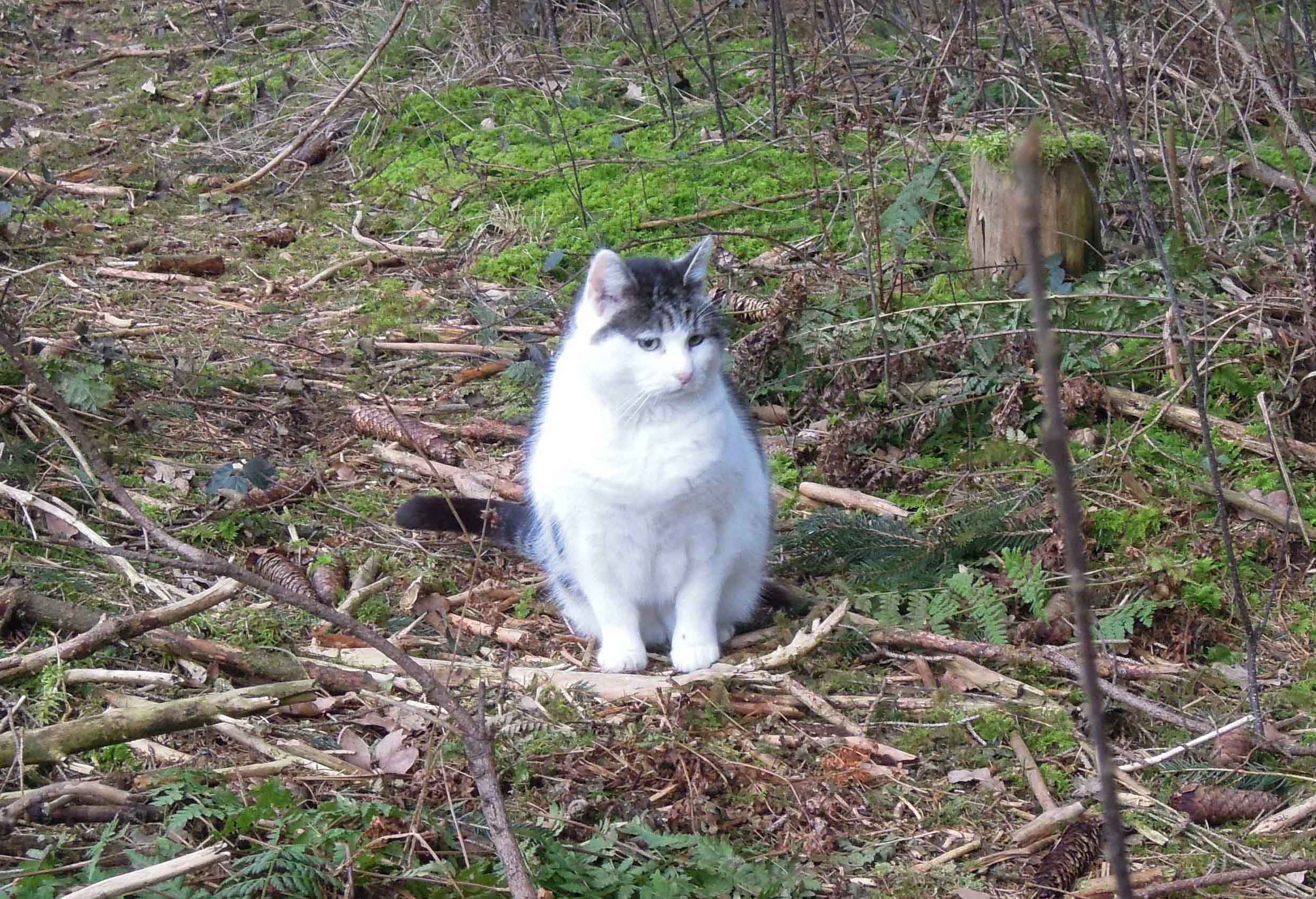
Sumo forest DSCN1326
It was a sunny and mild day, the cats were all in good spirit and we made fast progress. We were already far beyond the point where Sumo had given up in fall and she still was beside me and seemingly absolutely determined to see this through. Sumo was hell-bent to succeed this time.

As the vegetation became more dense and the path more narrow, Sumo had to walk behind me, but she always stayed as close as possible. This was a place where she never had been and she knew that finding a way out on her own would be difficult.

The other cats were now also following close behind me. Normally the cats use all possible sideways to explore the surrounding area. Especially Rosy, who has a phenomenal sense of orientation and knows the forest better than me, always tries to find shortcuts and alternative pathways. In this jungle though, Rosy was out of luck and she had to retreat from her sideway exploration, desperately meowing to signal me that I had to wait to let her catch up again with the group.

So I made a stop till Rosy was in sight and when we started walking, Sumo took the lead. She didn’t know the way, but she guessed, and she guessed well. At one point she took the wrong turn, following a path that deer had created and that would have led us to nowhere. A short call from me was enough to put her back on the right track, but from then on she did let me take the lead again.

The shrubs were now as dense as they could be, mostly hawthorn and wild blackberries. These bushes have nasty thorns, making a wrong step and becoming entangled into their thorny branches means severe trouble.
The forest plants know how to defend their territory.

Cats normally are able to skillfully and elegantly slip through thorny shrubs but this wall of brambles let even them become anxious and clueless, also Sumo seemed to be a bit hesitant now. Fortunately at this point we were already approaching the end of the jungle, it took just a few meters more (actually about ten meters) carefully maneuvering from gap to gap to reach the way between the small lake in the east of the forest and the big clearing in the middle.

This way is a bit wider and never overgrown because occasionally the forest owner drives with his tractor there. It is also the only track which is used by wanderers, normally a reason to avoid it because when the cats encounter strangers they disappear into the underwood and only slowly appear again when nobody is in sight anymore.
When Sumo and I were able to set our feet (paws) onto this way we both drew a long breath of relief and paused. We had to wait for the other cats who one by one emerged from the maze. They were all quite exhausted but when they looked around and realized that we had finally reached this main way which they all knew well they were relieved, jubilant, one could even say exalted.

So we put ourselves together, Sumo again took the lead and we went up to the big clearing and from there straight down to the small crossing where a well disguised path leads directly to our house.

Arrived at home, the cats got the best food that I had in store and I sat down to eat the leftovers of my muesli. I felt elated and proud, we really had achieved something remarkable and we would remember this walk for a long time to come. Sumo had earned my deep respect and probably also the respect of her fellow cats, it was very clear, that her standing in the group would be different from now on.

And as I sat there, surrounded by my little friends, I suddenly knew that as a consequence of this days event Sumo had a new name, a name that would reflect her achievement, a name that she had rightfully earned — from now on she would be called “Miss Marple.”  
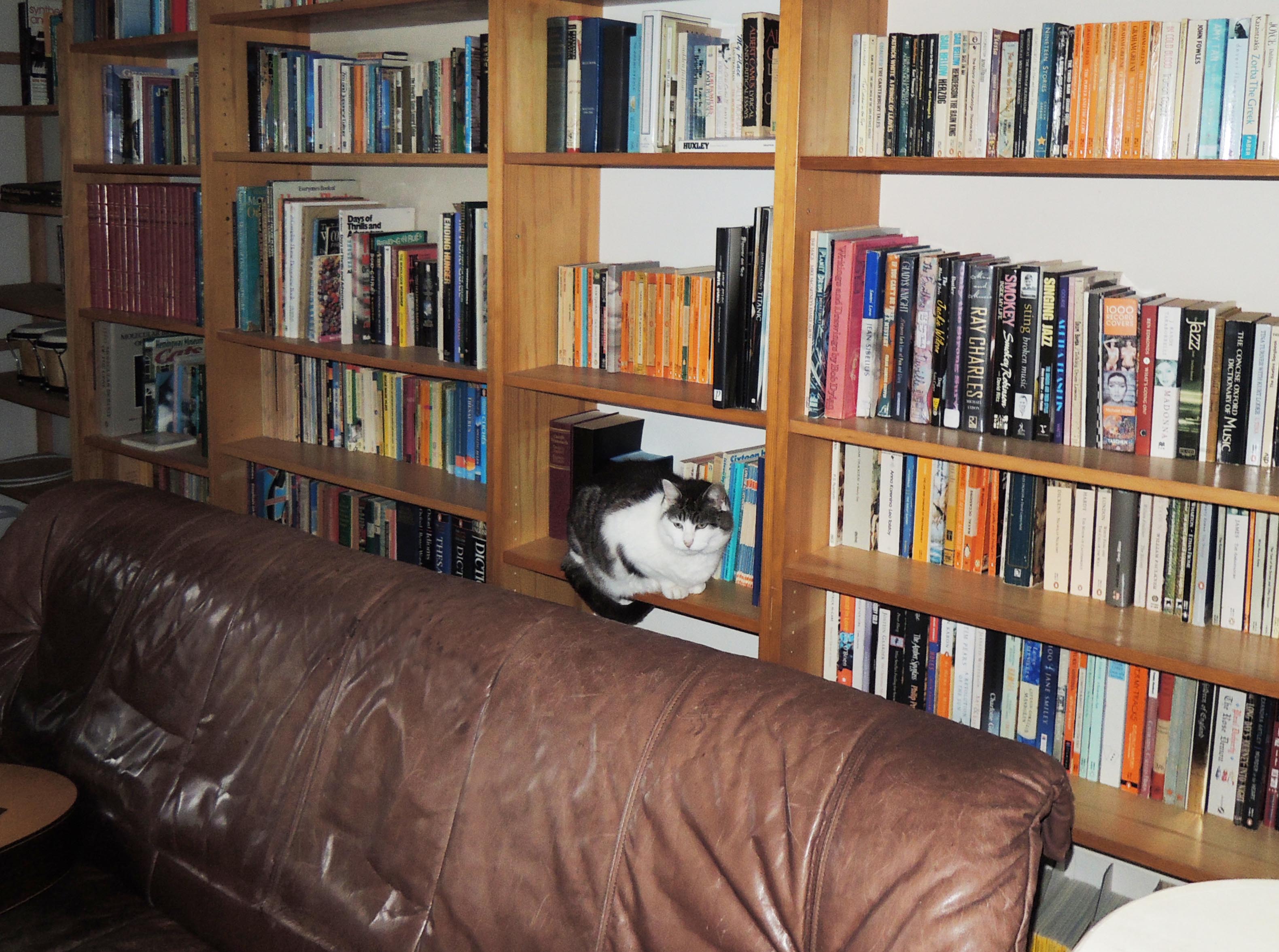
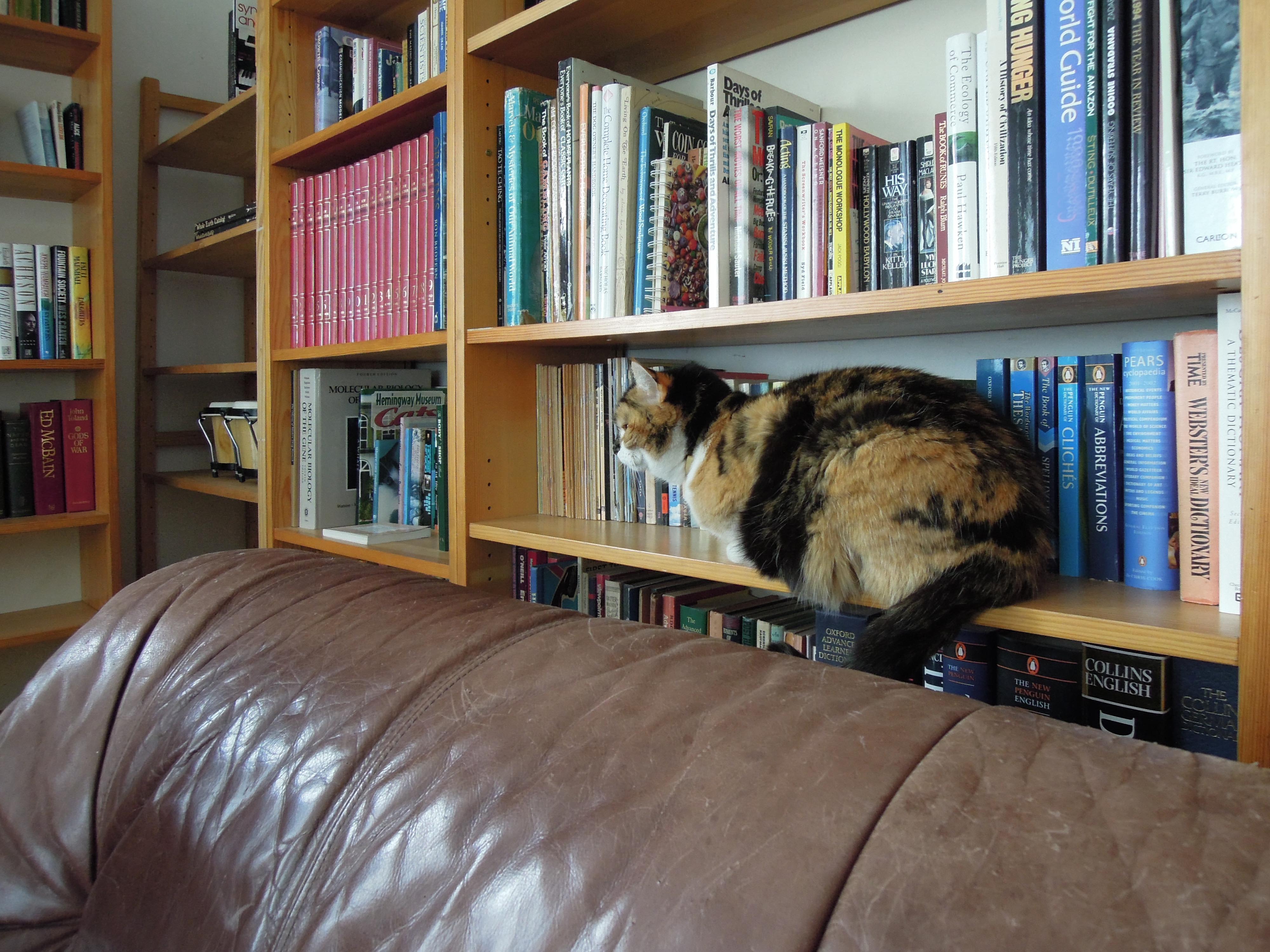
Sumo book shelf DSCN0638

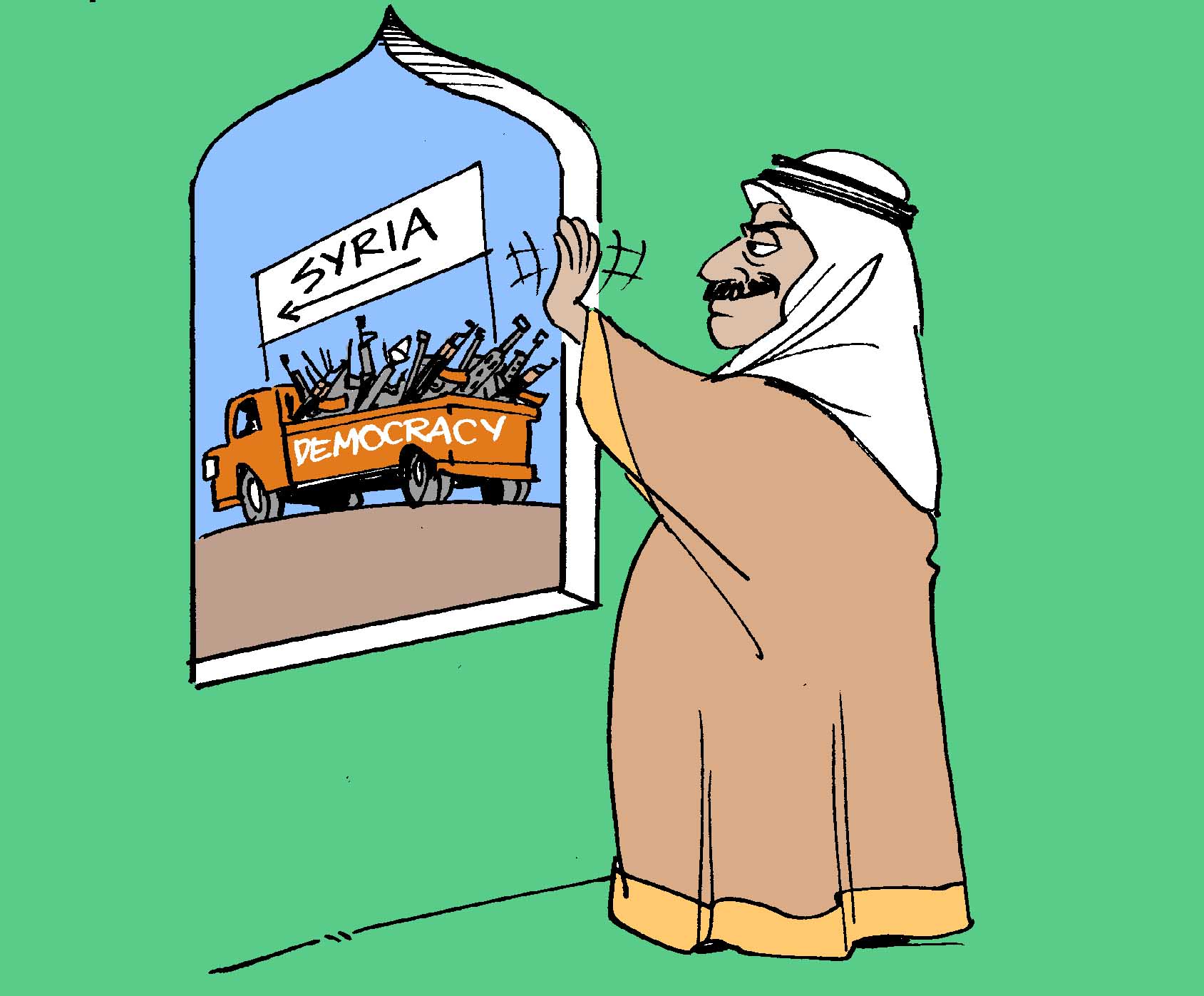
Saudi fighters flow into Syria


Abdullah Suleiman Ali  As-Safir

Hardly a day goes by without another Saudi arriving in Syria to join jihadist groups and fight in their ranks. Although the jihadists in Syria hail from various nations, Saudis are the source of jihadist leadership and a reservoir of suicide bombers, distinguishing them from their peers.

While we may know that the most recent Saudi to arrive in Syria was 17-year-old Mouaz al-Maataq, we will probably never know the identity of the first Saudi to go to Syria to join the fighting, or the exact date of his arrival.

As stated in the few available data, Abdul Aziz al-Othman was among the first Saudis to travel to Syria in early 2012 to fight against the state authorities. Othman became a prominent leader of Jabhat al-Nusra and some stories on his death in al-Shaddadi, in the al-Hasakeh governorate, even said that he was in the same car with Abu Mohammed al-Golani, a leader of Jabhat al-Nusra, and Abu Maraya al-Qahtani, Nusra’s chief legal adviser. This indicates that he was a close and reliable associate of the two. Omar al-Mouhaisini, another Saudi, was also killed in the same accident.

This does not mean that Saudis did not arrive to Syria before that date. It is likely that the influx of Saudi jihadists into Syria began with the start of the crisis there. Yet, at that time, traveling to Syria was not taking place through a general mobilization, but rather through the summoning of some former al-Qaeda leaders and veterans from the first generation of Afghan Arabs who individually traveled to Syria to explore the best ways to act there. This certainly meant establishing primary cells to lay the foundation of jihadist groups.
Syria saudi jihad c1
According to exclusive information which As-Safir obtained from a source in the Ahrar al-Sham movement, a figure far removed from the spotlight played a prominent role in the formation of the first armed Islamic-oriented battalion and, from the beginning, sought to cooperate and consult with prominent al-Qaeda figures regarding the best methods of jihadist war in Syria. This man is Abu Khalid as-Souri, an important figure in Jihadist history, to which Abu Musab al-as-Souri dedicated his book titled A Call to Global Jihad. Souri worked with Atiyatallah al-Libi, another al-Qaeda leader, which indicates his importance and central position. This importance is likely to grow bigger, because he was recently chosen by al-Qaeda leader Ayman al-Zawahiri to referee disputes between Golani and the leader of ISIS (Islamic State in Iraq and al-Sham) Abu Bakr al-Baghdadi. Souri is a reliable man and clearly has a leading position in al-Qaeda.

According to the source, a number of foreign fighters, including Saudis, were in Syria as the Ahrar al-Sham movement was emerging in May 2011. Souri is a founder and senior leader in this movement. Most of these “migrants” had secretly joined Ahrar al-Sham, since it was a faction recommended by al-Qaeda leaders, though the majority of them moved on to Jabhat al-Nusra, when the latter was established. As for Souri, he remained with Ahrar al-Sham, in a move that may have been intended to strengthen the “al-Qaeda movement” in Ahrar al-Sham, to be used at the right time.

That al-Qaeda leaders and figures from the first generation of Afghan Arabs were able to easily travel from Saudi Arabia to Syrian territory raises questions about the role of Saudi security forces in monitoring and tracing them. Does this move represent an indicator that the Saudi intelligence services are turning a blind eye, or is it a greater issue?

According to other available data, Sheikh Abdel Wahed, who is known as Saqr al-Jihad (the Hawk of jihad), may be the first leader of the first generation of Afghan Arabs who arrived in Syrian territory a few months following the outbreak of the crisis. He settled in the mountains of Latakia and worked on establishing the Soqqor al-Ezz battalion, through which Abdel Wahed attracted prominent figures of the jihadist struggle in Afghanistan. 
These included Abdel malak al-Ihsa’i (Abu Leen), Zaid al-Bawardi (Abu Ammar al-Makki ) and Abu Mohammed al-Halabi, who were all from the first generation and had spent more than 25 years in wars (from Afghanistan to Bosnia, Chechnya, and Iraq). Syria was their very last station, because all three were killed soon.

The Soqqor al-Ezz battalion later assumed the role of receiving “migrants” at the Turkish-Syrian border and providing shelter until they were assigned to battalions.

Sheikh Abdel Wahed was followed by men who were less important than he, such as Najmeddine Azad, whose real name is Adel al-Otaibi, and who fought in Afghanistan with late al-Qaeda leader Osama bin Laden and another leader known as Khattab. Otaibi moved from Saudi Arabia to Syria, despite that one of his legs has been amputated. There is also Fayez al-Mitab, who is considered a friend of bin Laden, as the latter used to stay at his residence during his visits to Saudi Arabia. Various other figures from the Afghan jihad, whose participants are internationally considered as terrorists and supposed to be prosecuted, or at least surveilled by the Saudi authorities, followed them.
Syria Saudi jihad c2
This raises the question of how these persons suddenly gained, with the onset of the Syrian crisis, freedom of movement across the border without any restrictions or control. Is it possible that this happened under the nose of Saudi intelligence services? If we presume that the first people who resorted to jihad in Syria managed to deceive Saudi authorities and were able to join Syrian jihadist organizations, then why are their fellow Afghan Arab veterans still flowing into Syria to date, without the Saudi intelligence services trying to stop them and ban them from leaving the kingdom’s territories?

The frequency with which Saudi nationals were collectively mobilized to fight in Syria increased after Jabhat al-Nusra was established and started carrying out its suicide operations. Convoys of jihadists were crossing the Turkish border continuously all the way to the headquarters of the Soqqor al-Ezz battalion in the mountains of Latakia. From there, these convoys either enrolled in Jabhat al-Nusra or stayed with the Soqqor-al-Ezz battalion. The majority of these Jihadists joined Jabhat al-Nusra, since the sheikhs of al-Qaeda recommended Jabhat al-Nusrah instead of Ahrar al-Sham.

Abdul Hakim al-Muwahad, whose real name is Abdul Aziz Al Sibaie, joined Jabhat al-Nusra. While he was no ordinary member, he also was not experienced in jihad. However, he was banned from traveling by virtue of a decision issued by the Saudi Arabian authorities, and he actively called for staging the sit-in in Tarafiyah in the city of Buraidah in Saudi Arabia to demand the release of political detainees. Moreover, as soon as he arrived in Syria, he became a coordinator recruiting Saudis for jihad in Syria and helping them get there without falling prey to the hands of the Syrian security services.

Sibaie was neither the first nor the last Saudi citizen who has been banned from traveling, yet succeeded in arriving in Syria. It is no exaggeration to say that the available data at hand indicates that a large number of Saudi jihadists present in Syria are in fact barred from traveling, by virtue of a formal decision issued by the Saudi authorities. These figures include Abdullah bin Qaed al-Otaibi, Badr bin Ajab al-Mqati, Abdulla al-Sudairi, Uqab Mamdouh Marzouki, and dozens of others who arrived in Syria despite the travel ban. It is worth mentioning that these Saudis left the kingdom through Riyadh airport, as confirmed by most of them on Twitter.

It should be noted that Sibaie was killed around two and a half months ago in Jobar in Damascus, and his brother Suleiman Sibaie quickly joined the collective fight in Syria without facing any impediment. It is worth mentioning that Abdul Aziz Al Sibaie had traveled with the passport of his brother Suleiman. This means that Suleiman had obtained a new passport and visa when he left the airport, despite the fact that according to official entries he was still abroad and had yet to return to the kingdom.

It is surely notable that activists who were participating in sit-ins and demonstrations against the Saudi government, suddenly transformed from activists and opposition members to mujahideen. They left the sit-ins and cleared the streets from any rallies against the regime in their country. They abandoned their cause (calling for the release of political detainees) and decided to move to Syria and join the jihad against the government.
Coincidentally, this transformation always occurred two or three weeks after they were released from detention. The detainees obviously came out of prison with the ultimate dream of heading for jihad in Syria. The detainees of what used to be called the Tarafiyah sit-in are only one, though an outstanding example of this phenomenon. The majority of those activists and demonstrators detained by the Saudi authorities in the wake of the sit-in in Tarafiyah in Qassim decided to head to Syria and join jihadist organizations there, despite not having any combat experience. This led to a number of them dying just days after their arrival in Syria (for example Mohammed al-Taleq, who had never before taken up arms, was killed five days after arriving).

Is it possible that all this happened without knowledge of the Saudi authorities? Senior al-Qaeda members and a large number of those who were banned from traveling, as well as a number of activists and protesters, are getting out of the kingdom through the Riyadh airport, while the Saudi authorities are completely unaware of what is happening on their territory?
Syria Saudi jihad c5
In fact, the Saudi authorities cannot be requested to prevent or ban their citizens from traveling via the kingdom’s airports, simply because there is a crisis in Syria that attracts jihadist figures from all around the world. Yet, it is evident that this must not include those under a travel ban, since they are not allowed to travel under any circumstance. So how, therefore, was a large number of them able to travel to Turkey and from there to Syria? Furthermore, some of them returned back to Saudi Arabia for a short time, in what seemed to be a vacation from jihad, only to return back to Syria again, all under the nose of the Saudi authorities who failed to take any action and rather only observed.

It would be very naive and illogical to believe that the Saudi authorities were completely unaware of the ongoing influx from their territory to Syria and it makes more sense to assume, that the Saudi intelligence services were ordered to turn a blind eye onto the moves of what the regime deemes to be the most dangerous groups.

The number of Saudi people heading to Syria is increasing by the day. During the last couple of months, this phenomenon has started to spread among the middle class and the class right below the class of princes, so to speak. In other words, it is no longer limited to the poor, marginalized or those with modest conditions.

There are many Islamist preachers who have arrived in Syria (chief among them is Sheikh Abdullah Muheissny), university professors such as Sheikh Othman Al-Nazeh, doctors, notaries, the director of the electricity company, officers in the Saudi army, and relatives of officers.

A couple of days ago, Nayef al-Shammari, a major in the Saudi border guards, was killed in Deir Atieh in Syria. He had reportedly defected and joined the jihadist groups in Syria, but he did not do anything that proves he actually defected. Motlaq al-Motlaq was also killed in Aleppo, and he turned out to be the son of Maj. Gen. Abdullah Motlaq al-Sudairi, the director of the Officers Center. As-Safir learned that Motlaq al-Motlaq had been openly supporting jihadists in Syria since last year, and he was carrying out campaigns to collect and send donations to them. Following his death in Syria, Saudi intelligence leaked a report according to which he was wanted by the intelligence apparatus and that he travelled to Syria for fear of being arrested. The suspicious part in the report leaked by the Saudi intelligence, however, was that the uncle of Motlaq, i.e., the brother of the major general, was also in Syria with jihadist organizations, and he was the one who took over his nephew’s belongings after his death. Can it really just be a coincidence that the family of a major in the Saudi army decided to go to Syria and join militant groups?
Syria Saudi jihad c4

09.12.2013

Salesmen of Subversion


From Bahrain to Ukraine: Hail the Western Salesmen of Subversion and Deception.

Finian Cunningham   Strategic Culture foundation

The Manama Dialogue held in Bahrain at the weekend — attended by US Defense Secretary Chuck Hagel and Britain’s Foreign Secretary William Hague, among other senior Western officials — is presented with gravitas and self-importance as a forum to earnestly discuss “security issues” in the Middle East and beyond.

In reality, the event — held in the Bahraini capital, Manama — is nothing but a talking shop of fake concepts, hollow posturing and boilerplate verbosity. A talking shop, complete with garish window dressing and manikins, to hide the gruesome nature of the real Western political business that goes on in the basement of the oil-rich region.

Like the general position of Washington and London towards the Persian Gulf Arab regimes, the Manama Dialogue is all about selling propaganda and deception to cover the most brutal facts of life, sold with the guise of genial, virtuous vendors.
Bahrain protests 2
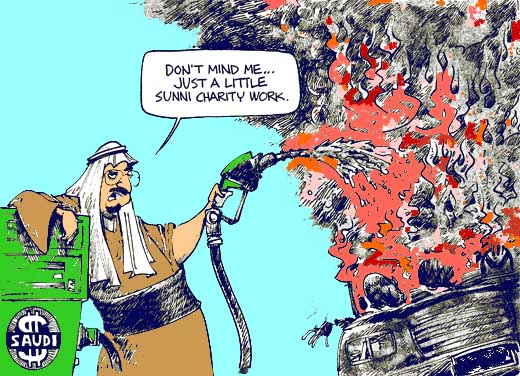
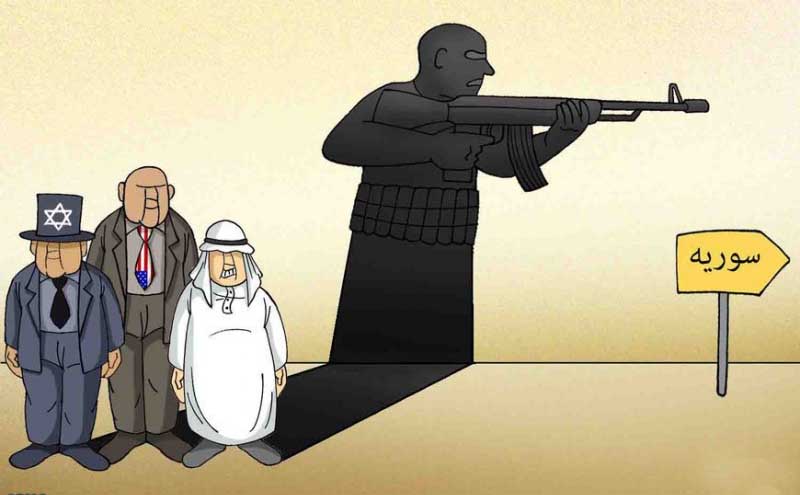
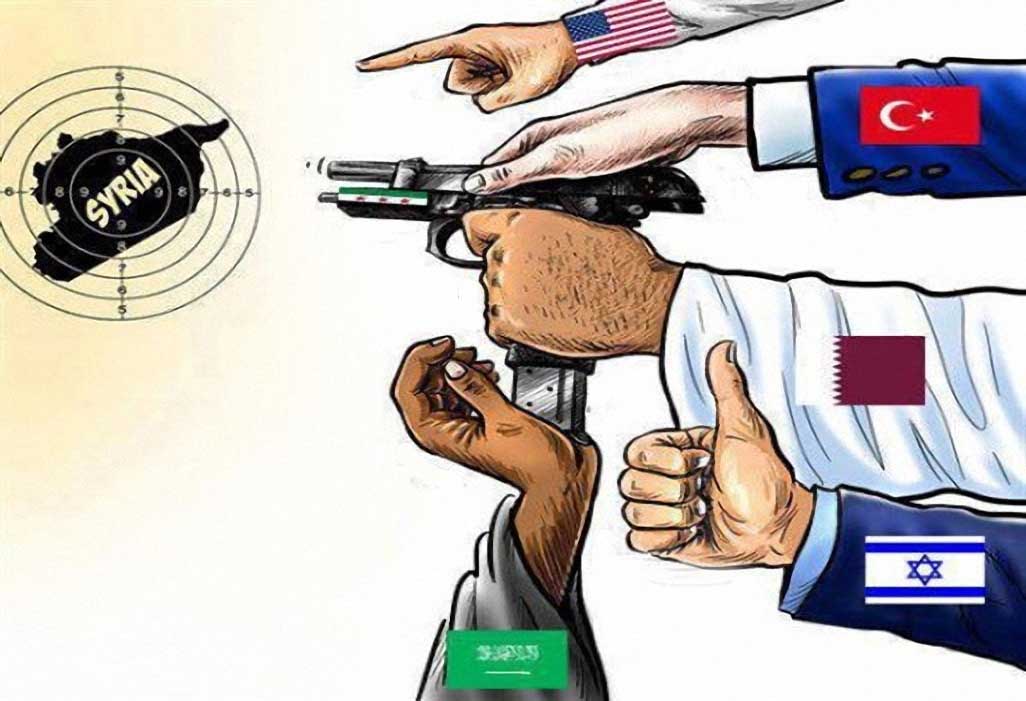
One of these brutal facts is that the Western governments are fully complicit in the repression of their Persian Arab clients against their own people. Another brutal fact is that it is Western governments and their Persian Arab clients who are fueling insecurity and violence across the Middle East, as in Syria, Iraq and Lebanon, by covertly supporting extremist regime-change mercenaries, such as Jabhat al-Nusra and ISIS (Islamic State of Iraq and Levant), both of which are linked to Al Qaeda.

Yet another brutal fact is that the Persian Gulf is one of the most militarized and insecure locations in the world, partly because of Western support for illicitly nuclear-armed Israel, and partly because of reckless weapons sales by the USA and Britain to the tinderbox region. 

Nevertheless, senior representatives of the war-dealing Western states have the audacity to address a conference in the region on “peace and security”.

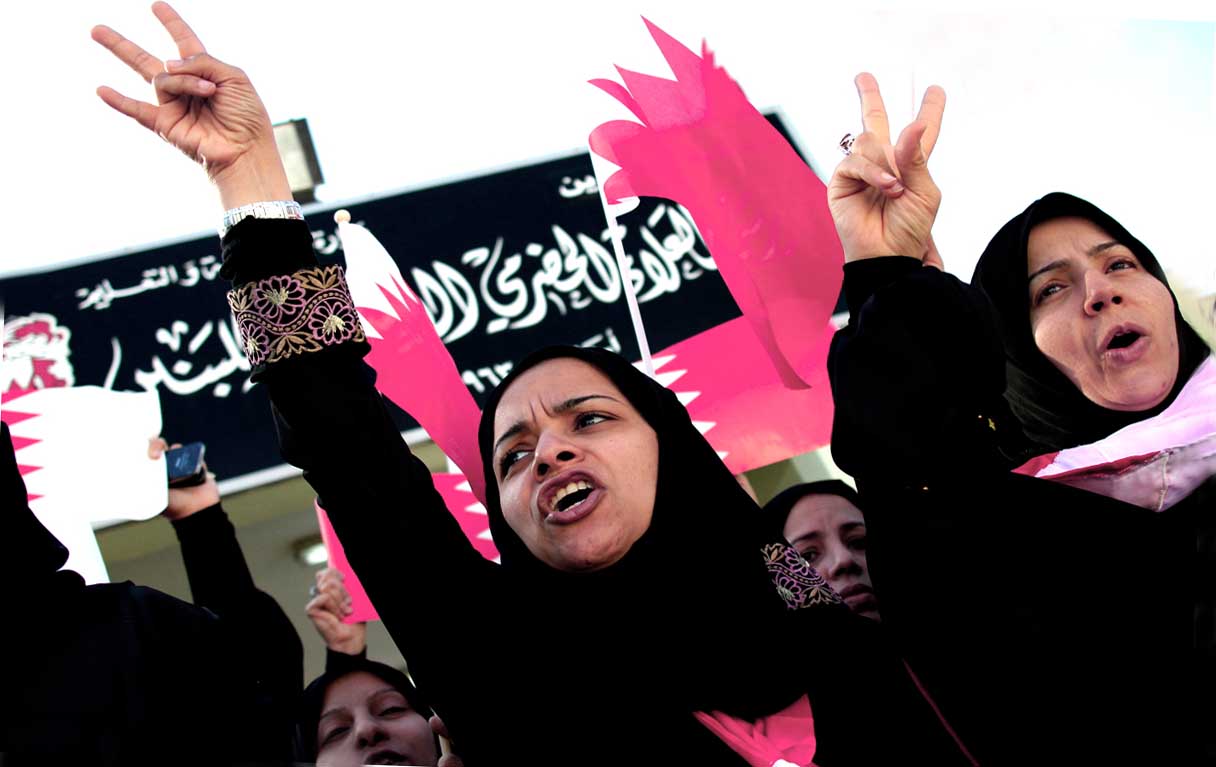
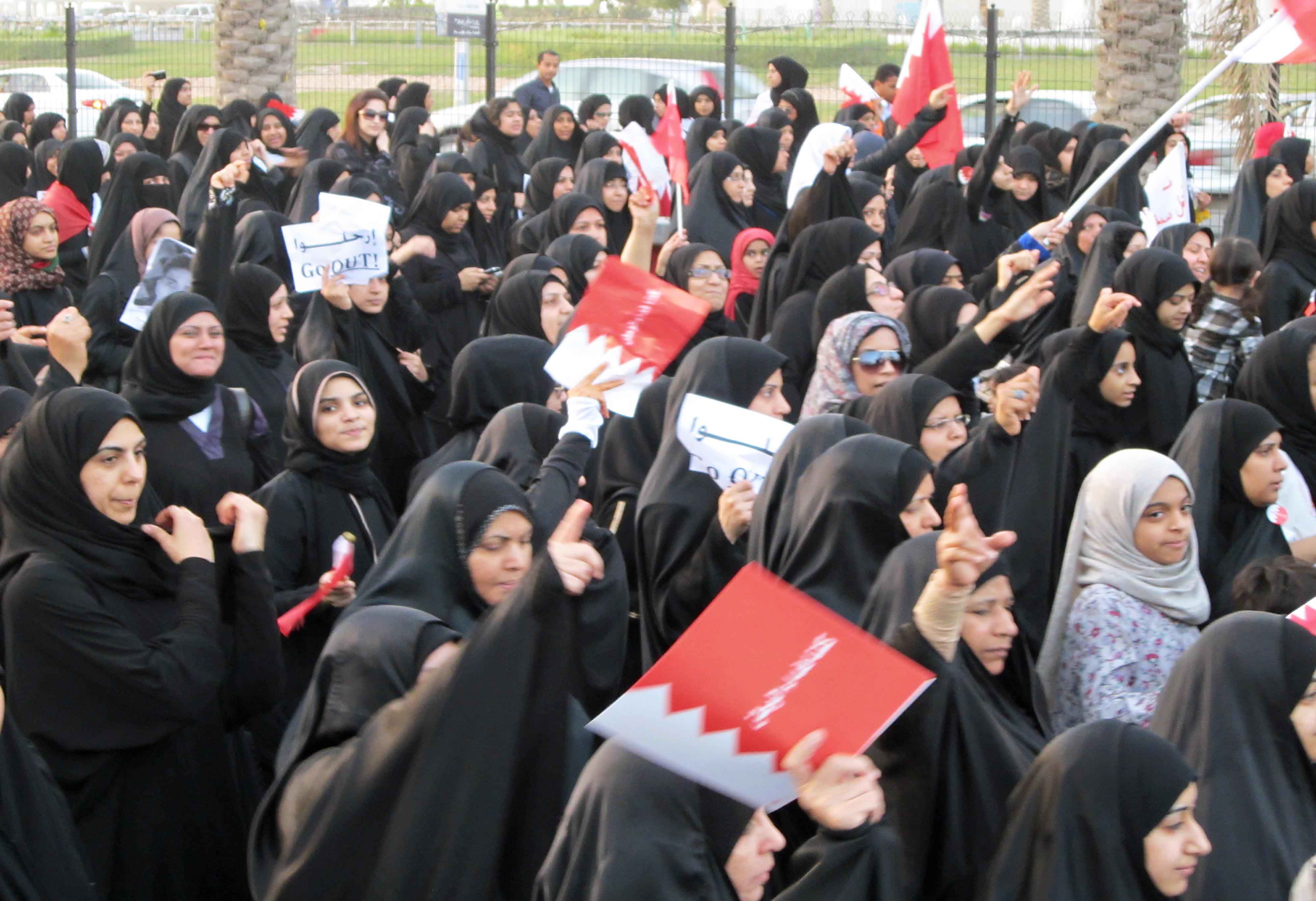
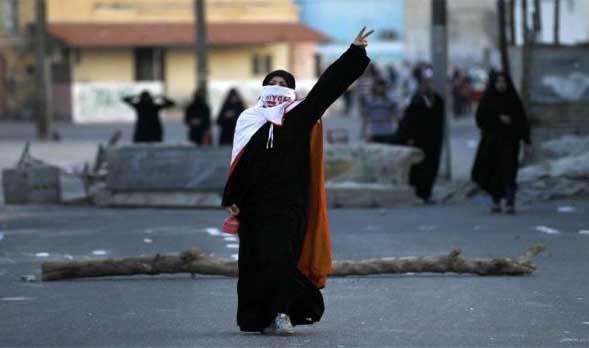
Like in a parallel universe, speakers and delegates were ensconced in a plush hotel by their Bahraini hosts to hold forth on democracy, rule of law and terrorism. Meanwhile, a few kilometers away from the venue, the Western-backed Bahraini regime was deploying its riot police to club and gas peaceful pro-democracy supporters. The protesters were trying to exercise their universal right to freedom of peaceful assembly and expression — the same human rights that Washington and London repeatedly declare they are champion retailers of.
Bahrain protests 3
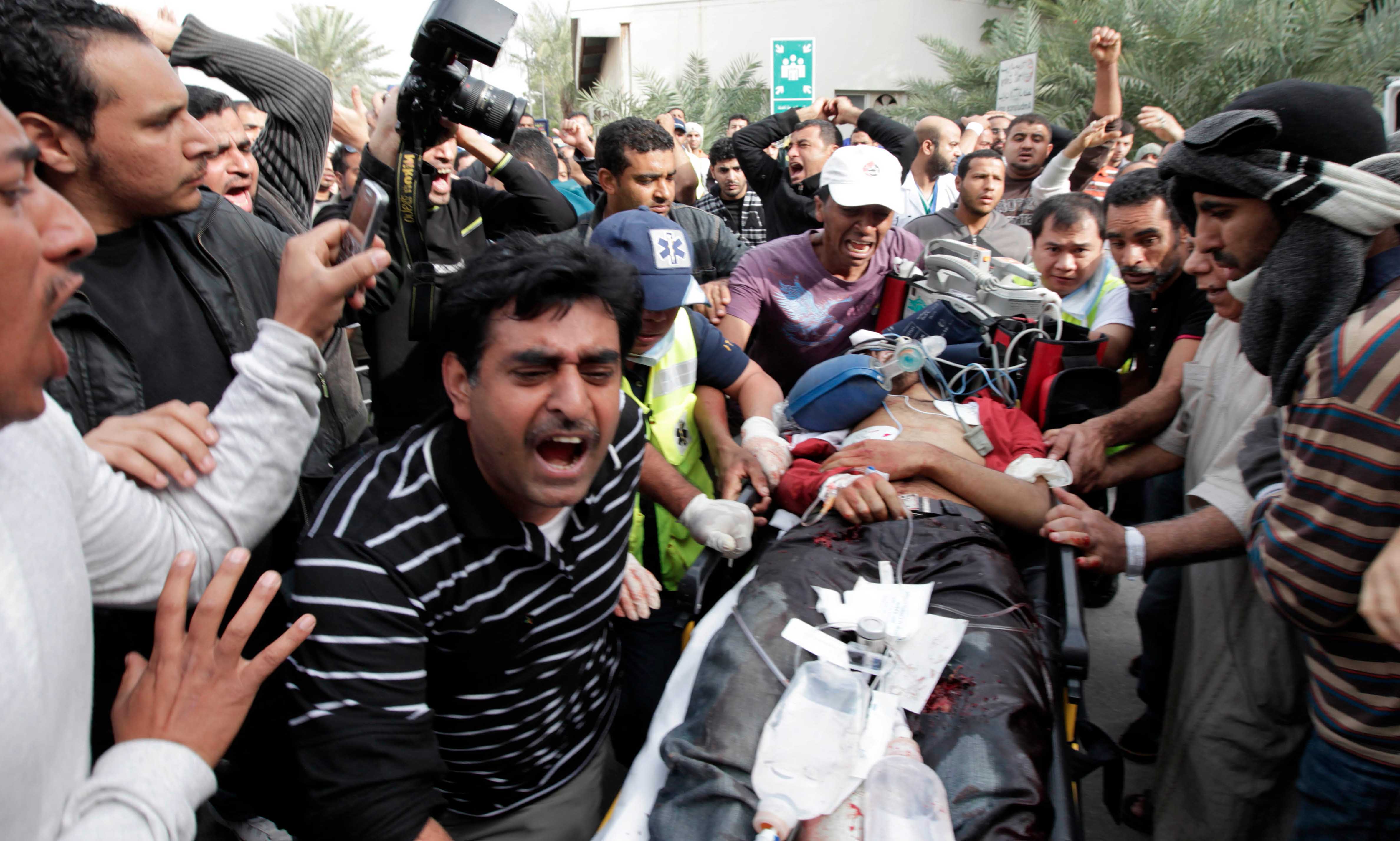
These rights have been systematically denied to Bahraini civilians for the past three years (and before) by the US and British-backed absolute monarchy in Bahrain. Since February 2011, when the pro-democracy movement rekindled in the Persian Gulf kingdom, regime forces have killed nearly 100 civilians, some of whom died under torture during detention; hundreds have been maimed with grotesque injuries, such as the loss of eyes and limbs from shot gun pellets; infants and elderly have been poisoned in their homes from the deliberate, excessive use of tear gas; and thousands of families have been plunged into misery because fathers and sons have been locked up in jails without a semblance of due legal process.  All this barbarity is done with the tacit support of Washington and London, and with the shameful indifference of the Western news media.

For a tiny population of only 600,000 native Bahrainis (an expatriate foreign worker population is of the same size), the toll of brutality and suffering inflicted by the Khalifa regime has been immense. And in this fierce assault on the mainly Shia population, the Bahraini rulers have been fully assisted by Saudi Arabia, which sent troops into the neighboring island back in March 2011 to crush the pro-democracy demonstrations. Saudi troops have remained in Bahrain ever since — albeit covertly, by donning Bahraini uniforms. Washington and London are fully apprised of the situation. In fact, it was the US and Britain that gave a green light to the House of Saud to embark on the crushing of protests in Bahrain, just as the Saudi rulers have been doing in their own Eastern Province and other parts of that oil-rich kingdom.
Bahrain Protests 1
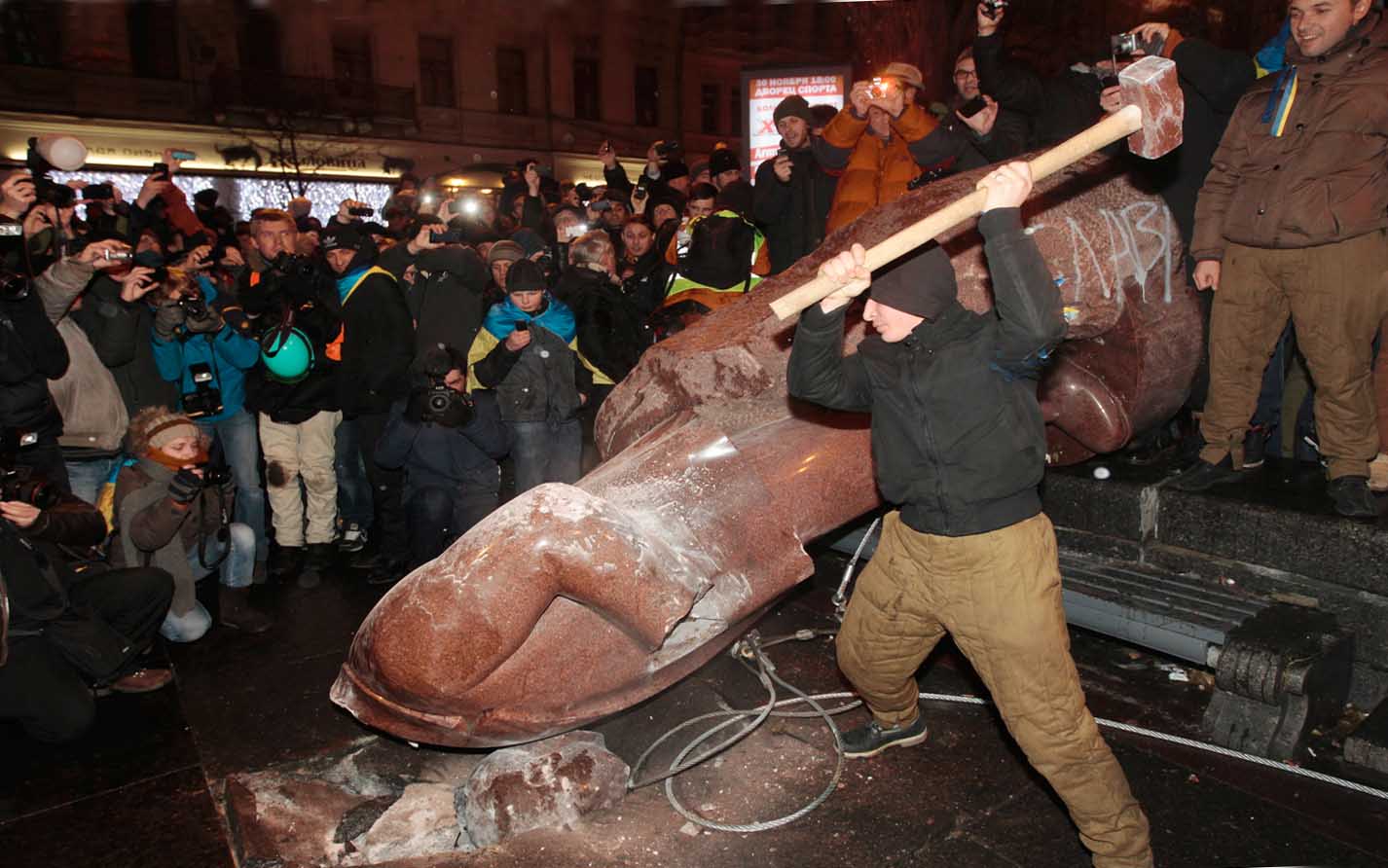
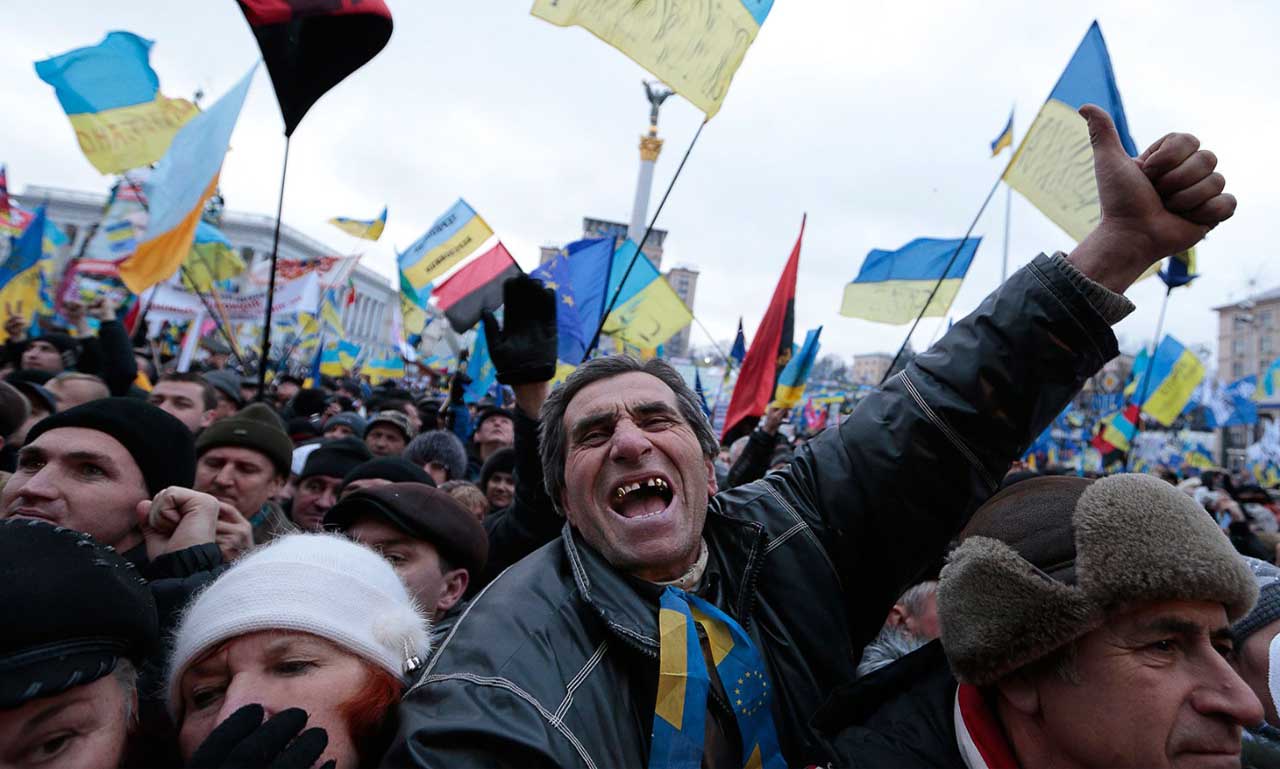
It is instructive to compare and contrast what is happening in the Ukraine, including the official Western response. The protests in Kiev have evidently been driven by a determined minority, using violent and organized subversion. The protesters are calling for the overthrow of the elected authorities. This is not the exercise of international human rights, as in Bahrain; in the case of the Ukraine, it is a call to sedition.

Furthermore, the agitating groups in the Ukraine, such as the Fatherland Party and the neo-fascist Freedom Party, are known to have well-established logistical links to foreign agencies that are committed to fomenting regime change in targeted nations. These agencies include the CIA as well as the benign-sounding National Endowment for Democracy. Certainly, the methodical tactics of disruption deployed recently against government buildings in Kiev strongly imply a covert military input…
ukraine lenin statue destroyed
To upbraid the Ukrainian state for responding with a heavy-hand in the face of this wanton subversion against its sovereign authority, as Western governments have charged, is at best naive and at worst blatant propaganda to distort the real situation.

Apparently, innocent civilian bystanders were caught up in the melee and incurred injuries. There were, however, no deaths, and Ukrainian Prime Minister Mykola Azarov later issued a public apology for police conduct. Since the height of the commotion a week ago, the demonstrations in the Ukrainian capital have subsided. This pattern again implies that the protests and public were manipulated for an ulterior agenda — an agenda that was not merely about expressing dissent against the government’s EU rejection, but rather was more sinister in scope, namely to destabilize the state.
Ukraine protests 1ukraine protests 3
The contrast with Bahrain could hardly be more lucid. Here the authorities are an unelected regime comprised largely of one family — the al Khalifas, headed by a self-appointed king, Hamad bin Issa al Khalifa. His hereditary successor will be his eldest son, Crown Prince Salman. The Bahraini regime rules by absolute decree with the guise of a consultative parliament that is “elected” through a heavily gerrymandered process.

The Bahraini regime and its foreign supporters — Washington, London and Saudi Arabia — have claimed that the largely peaceful pro-democracy protests are manipulated by foreign agents. It is claimed that these agents include Shia Iran and the Lebanese resistance movement, Hezbollah. The US and British governments do not reiterate this too often or loudly because they know full well that the accusation is an utter figment of imagination. There is not an iota of evidence for the involvement of Iran, Hezbollah or any other foreign agency in the Bahraini demonstrations. These protests have been sustained for nearly three years simply by the civilian population’s own desire to have the right to democratically elect a government, rather than being lorded over by a corrupt and venal crony family racket.

Unlike the Ukraine, Bahrain is a simple and straightforward case of democracy being brutally denied to a civilian population that has remained peaceful despite relentless provocation from an unelected, corrupt regime.

The double standards and hypocrisy of the Western governments and the mainstream news media as shown by the differing response to events in the Ukraine and Bahrain is glaring. A short-lived bid to sow chaos in the Ukraine by a provable foreign-backed subversion against an elected government is given the highest profile by Western governments and media as “a noble bid for democracy against an autocratic regime”. Whereas in Bahrain, a sustained pro-democracy movement by unarmed, peaceful civilians against a brutal, unelected autocrat is, well, simply ignored by the West.
Bahrain Protests 3
Indeed, Bahrain is not merely ignored by the West. It is indulged and tacitly backed to the hilt by Washington and London.  The attendance of such prominent figures as Chuck Hagel and William Hague at the Manama Dialogue in Bahrain at the weekend — during which they spouted platitudes about security, democracy and rule of law — is the US and British government’s way of reassuring the Bahraini and Saudi regimes of their ongoing support to crush democracy.

Meanwhile, Chuck Hagel announced during the weekend forum that the US has no intention of scaling back its military presence (read: arms sales) in the Persian Gulf despite the recent diplomatic detente with Iran. “Diplomacy, must be backed up with military power,” Hagel told delegates. The Pentagon chief also disclosed that the US was going ahead with the sale of 15,000 anti-tank missiles to Saudi Arabia worth one billion US$. These missiles will probably end up in the hands of Al Qaeda militants waging a war of terror against Syria for the Western-backed objective of regime change in that country. Ironically, and ludicrously, the British Foreign Secretary William Hague warned delegates that “extremists” operating in Syria (with the covert support of the US, Britain and Saudi Arabia among others) present a grave security threat to the Middle East region and Europe.

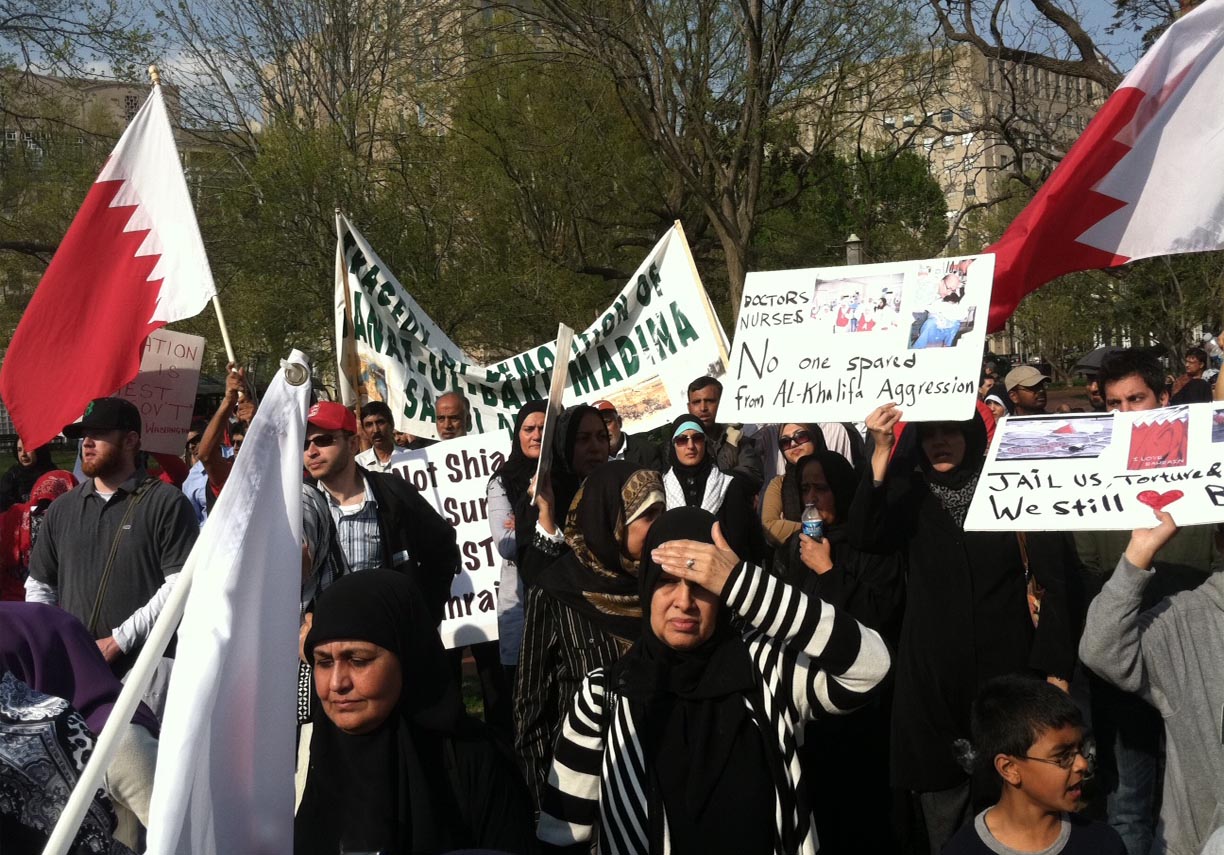
Outside the Manama conference, where peaceful protesters were having their heads cracked open by Bahraini riot police, one banner held up by the crowd read: “Why do Western governments not support calls for democracy in Bahrain?”

What a cruel joke. Western governments do not support democracy in Bahrain — or anywhere else for that matter — because they make money from oil and arms sales by supporting dictatorships, and from crushing and subverting democracy. Bahrain and the Ukraine are just two examples of the general concept. Despite their polished and preening rhetoric, Washington and London are nothing but salesmen for subversion and deception.
Bahraini women demonstrating2

02.12.2013

Can US Military Might Save the Dollar?


Finian Cunningham  Press TV
The escalation of military tensions between Washington and Beijing in the East China Sea is on the surface over China’s unilateral declaration of an air defense zone. But the real reason for Washington’s ire is the recent Chinese announcement that it is planning to reduce its holdings of the US dollar.

That move to offload some of its 3.5 trillion in US$ reserves combined with China’s increasing global trade in oil based on national currencies presents a mortal threat to the American petrodollar and the entire American economy.

This threat to US viability — already teetering on bankruptcy, record debt and social meltdown – would explain why Washington has responded with such belligerence to China setting up an Air Defense Identification Zone (ADIZ) last week extending some 400 miles from its coast into the East China Sea.

Beijing said the zone was aimed at halting intrusive military maneuvers by US spy planes over its territory. The US has been conducting military flights over Chinese territory for decades without giving Beijing the slightest notification.

Back in April 2001, a Chinese fighter pilot was killed when his aircraft collided with a US spy plane. The American crew survived, but the incident sparked a diplomatic furor, with Beijing saying that it illustrated Washington’s unlawful and systematic violation of Chinese sovereignty.

Within days of China’s announcement of its new ADIZ last week, the US sent two B52 bombers into the air space without giving the notification of flight paths required by Beijing.

American allies Japan and South Korea also sent military aircraft in defiance of China. Washington dismissed the Chinese declared zone and asserted that the area was international air space.

A second intrusion of China’s claimed air territory involved US surveillance planes and up to 10 Japanese US-made F-15 fighter jets. On that occasion, Beijing has responded more forcefully by scrambling SU-30 and J-10 warplanes, which tailed the offending foreign aircraft.

Many analysts see the latest tensions as part of the ongoing dispute between China and Japan over the islands known, respectively, as the Diaoyu and Senkaku, located in the East China Sea. Both countries claim ownership. The islands are uninhabited but the surrounding sea is a rich fishing ground and the seabed is believed to contain huge reserves of oil and gas.

By claiming the skies over the islands, China appears to be adding to its territorial rights to the contested islands.

In a provocative warning to Beijing, US defense secretary Chuck Hagel this week reiterated that the decades-old US-Japan military pact covers any infringement by China of Japan’s claim on the Diaoyu/Senkaku Islands.
dollar defense
It is hard to justify Washington and Tokyo’s stance on the issue. The islands are much nearer to China’s mainland (250 miles) compared with Japan’s (600 miles). China claims that the islands were part of its territory for centuries until Japan annexed them in 1895 during its imperialist expansion, which eventually led to an all-out invasion and war of aggression on China.

Also, as Beijing points out, the US and its postwar Japanese ally both have declared their own air defense zones. It is indeed inconceivable that Chinese spy planes and bombers could encroach unannounced on the US West Coast without the Pentagon ordering fierce retaliation.

Furthermore, maps show that the American-backed air defense zone extending from Japan’s southern territory is way beyond any reasonable halfway limit between China and Japan. This American-backed arbitrary imposition on Chinese territorial sovereignty is thus seen as an arrogant convention, set up and maintained by Washington for decades.

The US and its controlled news media are absurdly presenting Beijing’s newly declared air defense zone as China “flexing its muscles and stoking tensions.” And Washington is claiming that it is nobly defending its Japanese and South Korea allies from Chinese expansionism.

However, it is the background move by China to ditch the US dollar that is most likely the real cause for Washington’s militarism towards Beijing. The apparent row over the air and sea territory, which China has sound rights to, is but the pretext for the US to mobilize its military and in effect threaten China with aggression.
dollar-printing 2b
In recent years, China has been incrementally moving away from US financial hegemony. This hegemony is predicated on the US dollar being the world reserve currency and, by convention, the standard means of payment for international trade and in particular trade in oil. That arrangement is obsolete given the bankrupt state of the US economy. But it allows the US to continue bingeing on credit.

China — the second biggest economy in the world and a top importer of oil — has or is seeking oil trading arrangements with its major suppliers, including Russia, Saudi Arabia, Iran and Venezuela, which will involve the exchange of national currencies. That development presents a grave threat to the petrodollar and its global reserve status.

The latest move by Beijing on November 20 giving notice that it intends to shift its risky foreign exchange holdings of US Treasury notes for a mixture of other currencies is a harbinger that the American economy’s days are numbered, as Paul Craig Roberts noted in an article last week.

Moving away from the dollar is of course China’s lawful right, as are its territorial claims. But, in the imperialist, megalomaniac mindset of Washington, the threat to the US economy and indebted way of life is perceived as a tacit act of war. That is why Washington is reacting so furiously and desperately to China’s newly declared air corridor. It is a pretext for the US to clench an iron fist.
dollar printing 1

24.11.2013

Links November 2013


US Exeptionalism Flag copy
Maybe some eminent heads of the US political elite have woken up from their geopolitical dreams and are realizing, that their Arab Spring revolutions didn’t turn out as planned and have made matters worse not only for the concerned population but also for the masterminds in the neocolonial nations.
It looked so promising and the underlaying plan seemed to be straight forward, easy and yet brilliant, but the plan had serious flaws which the Yankee minds with their narrow, power- and profit-oriented world view couldn’t see.
US Middle East politics has cost 600,00 Iraqi, 40,00 Libyan, 100,00 Syrian lives, has resulted in unimaginable destruction and suffering throughout the region — and the Yankees, cocooned in their parallel universe still ask: Why do they hate us?
KONICA MINOLTA DIGITAL CAMERAKONICA MINOLTA DIGITAL CAMERA
To sugarcoat the bitter pills of world news the link lists on this blog are always combined with pictures of Mato’s cat family. This time the subject is Rosy, a stout but nevertheless lovely nine year old calico cat. Rosy joined the cat family together with her siblings Paul and Mary as tiny kittens. My then wife had invited me to a friend of hers who showed us a little basket with the three cute kittens and casually asked: “Are you taking them or shall I throw them to death right away?”

This is how the cat population is managed in rural areas. Cats are not neutered or spayed because that is costly, but instead the newborn kittens are thrown against a stone wall till they are dead (or presumed to be dead). Alternatively the kittens are drowned in a bucket of water. I cannot imagine what kind of consciousness a person must have who takes one kitten after another to throw it against a wall or submerge it in a bucket till it stops moving.

Well, other people sign “kill lists,” some people plan and start wars, some make a fortune by producing and trading deadly weapons.

Empathy can be very selective.

Anyway, the response to the question of my wife’s friend was of course yes, and Rosy, Paul, and Mary joined Harry and Lizzy, the initial members of the cat family. Harry was neutered and a huge cat with at least 6 kilo weight, he was easy going and very friendly. He was also an excellent mouse catcher.

It was unavoidable and only natural that Rosy grew up under the guidance of Harry, who was throughout his unfortunately only six year long life the unchallenged patriarch of the family. When Rosy and her siblings joined the family, Harry took care of Rosy and the two developed an unusual close relationship and were always playing and hunting together. Harry had obviously, like so many other males in leading positions, a soft spot for young female subordinates.
KONICA MINOLTA DIGITAL CAMERA
It was a match made in heaven, but it unfortunately ended after five years with the tragic and untimely death of Harry, who in summer 2008 mysteriously and without apparent reason became quiet and withdrawn. He had, as we learned later from the vet, an incurable lever infection, probably contracted in a bloody fight with an intruding straying tomcat.

When Rosy was a few month old, the cats and I developed the routine of gathering in the evening near the entrance door and then walking around the house. Soon we extended the evening walks to wander across the meadows, which surrounded the house, and along the pathways between the nearby fields and meadows. Gradually the walks became longer and longer and we were exploring the wider area with its various fields, meadows, thickets, and hedges.

Harry was the co-leader and co-organizer of these daily walks, but in the last weeks of his life he could not go the whole way, so he just rested after a few hundred meters and waited till we came back and then he joined us again, leading the group home like in the old days. When I realized the severity of Harrys condition, I walked half the way that we normally took and then turned so we would came back exactly to the place where he was waiting for us. Occasionally I also carried him a part of the way, which was quit exhausting because he was still a big and heavy cat despite the fact, that he did not eat much anymore and constantly lost weight.

I can remember when Rosy repeatedly jumped at him during the walks as a clear invitation to play and how deeply disappointed she was when he just shrugged and only continued walking as good as he could.

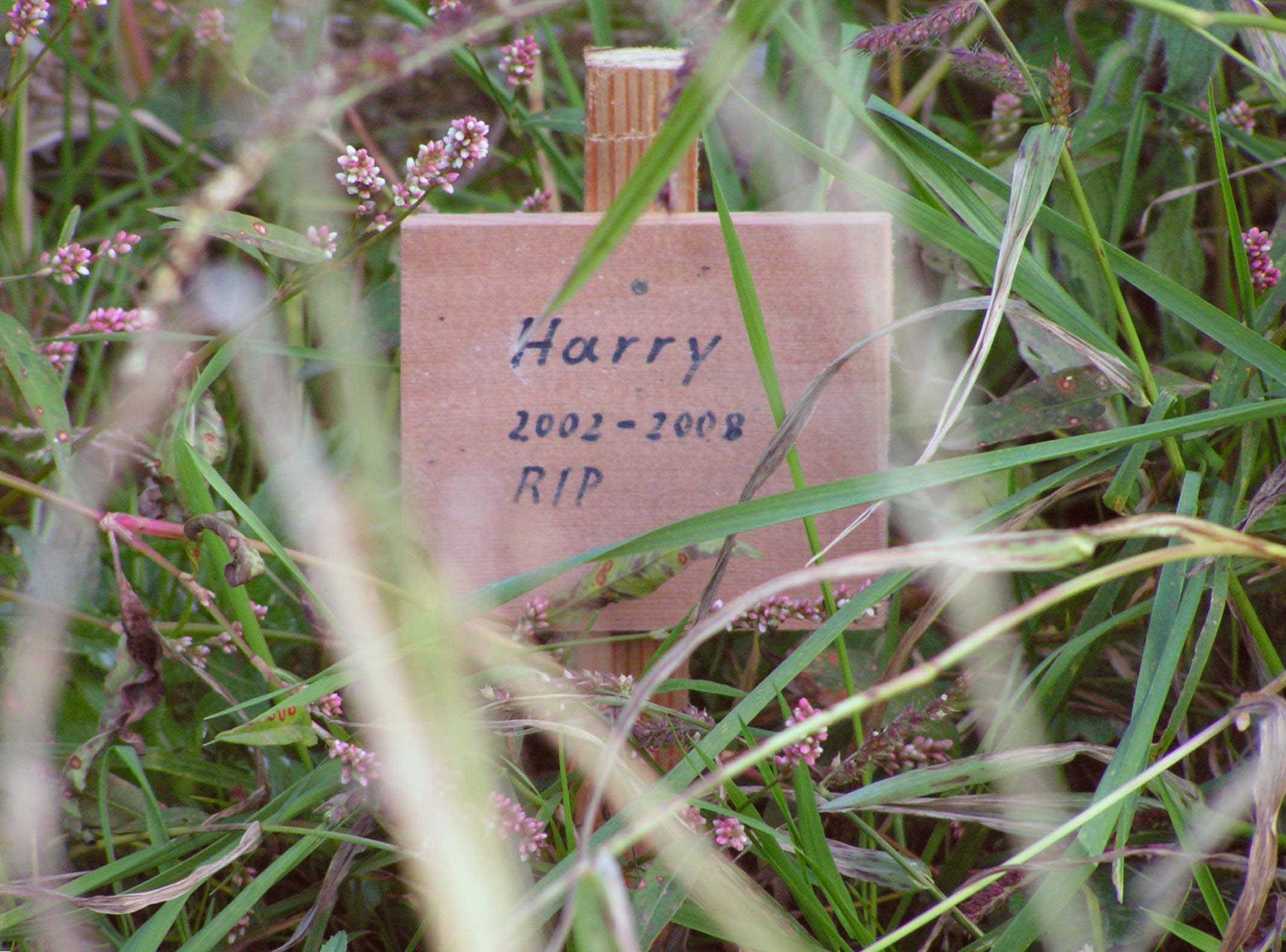
Harry’s death was a blow to all of us. I lost one of the best friends that I ever had and even as I write this I have to wipe my eyes. Consider me a sentimental geezer or a sissy or whatever, I don’t mind. Harry, together with Lizzy and the other cats were responsible for the happiest years of my life until now and I’m deeply indebted to him. A debt that I pay back to the cats which are still with me.
KONICA MINOLTA DIGITAL CAMERA
Rosy became very melancholic when Harry disappeared. She didn’t know that he died in my arms, euthanized by the vet. She didn’t realize that it was her friend Harry, whom I buried in a corner of the vegetable garden. Maybe she hoped for some time, that he would come back one day and play again with her and they would joyfully jump around and chase each other like in the old times.

It took many years for Rosy to overcome the loss of her best friend. She became a moody middle aged cat lady, a bit distanced, sometimes petulant, seldom cheerful. During the last year though her mood improved significantly, it seems that recent changes in the cat family opened her new and favorable perspectives.
KONICA MINOLTA DIGITAL CAMERA
The changes in her favor are: Ma Xi has left the family and found a new host (I wish him well, he is still my friend and I care about him). Princess Min Ki, leader of the family and Rosy’s long time rival, has mellowed and is not bossy anymore. Min Ki uses her remarkable social skills now more strategically and is “leading from behind.”

Mia, the elegant urban lady from Munich, is shy and quiet, but all at all a pleasant and uncomplicated new family member. Mia btw is Rosy’s niece, though these kind of family relations don’t mean much for cats.

Gandhi Jr., Mias son and Rosy’s grand nephew, is now one year and four month old. He is still growing and he will become a big cat, as big as Harry and maybe even bigger. For a period of time I had the impression the he was getting thinner and thinner and I became worried about his health till I realized, than he was not becoming thinner but only longer.

When Gandhi J. was a small kitten, Rosy first ignored him and later considered him as an annoyance (small cat boys can indeed be an annoyance, as they don’t know yet how to behave properly). But over time Rosy warmed up to him and now, alongside Mia and Princess Min Ki, even participates in his education.

It takes a village to raise a child, and a cat family to raise a young cat boy. Just like every other adolescent who belongs to a social species, Gandhi Jr. has to learn the rules and manners which must be obeyed to keep a society and a family functional and enable a harmonious social climate. And as there are no obedience training facilities or schools for cats, Gandhi’s fellow cats have to teach him. 

As I write down these words I start wondering and pondering about the question: Why are there no obedience training facilities or schools for cats, similar to that which exist for dogs and humans?

Well, cats are special!
Rosy computer DSCN0633Rosy book shelf DSCN2833KONICA MINOLTA DIGITAL CAMERA